Showing posts with label outdoors. Show all posts

10.05.2020

NPS #10: De Soto National Memorial and Florida History

History and nature come together at the Hernando De Soto National Memorial in Brandenton, FL.  Don't confuse this site with the Fort De Soto Park in St. Petersburg, Florida.  The National Park Service (NPS) operates this memorial.  The government authorized the memorial in 1948 to keep the story of Spanish conquistador and exploration.  

When we travel to new regions, we like to talk about the unique plants to the area.  Just getting out of the car, you will see a Gumbo Limbo tree, native to Southern Floridan and the Caribbean.  When you go into the visitors center, you can dress up in armor and watch a short film about the Spanish explorer Hernando De Soto.  You'll appreciate the no cost entrance.

He began exploring at an early age of 14, taking a trip from Spain to Panama.  He served Balboa and partnered with Hernan Ponce de Leon.  De Soto traveled from Spain to Cuba to Florida with nine ships and 600 soldiers.  As one of the earliest European explorers of North America, his expedition landed on Florida's west coast in 1539.

Fortunate timing allowed us to visit Camp Uzita, the living history camp operating December to April.  Men in period costumes provided in-depth demonstrations, taking us through time while demonstrating different weapons.

After hearing the history, we took the half-mile trail on the south shore of the Manatee River.  NPS places history stories along the trail.  You might also see animals such as birds, fiddler crabs, pelicans and gulls, egrets, and herons.  Beyond the mangroves, you will see the water.  The park includes a small beach called Cove Beach.  We had good timing.  During the week, we walked along the shore as the only family exploring.  Another great time to visit is during one of their fishing clinics (age 7 and up) or a 1.5 hour ranger led kayak tour. Visit the NPS website for event information and keep exploring.

8.07.2020

Art Lesson #13: Six Giant Troll Statues at Morton Arboretum

The Six Forgotten Giants in Copenhagen, Denmark, designed by artist Thomas Dambo, is celebrated art in Europe.  Travel is restricted to Europe, but you can find the artist's work in the United States.  The Morton Arboretum in Lisle, Illinois is home to Thomas Dambo's first large-scale exhibit in the United States.  Since Thomas is known for using recycled materials and promoting sustainability, it's fitting that an arboretum combines such art with nature.

I've visited the Morton Arboretum before the pandemic.  My friend had a membership and invited me to Passport Europe Festival one September afternoon.  The festival is so big that the event holds multiple stages simultaneously.  You have to choose between dancing and musical performances.  Often lots of audience interaction, joy, and laughter.  My friend certainly giggled when successfully volunteering me to learn Polish dancing in front of an audience.  I was so impressed with the park.  It's much larger than I expected.  I later learned it covers 1,700 acres and has 222,000 live plants combined with scientific research, making it internationally known.

During the pandemic, it's still a great place to visit.  The crowd is limited by timed-entry with non-refundable tickets.  With such wide, open spaces, social distancing feels so easy.  While more expensive than local or state parks ($15 per adult, $10 child ages 2-17), you also contribute to a great cause.  Joy Morton, son of the founder of Arbor Day and founder of Morton Salt Company, created the arboretum after studying botanical gardens in Europe.  The non-profit organization collects and studies plants from around the world.  From your ride through the forest, you can visit the East Loop and West Loop and see distinct outdoor exhibits of Asian, European, and North American Collections.

Tip #1:  Use the App to Help Find the Six Giant Trolls

Without the map, it could be a challenge to find all six trolls, some hidden in the woods after a trail.  Even with the map and signs with arrows, it still feels like a hunt.

Tip #2:  Drive the Troll Hunt

If you don't drive, finding the trolls would take a six to seven mile hike.  From a parking lot, the hike does not feel strenuous.  It takes a two feet to three-quarters of a mile hike from the nearest parking lot.  You'll still get your family moving.  One hike took you up a hill and you could look over both the arboretum and the highway, along with the super tall troll.  Rocky Bardur:  visible from road, easy walk from parking lot #1

Tip #3:  Plan for a Couple Hours

Once we started the hunt, my daughter insisted we find all six sculptures.  Kids enjoy finding the cute trolls and parents admire the details of reclaimed wood with different natural colors, twigs, and pincones combining for character.  Due to the pandemic, trolls are now fenced off.  You can still get great photos of Rocky Bardur, Sneaky Socks Alexa, Joe the Guardian, Furry Ema, Niels Bragger, and Little Arturs.  I've placed Destination Asia Festival my wish list for post-pandemic entertainment in August.  Culture, nature, and art come together at the Morton Arboretum.

8.08.2019

Art & Sculpture #4: International Sculpture Park and 4 More Sculpture Parks in IL

Smithsonian Magazine lists "Six of the World's Most Spectacular Sculpture Parks...from New York to Norway". (Jennifeer Nalewicki, May, 6, 2019) and I've only been to one of them, twice (Olympic Sculpture Park, Seattle, Washington).

Even with travel restrictions, if you live in Illinois, you can share the joy of sculpture art with your kids.  For our staycation, we planned visits to places that felt connected to other countries.  We chose the International Sculpture Park in Schaumburg, IL.  A partnership between The Chicago Anthenaeum Museum of Architecture and Design and the Village of Schumburg turned this 20 acres of meadow, forest, and prairies into a park for art lovers.  Then we connect to Greece.  Ioannis Karalias, a Greek architect, planned the garden.

Here's good news for moms - no admission fee, no parking fee, open from sunset to sunrise, and the open space makes it easy to socially distance.

You'll enter the grounds of the Robert O. Atcher Municipal Center with free parking at the Prairie Center for the Arts.  You likely won't see the sculpture garden entry sign from the lot.  Take the prairie trail back towards the entrance.  You will see the entrance sign and "Together", an 18 foot sculpture by Jerry S. Kenar.

You can connect back to Greece with "Chairs" sculpture by Argyro Konstantinidou showcasing Greek themes and images from the history of Mexico, Egypt, and Greece.  "Athys" by Charles de Montaigu provides another connection to Europe since it represents contemporary art in Switzerland.  "Touch Heaven" connects you to Israel designed by Oded Italahmy and inspired by Judaic culture and iconography.  "Vinland" intrigued us so much that we looked up more about the sculpture by Jarle Rosseland of Oslo, Norway.  The sculpture commemorates the 1,000 year anniversary of the Viking explorer, Leif Eriksson and his discoveries of the Americas.  With that background, we could see the ship form.  Another favorite was "Thought Rise in Vacuum" by Hans-Christian Berg, combining the numbers "zero" and "ones" in a cloud-like pattern.

Fortunately we researched the park ahead.  My daughter knew we missed sculptures, even though the path seemed to end near a road.  Trace back to the parking lot and walk across the street for other sculptures.  We had a picnic lunch near the prairie and now we found lots of other picnics near the small lake.

My daughter particularly wanted to see "Awaking Muse" by Don Lawler.  It takes a lot of horizontal space at 40 feet across.  The female figure inspired by Greek mythology appears to awaken from her sleep.  Keep walking and you'll find the colorful "Ecceltora" meaning "Behold the Hour".  May you enjoy your hour at the sculpture park.

Here's four additional sculpture parks to consider visiting in Illinois:

1) West Street Sculpture Park, Galena, IL, 2 acres

2) Goldman-Kuenz Sculpture Park at Cedarhurst in Mount Vernon, IL (Southern IL)

3) Scovill Sculpture Park in Decatur, IL near zoo and museum

4) Koehnline Sculpture Park, part of Koehnline Museum of Art on Oakton Community College campus- Des Plaines, IL (north of O'Hare airport), 25 sculptures

For more sculpture parks in the Midwest, visit my article "Pyramid Hill and 4 More Sculpture Parks in the Midwest".

2.20.2019

NPS #9: Cabrillo National Monument, San Diego History

If you are looking to combine history and nature, save a half day in your San Diego travel plan to visit the Cabrillo National Monument.  Operated by the National Park Service, the monument commemorates the landing of Juan Rodriguez Cabrillo at San Diego Bay on September 28, 1542.  


It's a great way to teach kids about exploration to the New World.  Cabrillo National Monument will tell stories of the 16th century exploration.  Born in Spain, Juan Rodriguez Cabrillo was a conquistador, a Spanish soldier who explored and settled in the New World.  Cabrillo explored in Guatemala, El Salvador, and Mexico.  He left Mexico on June 27th, 1542 with three ships and landed in what is now the West Coast of the United States.  The Kuneyaay Indians who lived in the southern border of the United States greeted Cabrillo.


Not far from the visitor center and parking lot, you will find the Old Point Loma Lighthouse and Cabrillo statue overlooking the harbor and ocean.  To keep focused on the history and nature, I've written a separate article about the lighthouse.  Standing at 422 feet above water views, you'll want your camera to capture
the breathtaking views.  If you visit during whale migration season (December through March), use your id to borrow binoculars from the visitor center.  You might see 30 to 50 foot long gray whales.  Peak time to see the whales is mid-January.

We kept hiking past the monument to the Bayside Trail.  Only a two mile hike and relatively easy (note some stairs and rock hopping), the website claims you can accomplish in an hour.  However, we took our time to enjoy the beauty of the plants and crashing waves against the rocks.  Also, you can explore more about the area history.  Since the Point Loma peninsula forms a natural protective barrier to San Diego Bay, this was an important military location.  It served as a military reserve in 1852 and Fort Rosecrans protected during the World Wars.  Within the park, you can find structures from the military past including base-end stations, fire control stations, searchlight stations, and radio station.

Interested in short video clip of crashing waves at the park or view from flight departing San Diego?  Visit my YouTube pagehttps://www.youtube.com/channel/UCPe_8GnvSvwxgjoNHEzwfWQ/videos 

If I could repeat the visit, I would have allocated more time.  I visited in February and it would have been the right time to see the tidepools.  Late fall and winter are the best times to visit the tidepools.  It's only a one mile hike.  Go two hours before low tide times.  Check the NPS website for tide charts.  The depressions in the rocks along the coastline capture animals during low tide (when water recedes) which would create a great nature exploration for kids.  Make sure they wear shoes that won't easily slip on the wet rocks.

If I could choose anytime to visit, I would time the visit to the Cabrillo Festival in September.  It's a free festival with cultural music and dancing, food from Mexico, Portugal, and Spain, and Kumeyaay baskets and other crafts.  I'd time arrive in time for the 1PM re-enactment of Cabrillo's landing on Ballast Point.  If you want to help support, buy tickets (approximately $30) for the evening social reception.

The National Park Service brings history alive.  If you are interested in another way to teach your kids through travel about early Spanish explorers, visit my article on the DeSoto National Memorial.


6.02.2018

Lighthouse Lesson #5: Sturgeon Bay Canal Lighthouse & North Pierhead Lighthouse

Sturgeon Bay Canal, Photo by Krenda
Walk the breakwall
If you want a quick stop to discuss the history of transportation, stop at the U.S. Coast Guard Station.  Considering my passion for lighthouses, the kids can wonder how much time could get spent at a lighthouse.  You have to consider the tour, walking up the stairs, and taking time for the view.  In this case, you can't wander on the grounds and the government offers no tour (except during annual lighthouse festival).  It's an active Coast Guard station.  You have a quick stop, walking from the parking lot to the north breakwall.  It does give you a nice view of two lighthouses.  The first lighthouse, Sturgeon Bay Canal Lighthouse, has a cylindrical design and stands tall at 78 feet.  Originally painted a reddish brown, it was repainted white in 1900.  The second lighthouse, Ship Canal North Pierhead Lighthouse, originally had white paint and later painted red.  It stands 35 feet above water at the end of the jetty.

Ship Canal North Pierhead
You also have a waterfront view.  The Sturgeon Bay Ship Canal connects Sturgeon Bay with Lake Peninsula. The approximately 7 mile canal provides a shortcut to the southern end of Green Bay.  It allows ships to avoid the dangerous "Death's Door" passage at the northern tip of the Door Peninsula.  At the end of the jetty when you are close to the Pierhead Lighthouse, turn around and take a photos of the Sturgeon Bay Canal Lighthouse too.

The lighthouses evolved over time to solve problems, whether adding a fog horn, better light, electricity, or larger keeper house, the government invested for marine safety.  The Sturgeon Bay Canal Lighthouse had structural issues from the wind vibration, so a steel framework was added.


4.18.2018

Global Thinking in the USA #3: Chicago Botanic Garden's Japanese Garden


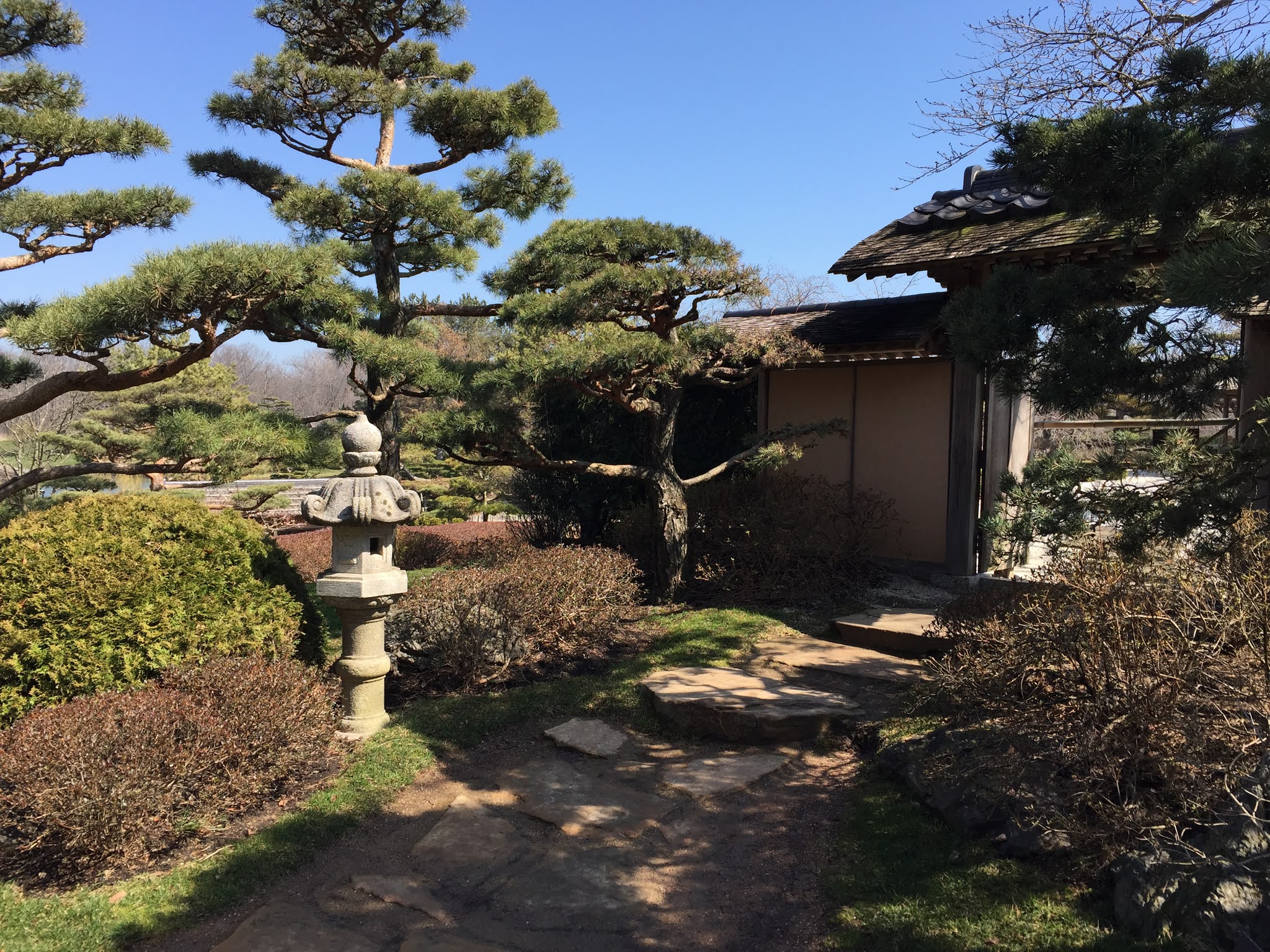
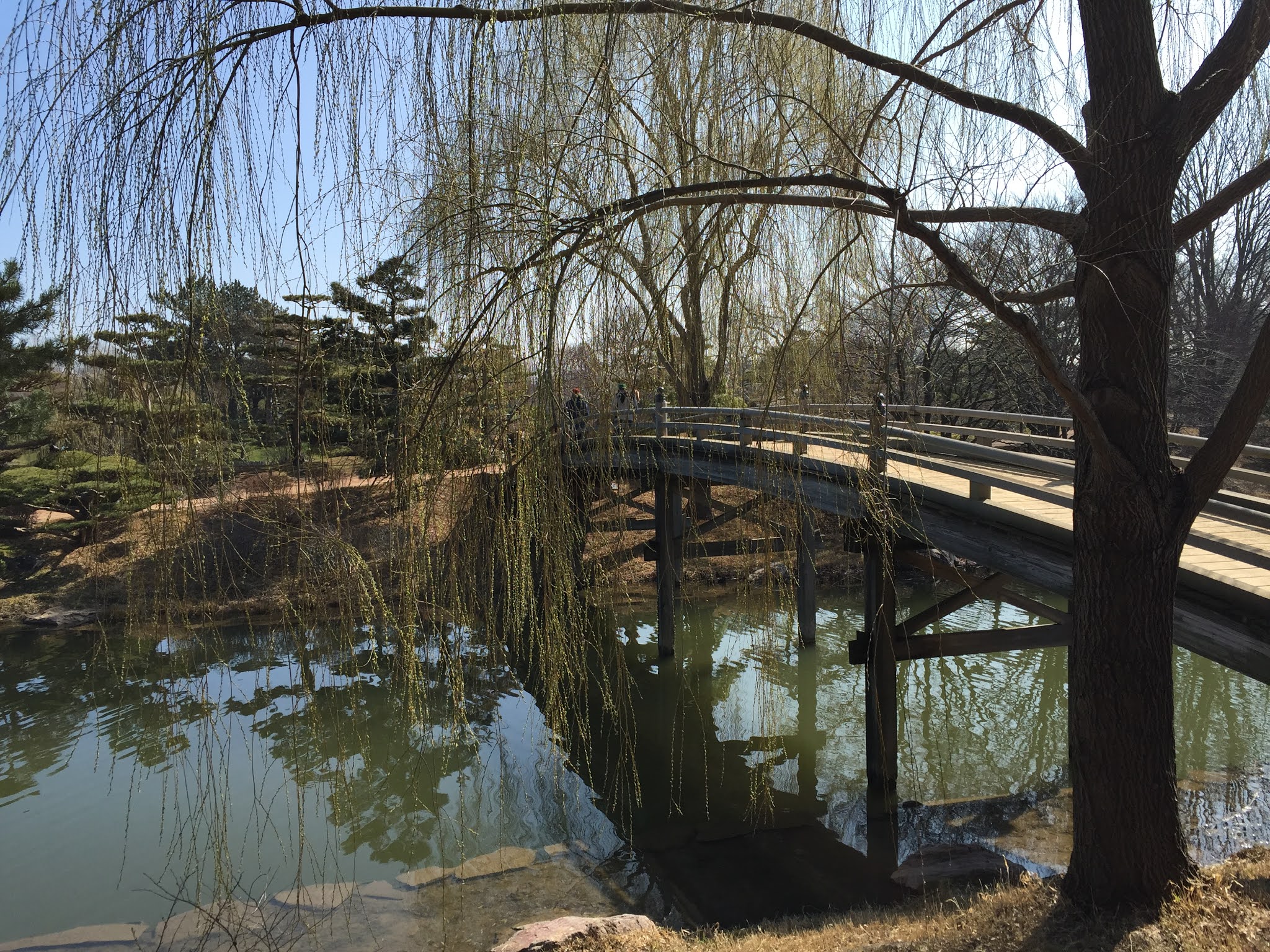
Chicago Botanic Garden, Photo by Krenda
Chicago Botanic Garden in Glencoe, Illinois (Chicago suburb) is a great place for kids to learn about horticulture.  Look on their website for special events.  I've been to the garden multiple times, but I most enjoyed a Girl Scout event that included dividing houseplants and planting the new plant to help earn a badge.  At the end of the event, we had a private tour of the garden including the Elizabeth Hubert Malott Japanese Garden and greenhouses.  The Chicago Botanic Garden is huge with over 27 gardens within 385 acres.  It's no wonder over 1 million people visit annually.  With approximately 50,000 members, it's the largest membership of any U.S. public garden.  Considering the size and diversity, I'll focus on how kids can learn about horticulture and the Japanese culture in the same place.

To get the lay of the land, the Japanese garden has 17 acres and includes three islands:  1) Seifuto (Island of Clear, Pure Breezes), 2) Keiunto (Island of the Auspicious Cloud), and 3) Horaijima (Island of Everlasting Happiness).  The first two island has public accessibility.  You most likely won't have a guide, so I suggest downloading the garden app, so you and your kids can learn the meanings of the sites.  I've taken a short snapshot of the descriptions provided on the website for you:
Stop 1:  The Ken - viewing point where all three islands can be seen at one spot
Stop 2:  The "Waterfall" - plants create nature scene (boxwoods = stones, cotoneaster flowing downhill = flowing water)
Stop 3:  Kasugastone Lantern - name from Kasuga Shrine where there are nearly 1,000 lanterns
Stop 4: Japanese Garden Bridge - link between this world + paradise with an arch representing the difficulty of the path
Stop 5:  Keiunto - most formal of the gardens


Stop 6:  Dry Landscape Garden - smooth gravel represents calm matter, raked rippled patterns represent waves breaking on a shore; peek into the garden from the house


Stop 7:  Arbor - house adapted from a building at Kodai-jiya Koyota temple, built in Japan and assembled in Chicago

Stop 8:  Crouching Basin - tradition to wash hands and rinse mouth before entering teahouse

Stop 9:  Zig Zag Bridge - legend tells story that people can avoid evil spirits by crossing a zigzag bridge because evil spirits believed to move only in a straight line

Stop 10:  Seifuto - stone lantern and grouping of boulders; rocks are thought to be the bones of the earth

Stop 11:  Boat Landing Stones - 2 large granite slabs for an ornamental boat landing

Stop 12:  Dry Garden and Arbor House - smaller dry garden than on Keiunto; notice the water basin and lantern

Stop 13:  Willow - uneven pathway of stones to make you step more deliberate; notice the pruned willow

Stop 14:  Pine Tres - symbols of long life in Japanese culture

Stop 15:  Shoin House:  Recreated garden retreat of an Edo-period feudal lord built in Japan

Stop 16:  Water basin at the Shoin House

Stop 17:  Snow-Viewing Lantern - yukimi lantern built with sturdy legs and broad umbrella, enabling it to bear the snow

Stop 18:  Puryear Point - bridge views and sculptures

The Forest Preserve District of Cook County owns the garden and the Chicago Horticultural Society manages the garden.  There's an agreement for free admission (beyond the $25-$30 parking fee per day) until 2022, so visit now.


9.01.2017

Gym Class #12: Free or Pay, 5 Free Water Ski Shows

Audience, Photo by Krenda
Waterskiing takes me back to childhood memories growing up in Wisconsin, surrounded by lakes.  My family moved north from the Quad Cities (Iowa/Illinois) to Wisconsin.  I thought we lived quite far north.  However, we would ask neighbors and friends about weekend plans and they would most likely respond "we are going Up North".  It seemed like everyone owned a cabin and boat further north.  I always appreciated invites to a cabin weekend, especially when the family had a boat that could take us water skiing.

Waterskiing has many categories including 1) show skiing, 2) wakeboarding, 3) barefooting, 4) ski racing, 5) hydrofoiling, 6) kneeboarding, 7) slalom, trick, and jump skiing, and 8) adaptive skiing.  My parents took us to the Tommy Bartlett show to see the professional water ski show.  If you have tried skiing, it gives even more appreciation for those who can do tricks.  It felt difficult enough to have the muscle to hold on and stay standing.

I grew up in the right place to appreciate skiing.  The United States has strong show teams.  The USA Water Ski Show Team won the Show Ski World Championships.  Wisconsin earns the title "Show Ski Capital of the World" and holds the largest water ski tournament in the world "Wisconsin State Water Ski Championship."

Some ski shows such as those at Sea World and Cypress Gardens disappeared.  However, the Tommy Bartlett Show still impresses audiences today with it's high energy, high skill shows.  It will cost your family to attend.  Adult tickets cost approximately $21.50 and child tickets cost approximately $12.50.

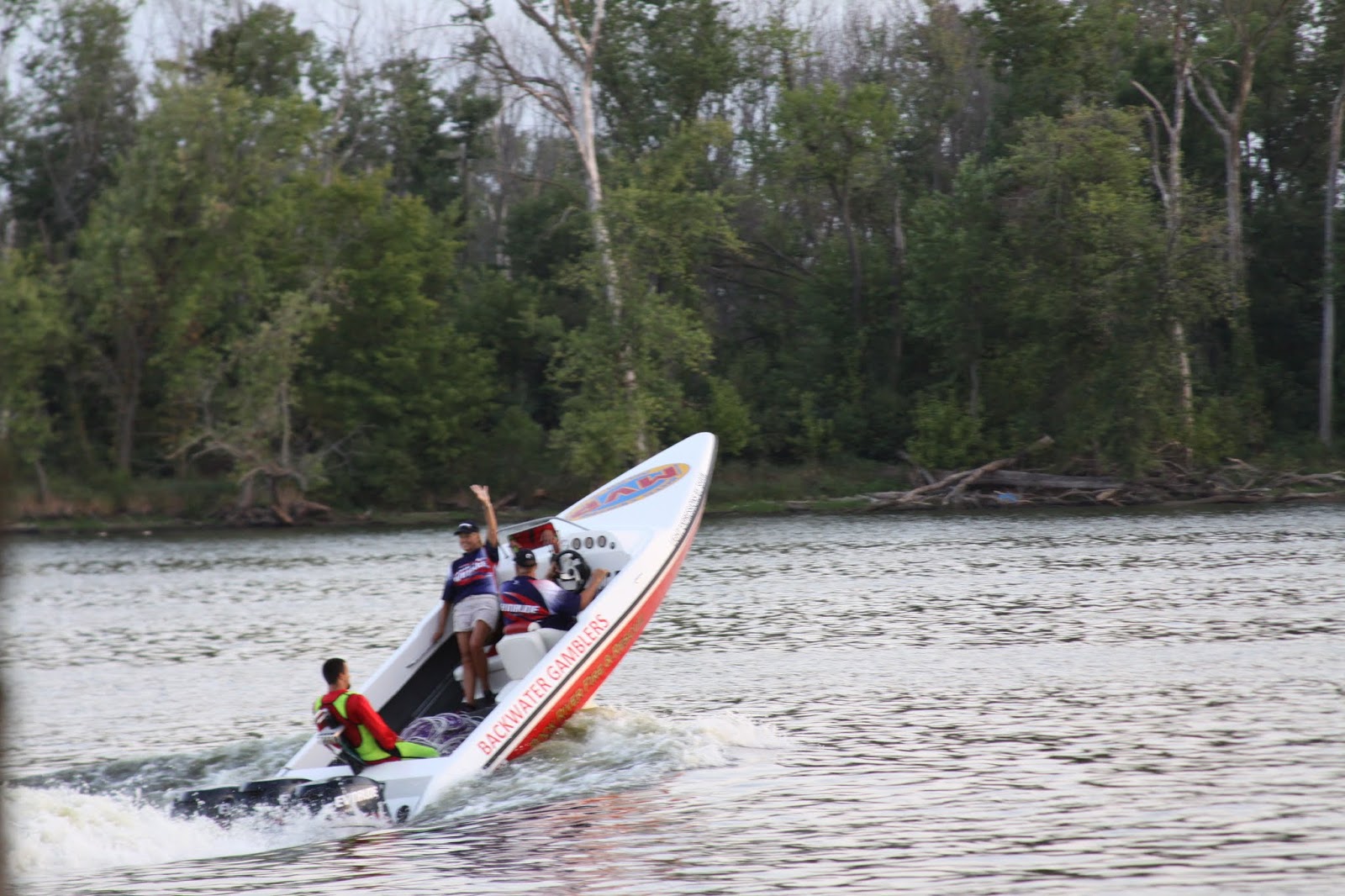
Good news that you can inspire your kids with a ski show and it might cost you nothing.  We went to the Backwater Gamblers show in Rock Island, IL (Quad Cities) on the Mississippi River.  The National Geographic book 100 Places That Can Change Your Child's Life lists Mississippi River as a must see place and claims waterskiing was invented on the Mississippi River in 1922.  We clapped loudly for the ramp tricks, boat tricks, and impressive human pyramids.  Plus we gave donations and bought concessions.  Here's four other free shows you should consider attending:
1.  Aquanut Water Shows; Lance Park in Twin Lakes, WI (close to IL border), Wed. & Sat. 6PM Memorial to Labor Day
Sponsored by Twin Lakes Marine and Gage Marine; show began in 1973 and now the 2018 National Show Ski Ballet Line Champions, contact them for Learn to Ski opportunities in July and August
2.  Chetek Hydroflites Water Ski Show Team; Chetek, WI (Northwest Wisconsin); Thur. & Sun summer shows
3.  Min-Aqua Bat Water Ski Shows; Minocqua, WI, Sun/Wed./Fri. night in summer
One of the oldest show teams in the U.S., club began in 1950
4.  Waterboard Warriors Water Ski Show; Wrightstown, WI (near Green Bay/Fox Valley); Tue & Thur. Memorial to Labor Day

If your child becomes so enthusiastic that they want to learn to ski, consider a ski school: 1) Bass Cove Ski School (Central Lake MI), 2) Barefoot Brothers Water Ski School (Alva, FL), 3) Collier County Water Ski Center (Naples, FL).


7.01.2017

Agriculture Lesson #6: From Turkey to US, Cherry Picking Farms & 7 Festivals

Cherry Picking, Photo by Krenda
One of my favorite memories about spending time on my grandparent's farm was picking cherries with grandpa.  Peering from the farm house lace curtain decorated windows, I could see the cherry trees.  If I saw too many birds, I might jump up and run out to scare them away.  Grandpa's nets worked better, but I could help too.  Fresh, sweet, tart cherries meant cherry pie.  What a treat!

Turkey wins the title of the world's largest cherry producing country.  However, you don't need to travel to Turkey to experience cherry picking.  The United States ranks as the second highest producer with Washington, California, Oregon, Wisconsin, and Michigan as top sweet cherry producing states.  We chose to find a u-pick cherry farm in Wisconsin.  We visited Hyline Orchards in Fish Creek, Wisconsin (Door County).  Nothing too fancy.  You enter the shop, pay for an empty bucket, and begin picking.

Turkey celebrates cherry agriculture with festivals.  The traditional and well known Polonezkoy festival includes concerts and folk dancing in June.  In the US, many festivals also occur in June and your family can celebrate the harvest and try cherry food items.  I'll list a few options, beginning with Traverse City, Michigan because the city calls itself the "Cherry Capital of the World":

1.  National Cherry Festival; Traverse City, Michigan, June/July
Many competitions including turtle race, cherry pie eating contest, diaper derby, cherry pit contest, sand sculpture contest, art competition, and shuffleboard tournament.  Kids may like the cherry teddy bear tea and chalk art.  Everyone will learn at the orchard tour.

2.  Jacksonport Historical Society Annual Cherry Fest; Jacksonport, WI
Kids will enjoy the penny hunt on the beach, face painting, and horse drawn wagon rides.  Indulge your sweet tooth by purchasing cherry kolaches at the bakery booth.

3.  Leona Valley Cherry Parade and Festival; Leona, CA; June
Many choices because over 20 u-pick cherry orchards within driving distance.  Plus enjoy live music, pie eating contest, and crafts.

4.  Whitehouse Cherry Fest; Whitehouse, OH, June
Entertain friends and family at the carnival rides and 5 min. helicopter rides for $35

5.  Emmett Cherry Festival; Emmett, Idaho, June
Active event including fireman hose competition, softball tourney, and run/walk.  Also visit the train show and parade.  Free admission and free contest entry.

6.  Polson Main Street Flathead Cherry Festival; Polson, Montana
Buy from Montana Made Item vendors and listen to the steel drum band.  Traditional events including pit-spitting and pie eating contests.

7.  Paonia Cherry Days Festival; Paonia, CO
Interesting contests including coal shoveling contest and hula contest.  Get moving at the American Legion dance and Zumba event.  Treat yourself at the ice cream social.  Event also includes Church in the Park and Library Book Sale.


1.14.2017

Animal Lesson #9: 9 Places in Florida Where Your Kids Might Spot a Manatee


Not only kids have curiosity about animals.  Travel & Leisure magazine article 12 Places to Swim with Animals states "your travel bucket list just got 12 items longer."  The article included swimming with manatees in Florida as one of the twelve places.  I admit that it was on my list.

All three species of manatees (West Indian, West African, Amazonians) have endangered animal status.  The Florida Manatee and Anitillean Manatees are subspecies of the West Indian species.  If you are a globe trotter, perhaps you visit the Anitillean Manatee in Puerto Rico or Mexico or the African Manatee in Kissama National Park in Angola, Africa.  Boat traffic and cold stress from temperatures below 68 degrees present risk factors for manatees.  If you go on a tour, the guide will reinforce instructions on how to observe without disturbing and rules such as not touching the manatees.

One of the few places to swim or snorkel with the Florida manatees is the Crystal River, north of Tampa.  In fact the book 1,000 Places to See Before You Die by Patricia Schultz lists "Swimming with Manatees" in Crystal River, FL and claims the river as the exclusive place "This is the only place in the world where you can have a face-to-face encounter with these gray-blue marine mammals."

A tour makes it easy, providing you wet suits and a short boat ride (under 30 minutes).  Make certain to arrive early to watch the mandatory regulations video.  Related to the elephants, these gentle giants or "sea cows" typically grow to 10 feet in length and can weigh over 3,000 lbs.  Manatees can live 50 to 60 years.

We saw manatees both active and swimming around us and manatees sleeping at lower levels.  Even during napping, manatees surface for air every twenty minutes.  Manatees eat large quantities of vegetation each day including sea grass, aquatic plants, algae, and mangrove leaves.  These friendly creatures swim gracefully.  It's a magical treat to swim near them.

The best time to spot manatees is during the winter and early spring when manatees gather near warmer water such as near springs or electric company channels.

If you take a Crystal River tour, swimming skills help.  You'll likely be in cool water for an hour and a half.

If seeing manatees from a boardwalk sounds most appealing, I highly recommend the Crystal River National Wildlife Refuge in Crystal River.  It is part of the United States National Wildlife Refuge System.  Look online for office directions.  After parking, a shuttle bus takes you to the refuge. 

There's many places to observe manatees including these 9 places:

1.  Citrus County's Homosassa River, paddle toward Ellie Schuller Homosassa Springs Wildlife State Park

2.  Weeki Wachee River, warm Weeki Wachee Springs; check out Paddling Adventures located next to Weeiki Wachee Springs Park for a 5 mile, 3 hour paddle

3.  Merritt Island National Wildlife Refuge observation area near Cape Canaveral, plus look nearby at Bairs Cove Boat Ramp

4.  Manatee Springs State Park Chiefland, Suwanee River, 100 million gallons of clear water comes from the springs


5.  Blue Spring State Park, north of Orlando, although access prohibited in winter

6.  Edward Ball Wakulla Spring Park, Wakulla Springs, the deepest freshwater spring in FL

7.  Lee County Park, Fort Meyers, discharge canal from electric company, check out Calusa Blueway Outfitters

8.  Manatee Lagoon, West Palm Beach, near electric company

9.  TECO Manatee Viewing Center, Apollo Beach near discharge canal

Experts estimate the total Florida manatee population at approximately 4,000, so you are not guaranteed to spot a manatee.  If you don't want to disappoint your kids, consider the Lowry Park Zoo or Miami Seaquarium. 


11.04.2015

Science Lesson #4: Geology - Where to See Liesegang Bands

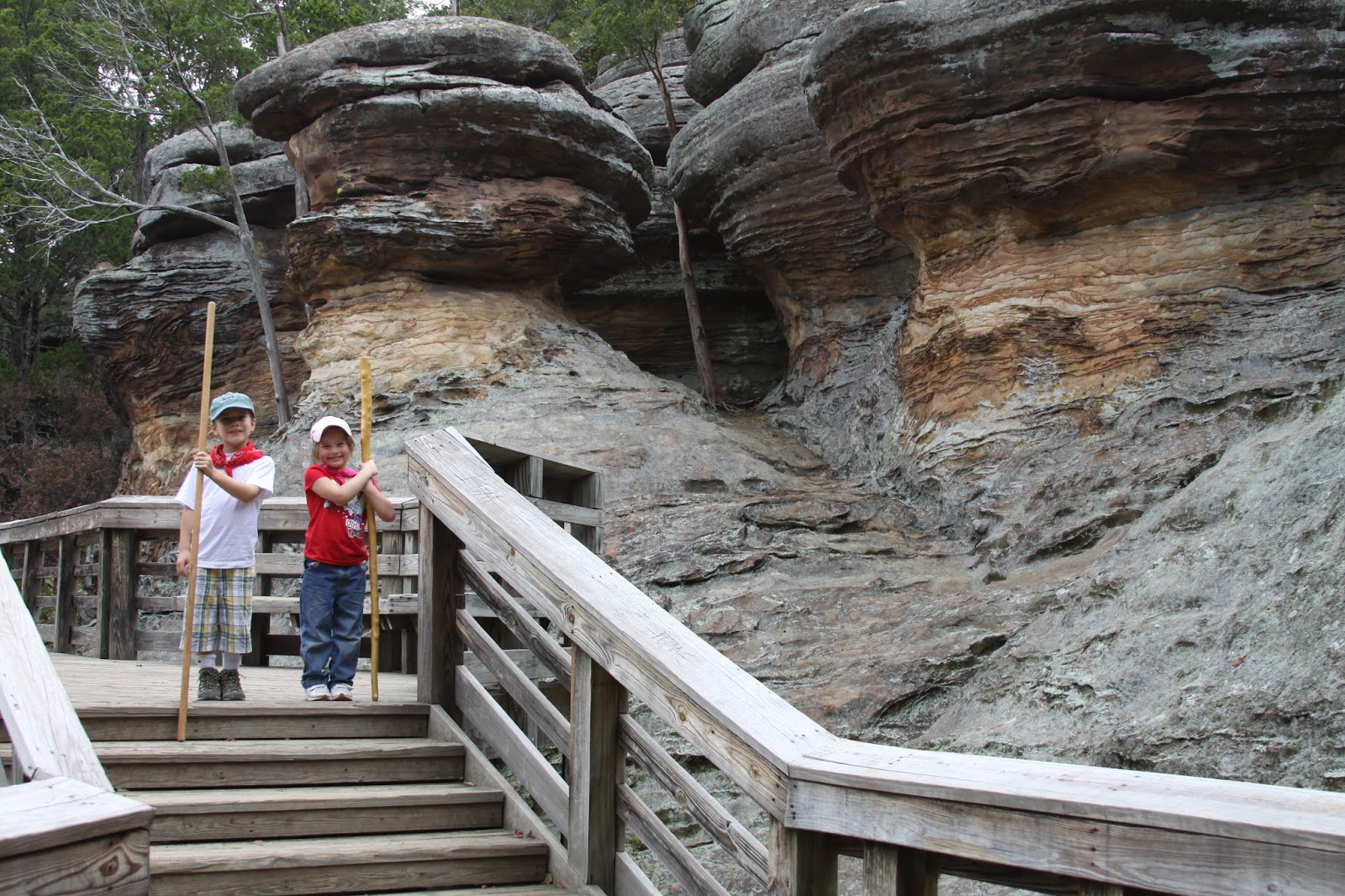
     USA Today lists Illinois Garden of the Gods as the most natural wonder in the state according to it's article "The most beautiful natural wonder in every state, from Lake Tahoe to Niagara Falls."  It's taken over 320 million years to sculpt the beauty of the Garden of the Gods State Park in Hebron, IL (not to be confused with Garden of the Gods in Colorado).  Take a day to visit Shawnee National Forest.  Enjoy the panoramic views and appreciate the geology. 


     According to the University of Illinois Institute of Natural Resource Sustainability Illinois State Geological Survey, Garden of the Gods park in IL is one of the most geographically complex areas of Illinois.  Bring water and snacks for the car ride and use the restrooms ahead.  You'll only find pit toilets at the park, even in the campground.
For edutainment, hike the easy 0.25 mile Observation Trail.  When described as easy, this does not mean safe - there's no rails and rocks can be slippery.  Described as an interpretive trail, the trail includes history and geology informational signs.


The "Bizzare Bands" sign helped explain the geology:  "Bizarre Bands.  The dark, reddish-brown swirls and rings on these rocks are called liesegang bands (pronounced L EE' ZEH GANG) named after German chemist Raphael Liesegang.  Long ago when this sandstone was underground, it was saturated with groundwater mixed with iron.  Chemical changes caused the iron to solidify as rust between the rock particles.  Held together by iron, the raised dark bands have resisted weathering as compared to the softer, light-colored rock.  the pattern of bands are the result of these chemical changes.


6.04.2015

Gym Class #5: Kids Sailing Camps from High to Lower Cost

Hoofer Sailing Club

UW Madison, Photo by Krenda
Before classes at University of Wisconsin Madison even begun, I took the Hoofer sailing club up for a deal to sail for free as part of orientation.  Not only did I love the sport, I met lifelong friends.  Now when strolling outside Memorial Union, I always admire the sailboats and imagine having a little more time to sail on the water.

Sailing may seem unobtainable for kids to begin due to lesson prices.  I've done a bit of research for you to show that sailing can cost thousands of dollars to begin, but it does not have to be so expensive.  Look beyond the yacht club and search park programs or YMCA camps.  In descending order from most to least expensive, here's eleven options:

1.  Adriondack Camp (Putnam Station, NY) offers a diverse sailboat fleet including Mercury Sloop, Capri Sloop, Lasers, Sunfish, JV Sloop, Classic 420, and 6 Flying Juniors; 2 week session $4,600

2.  Coral Reef Yacht Club (Miami, FL) teaches 8 to 17 year olds $750

3.  Coconut Grove Sailing Club (Miami, FL), learn how to rig, launch a boat, basic knots, and develop wind awareness; age 6-17 9AM-4PM $600

4.  San Diego Yacht Club (San Diego, CA) host of the Junior Olympic festival, fleet of 24 new CFJ sailboats; $590 for Junior Summer sailing

5.  Northwestern University Sailing Center (Chicago, IL), 420s and lasers, 9AM-noon $575

6.  Premier Sailing (The Tides, Irvington, VA), founded in 1998 by Irish sailors, one week young sailors course for age 6-17 $445

7.  Sail Sand Point (Seattle, WA), non-profit community boating center, separated by age such as youth beginner (8-12 year olds), teen beginner (12-17 yr olds) $410; same pricing at the Corinthian Yacht Club in Seattle

8.  The Watersports Camp (San Diego, CA), sponsored by the YMCA, basic sailing morning camp and option to upgrade to afternoon activity for only $50 incremental; $370

9.  St. Petersburg sailing (Florida), Learn to Sail Camp for age 7 to 12 teaches rigging, steering, and maneuvering around docks 8:30-4:30PM; $321

10.  Sail Buffalo Sailing School (Buffalo, NY), Junior Sailing Camp Nautical Day Camp 9AM-4PM age 8 to 18; full week $294

11.  Hoofer Youth Program (UW Madison, Madison, WI); sailing day camp 10AM-4PM or beginner racing (3 hours) for $265; also offers windsurfing lessons

12.  Wilmette Park (Chicago suburbs, IL) group sailing lessons age 9-15, 8 lessons 12:30-2:30 or 3-5PM, learn on Lake Michigan; 12 students max. per class; $196 each

Before the kids begin lessons, give them a head start by teaching them the terms:  rudder, centerboard, tack, stern, boom, head mast, jib, jibstay, jibsheet, bow, etc.

5.29.2015

Gym Class #4: 7 Top Fishing Spots in the US

Our Catch, Photo by Krenda
Wanting to share nature and sports with your kids? It's time to go fishing.
Fish, so graceful, you can get hypnotized watching them swim back and forth.  When your kids catch one, that's when peace turns to excitement.

You can go to a top destination, but we've found the local parks to provide plenty of excitement for beginners.  Check out license requirements.  Our kids caught this fish at the Voice of America pond in West Chester, Ohio.

When my kids got older, my dad bought a fishing boat to use in his pond in the photo below.   The kids relived the rush of catching a fish.

Tips
-Safety first.  Talk about fishing hooks.
-Go early, avoid the heat of the day.  Bring sunscreen & hats.

If you want to make the experience more memorable, plan ahead to include fishing in a trip.  The US and nearby islands are known for quality fishing.  According to americasbestonline.net, here's 7 places included in their Best Fishing Holes in the USA:
1.  King Salmon Fishing in Alaska:  look for youth only fisheries (anglers age 15 or younger) - Campbell Creek in Anchorage, AK (Sat. in June), and Seward King Salmon Fishery (specific dates)
2.  Salt Water Fishing in the Florida Keys
3.  Trout fishing in Yellowstone National Park
4. Tarpon Adventures of Galveston
5.  Rogue River Wilderness Adventures - Oregon
6. Montana Fishing and Fly Fishing
7.  Lake Sinclair

 -Set expectations or plan for higher odds.  When kids don't catch any fish, anticipate the disappointment.  It's happened to our family - rent a fishing boat at the park, but catch nothing.  Another time we planned ahead.  We made the extra effort to drive to a paid fishing pond/restaurant near the Smoky Mountains and the sure catch was a big hit.  See my cabin rental blog www.lightningbuglodge.blogspot.com

4.04.2015

Geography #3: Belize and Cave Tubing Adventure

My husband and I had an amazing jungle river boat tour in Belize while I was pregnant with our second child.  Our fearless guide took the boat right up to a crocodile leaping into the air and splashing back into the water.  Our guide pulled  the boat close to shore, so we could see the giant iguanas hanging from the trees.  Our guide enthusiastically insisted we all need to move to Belize, really not that dangerous of a country.  We bought wooden bowls and vases at a local market in the jungle.  Our items wrapped in newspaper gave us reading material on the bus including the story of a foreigner murdered yesterday.  
Sharing the photographs would have been amazing...except my husband left the camera memory card in the Norwegian cruise ship room safe.  We had to return to Belize someday.  Who would know how to top such experience?  Pauline Frommer!  The award-winning travel writer would speak at the Chicago Travel and Adventure Show.  So I asked Pauline and she quickly replied that we must take the family cave tubing!
Not too many places offer cave tubing.  However, Belize has the largest cave systems in the Americas.  Humans have discovered over 300 caves in Belize and still looking for more.  The Dark Night Three Cave Tubing Adventure Cave Exploration tour takes you to a journey deep into Jaguar Cave.  Jaguar tracks left in the soil led to the cave name.  While I kept my eyes out for jaguars, I had a two surprise.  
Surprise #1 - Friendly Scorpion
The first surprise came after the hour plus bus ride including a bumpy section over a dirt road.  Employees warned us to use the restrooms because the trails had no restroom.  The signs clearly stated not to throw paper in the toilet.  I didn't expect the scorpion crawling out of the wastebasket.  I didn't freak out.  In fact, I waited patiently for the opportunity to photograph him.  I didn't follow the scorpion too long.  It's generally unwise to stalk a venomous animal.  I told my husband about the scorpion and he shrugged.  If your spouse lived in South America for a year and Spain for a year, you can get shrugs.  As if I just told him I saw a fluffy, cute cat or dog.  For goodness sakes, I probably just say a centruroides gracilis, the most common black scorpion in Belize.  

Surprise #2 -Termite-Eating Guide
The second surprise came from our tour guide.  Before you get to tubing, you hike in the rainforest, across wooden bridges, and near towering cliffs.  The caving tour company claimed guides were versed on jungle plants, herbal medicine, and Mayan history.  Boy, our guide more than delivered.  From Mayan descent, his father taught him at a young age how to survive in the thick rainforest.  He seemed to know every plant and animal.  At one point, he stops to show us termites and encourage us try them.  Surprise!  Termites are packed in protein!  You should eat them!  Despite my enthusiasm for protein, I let the guide eat the termites.  The kids really liked our guide as he let the kids climb vines and ask lots of questions.  

Historically the Belize citizens used caves were for sacred rituals and ceremonies and caves could cause fear.  You need not fear the caves.  The guides give you headlamps and it never seemed pitched dark to me.  The Jaguar Cave has enormous 100-foot ceilings.  I think even claustrophobic people would enjoy this cave tubing.  Indian Creek's calm waters let us enjoy the views.  Emerging out of the cave made for a beautiful scene of blue skies, bright blue green water, and green plants surrounding us.  
After all the hiking, we had quite the appetite and so grateful for the local lunch included.  Chicken, stew, and beans brought back good taste and scent memories of visiting Central America.
The neat part of the long bus ride was having the opportunity to see the city, the countryside, and even the above ground cemeteries.  I booked the excursion through the Royal Caribbean cruise.  The cruise traveled to Belize, Honduras, and Mexico.  Read about our dolphin excursions in Honduras in my article "Dolphin Kisses".  Travelers know that you can't just appreciate the destination, you need to appreciate the journey too.  A special thank you to Pauline Frommer, encouraging us to take another adventure.


x