Showing posts sorted by relevance for query snow. Sort by date Show all posts

1.01.2023

Art & Sculpture #3: International Snow Sculpture Championship (Lake Geneva, WI)

What kid doesn't like to play with snow?  When kids go to the beach, they can't wait to sculpt the sand.  Why not try sculpting snow?  You can do more than build a snowman.  If you want to see the professional art, inspire your kids at the International Snow Sculpture Championship in Lake Geneva, Wisconsin.  Lake Geneva has hosted the event for 26 years.
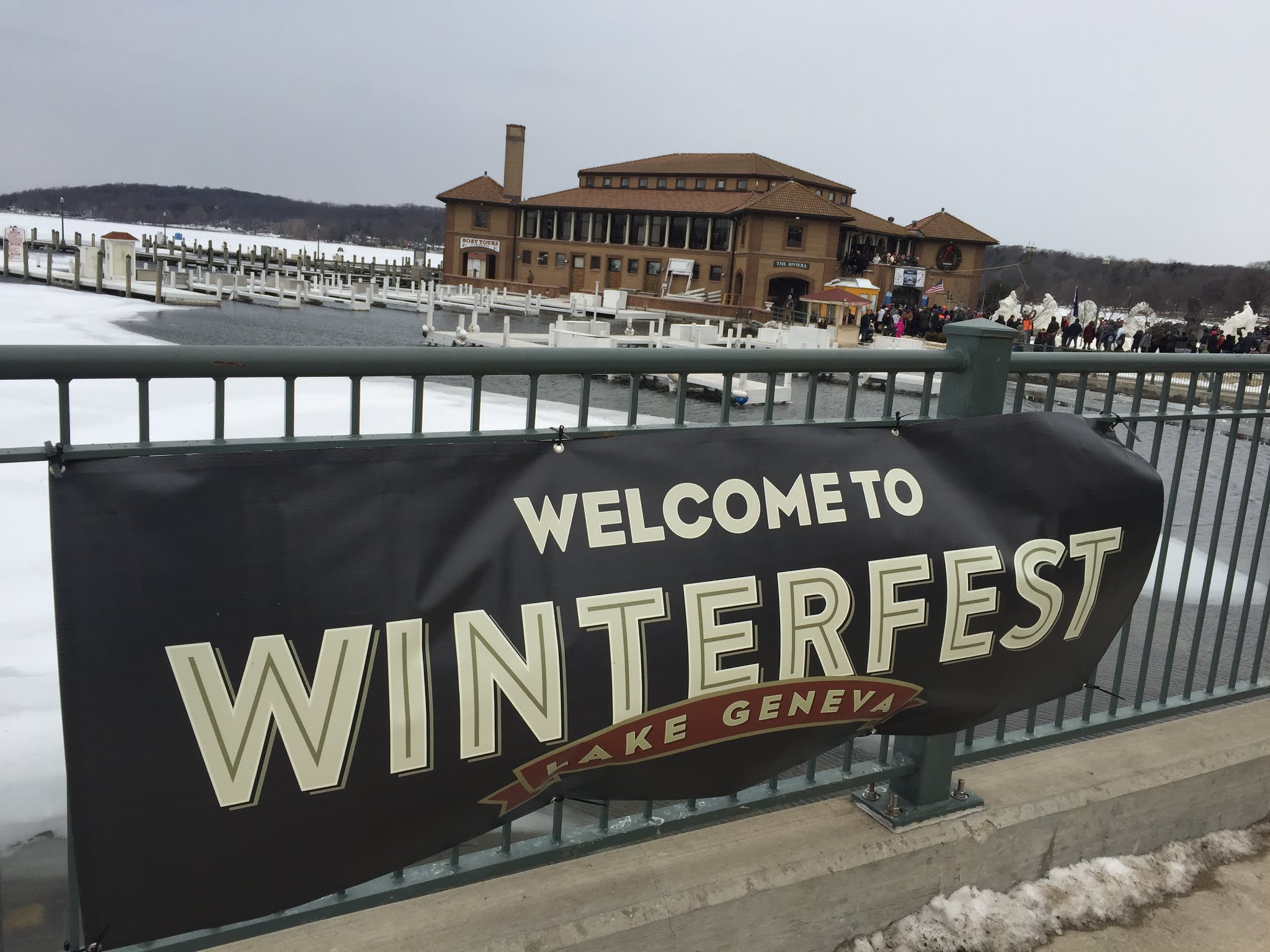
Winterfest in Wisconsin, Photo by Krenda

Sculptors tend to dream a theme, draw it, and begin with a blank 8 feet or 12 feet blocks of snow.  It takes days to create the sculpture.  If you go to the competition early in the festival, you can see their drawings and watch them work with shovels, hand saws, and wooden spoons.  I like to return to see their finished art.  I timed it right to stay for the award ceremony and cheering.

Sculptors hope for quality snow block and the right temperature.  They wish for snow without dirt, ice, or rocks.  They hope for Goldilocks weather, not too frigid and not too warm.  Too cold makes it hard to carve and melting, slushy snow makes it difficult to keep the details crisp.

Some sculptures look so smooth.  Other sculptures so intricate.  Some had humor.  Others tried to convey deep meaning.  With approximately 15 teams and 15 sculptures, everyone strolls along the pathways finding their favorite. 

If you go to Lake Geneva, just pay for parking.  One year people decided to park on the lake, but the lake didn't totally freeze and cars and trucks sank.  With a free event, paid parking doesn't seem too much.

What if you don't live close to Lake Geneva?  Find earlier events, ones that may decide which sculptors participate in the National competition or just bring joy at winter festivals.  Here's seven other snow sculpting events:

1.  Illinois Snow Sculpting Competition - Rockford, IL, Sinnissippi Park, 10 sculptures

2.  Minnesota State Snow Sculpting Competition - St. Paul, Vulcan Snow Park

3.  Wisconsin Snow Sculpting Competition - Fond du Lac, WI, compete and possibly win a trip to the U.S. Championship

4.  Ely's Snow Sculpting Symposium - Ely, MN, Ely's winter Festival at Whiteside Park, lit by candles at nigh

5.  Zehnder's Snowfest - Frankenmuth, Michigan, fireworks every night

6.  Woodstock Flurry - Vermont, state contest, free

7.  Winter Arts Snow Sculpting Festival - Dubuque, Iowa, Washington Park

If you want to go beyond U.S. competitions, consider a trip to Breckenridge, Colorado for the International Snow Sculpture Championships.  Often combined with the Viking inspired week of winter games called Ullr Fest, you can see approximately 16 teams hand-carve 20-ton bricks.

8.27.2016

Mom Blooper: Goat & Grant's Farm

It's time out for another "Mom Blooper".  Travel can lead you to so many adventures, including unexpected ones.  People always joke about the ultimate excuse "the dog ate my homework."  Somehow family travel led me to claiming "the goat ate my daughter's snow cone ticket."

It all starts with a casual family outing to Grant's Farm, a family friendly attraction in St. Louis, MO.  It's a great deal - free admission to the park, free tram ride to tour the deer park, a beer garden with free tastings, and free animal shows.  The Busch family, the family who owned the Anheuser-Busch company, owns 281 acre Grant's Farm.  You can see the famous Clydesdale horses and carriage houses even without the $25 Clydesdale Experience Tour.  The park offers a 1.5 hour estate grounds tour "Estate Tour" for $25, but you can spend much longer just walking the grounds and seeing animals.

In this wonderful land of free fun, there's an opportunity to buy a bundled "fun pass" for only $6.  Here's the beginning of "the goat ate my daughter's snow cone ticket" claim.  The pass includes one carousel ride, two goat feeding bottles, and one snow cone.  Who could pass up such a combination?

My daughter entered the goat feeding area with two bottles and her remaining snow cone ticket.  The goats surrounded her.  I don't think she expected goats trying to eat her skirt while trying to feed another goat.  The snow cone ticket got too close to a goat mouth and we watched in terror as the goat quickly snatched it, chewed it, and swallowed it.  My daughter exclaimed "no one's going to believe that the goat ate my snow cone ticket!"  It's a hot day.  Her cousins and brother still own snow cone tickets.  You know it, mom must approach the window to explain to the compassionate employees the entire ordeal.  The employees didn't seem to phased by the story and gave us a snow cone ticket. Perhaps I should have paid more attention to the "goats can be aggressive" sign, but we had a fun time overall.


4.28.2017

Science Lesson #5: Ice Castles in Wisconsin & 10 Other Places to See Ice Castles

Ice Castles, Photo by Krenda
If you grew up watching Superman and the fantasy of the Fortress of Solitude and then have a daughter who loves Frozen and the magical winter landscapes, you might also dream of Ice Castles.

What began as a dad entertaining his kids in his Utah front yard, Ice Castles is now company providing a magical experience to thousand of visitor in multiple locations (Colorado, Utah, New Hampshire, Wisconsin, and Alberta).  We visited the Ice Castles in Wisconsin Dells.  Later years placed the Wisconsin Ice Castles in Lake Geneva.

The Ice Castles have impressive size with approximately 10,000 icicles, castles over 20 million pounds each, and can stand up to 30 feet high.  It can take approximately six weeks to build.

You can purchase tickets only (approximately $23) or book a hotel package.  We booked the hotel package through Mt. Olympus.  For the Lake Geneva location, check out Geneva National Resort or The Ridge Hotel for packages.

It captured my attention and we spent several hours, walking through the caves and tunnels in awe.  Entry was timed and I chose evening, so we could see the castles illuminated with bright LED lights.  Every area was unique and the artists told us every location and day is unique because the icicles are grown daily and hand placed.  I wasn't the only one smitten by the natural grand architecture and winter playground.  CNN, Travel & Leisure, and Oprah.com featured the event too.  Oprah.com describes the experience as magical too "magical...twinkling and sense-defying and straight out of fairytales."

We spent more time than we had planned.  Ditch the princess gown and crown, wear your warm snowpants and boots with grips.  You'll walk on bumpy paths of crushed and ice snow.  Your kids will see the ice slide and they could wait up to 30 minutes for the unique ride.  Also, take time to ask questions to the employees - they might be the ice artists and they provide more background about the castle construction and ice science.

The Ice Castles LLC made 3 of the 10 sites listed in Fodor's Travel "10 Amazing Ice Castles Around the World" by Annie Bruce (2017).  Here's the full list in case you are fortunate to travel around the world:

1.  Stratton Ice Castle- Stratton Mountain Resort, Vermont

2.  Snow Castle of Kemi - Kemi, Finland, biggest snow fort in the world

3.  Lincoln Ice Castle - Lincoln, New Hampshire

4.  Jungfraujoch Ice Palace - Jungfraujoch, Switzerland, among the highest in the world in the Swiss Alps

5.  Eden Prairie Ice Castles - Eden Prairie, MN

6.  Harbin Ice Festival - Harbin, China, largest ice festival in the world

7.  Saranac Lake Winter Carnival Ice Palace - Saranac Lake, New York, castles as tall as 60 feet high

8.  The Fairmonth Chateau Lake Louise - Lake Louise, Alberta, giant blocks of ice

9.  The White Pines Cottage Resort - Calabogie, Ontario, 800 blocks of ice from Black Donald Lake

10.  Quebec Winter Carnival - Quebec City, Quebec called "Bonhomme's Palace" using 300 tons of ice


4.18.2018

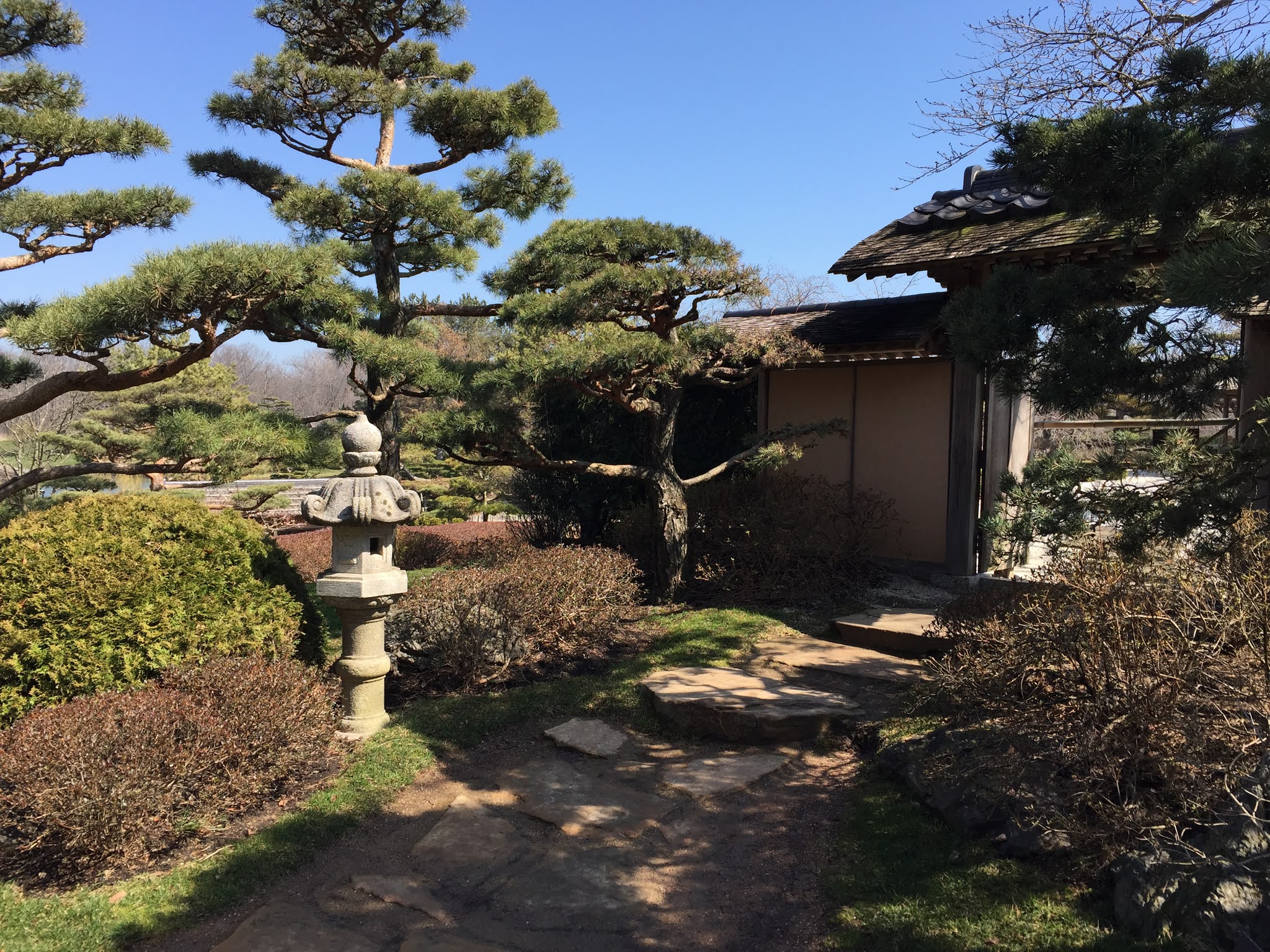
Global Thinking in the USA #3: Chicago Botanic Garden's Japanese Garden


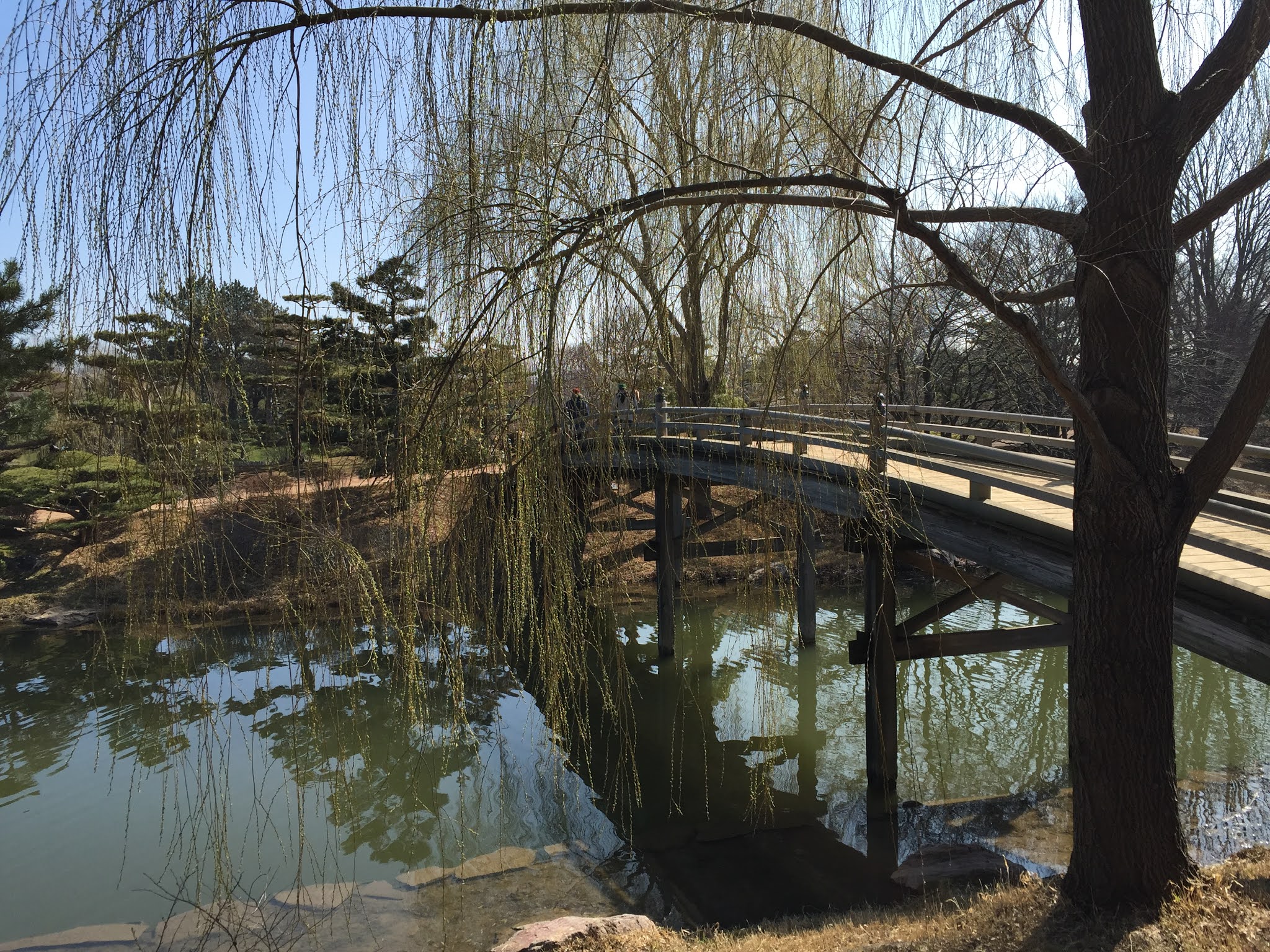
Chicago Botanic Garden, Photo by Krenda
Chicago Botanic Garden in Glencoe, Illinois (Chicago suburb) is a great place for kids to learn about horticulture.  Look on their website for special events.  I've been to the garden multiple times, but I most enjoyed a Girl Scout event that included dividing houseplants and planting the new plant to help earn a badge.  At the end of the event, we had a private tour of the garden including the Elizabeth Hubert Malott Japanese Garden and greenhouses.  The Chicago Botanic Garden is huge with over 27 gardens within 385 acres.  It's no wonder over 1 million people visit annually.  With approximately 50,000 members, it's the largest membership of any U.S. public garden.  Considering the size and diversity, I'll focus on how kids can learn about horticulture and the Japanese culture in the same place.

To get the lay of the land, the Japanese garden has 17 acres and includes three islands:  1) Seifuto (Island of Clear, Pure Breezes), 2) Keiunto (Island of the Auspicious Cloud), and 3) Horaijima (Island of Everlasting Happiness).  The first two island has public accessibility.  You most likely won't have a guide, so I suggest downloading the garden app, so you and your kids can learn the meanings of the sites.  I've taken a short snapshot of the descriptions provided on the website for you:
Stop 1:  The Ken - viewing point where all three islands can be seen at one spot
Stop 2:  The "Waterfall" - plants create nature scene (boxwoods = stones, cotoneaster flowing downhill = flowing water)
Stop 3:  Kasugastone Lantern - name from Kasuga Shrine where there are nearly 1,000 lanterns
Stop 4: Japanese Garden Bridge - link between this world + paradise with an arch representing the difficulty of the path
Stop 5:  Keiunto - most formal of the gardens


Stop 6:  Dry Landscape Garden - smooth gravel represents calm matter, raked rippled patterns represent waves breaking on a shore; peek into the garden from the house


Stop 7:  Arbor - house adapted from a building at Kodai-jiya Koyota temple, built in Japan and assembled in Chicago

Stop 8:  Crouching Basin - tradition to wash hands and rinse mouth before entering teahouse

Stop 9:  Zig Zag Bridge - legend tells story that people can avoid evil spirits by crossing a zigzag bridge because evil spirits believed to move only in a straight line

Stop 10:  Seifuto - stone lantern and grouping of boulders; rocks are thought to be the bones of the earth

Stop 11:  Boat Landing Stones - 2 large granite slabs for an ornamental boat landing

Stop 12:  Dry Garden and Arbor House - smaller dry garden than on Keiunto; notice the water basin and lantern

Stop 13:  Willow - uneven pathway of stones to make you step more deliberate; notice the pruned willow

Stop 14:  Pine Tres - symbols of long life in Japanese culture

Stop 15:  Shoin House:  Recreated garden retreat of an Edo-period feudal lord built in Japan

Stop 16:  Water basin at the Shoin House

Stop 17:  Snow-Viewing Lantern - yukimi lantern built with sturdy legs and broad umbrella, enabling it to bear the snow

Stop 18:  Puryear Point - bridge views and sculptures

The Forest Preserve District of Cook County owns the garden and the Chicago Horticultural Society manages the garden.  There's an agreement for free admission (beyond the $25-$30 parking fee per day) until 2022, so visit now.


9.12.2015

Science Lesson #3: Geology - Salt Mine -Strattaca in Kansas

 Few salt mines allow the public to tour.  There's the Bavaria Mountains and Salt Mines tour in Salzburg, but when I visited Salzburg, I opted for the Mozart tour and The Sound of Music Tour.  Poland has the Wieliczka Salt Mine Tour and Pakistan's Khewra Salt Mines attracts approximately 250,000 visitors per year.  I'm not sure when I'll take my kids to Poland or Pakistan. 

After researching US tours, I found one place - Strattaca, located in Hutchinson, Kansas.  Thanks to the Reno County Historical Society and two companies, the Hutchinson Salt Company and Underground Vaults and Storage company, the Kansas Underground Salt Museum opened to the public in 2007.  It's the only working museum that exists in a working salt mine anywhere in the Western Hemisphere.  Voters named it one of the "Eight Wonders of Kansas" (2008).

Formed 275 million years ago when the Permian Sea dried up, it's one of the largest salt mines in the world and still mined today.  When you descend 650 feet below the prairie surface on an industrial elevator (and our group chose to keep the lights off - cool!!!), you walk out and see the vast space.  It's 300,000 square feet of mined out area.  Ceilings are 10 to 17 feet high.

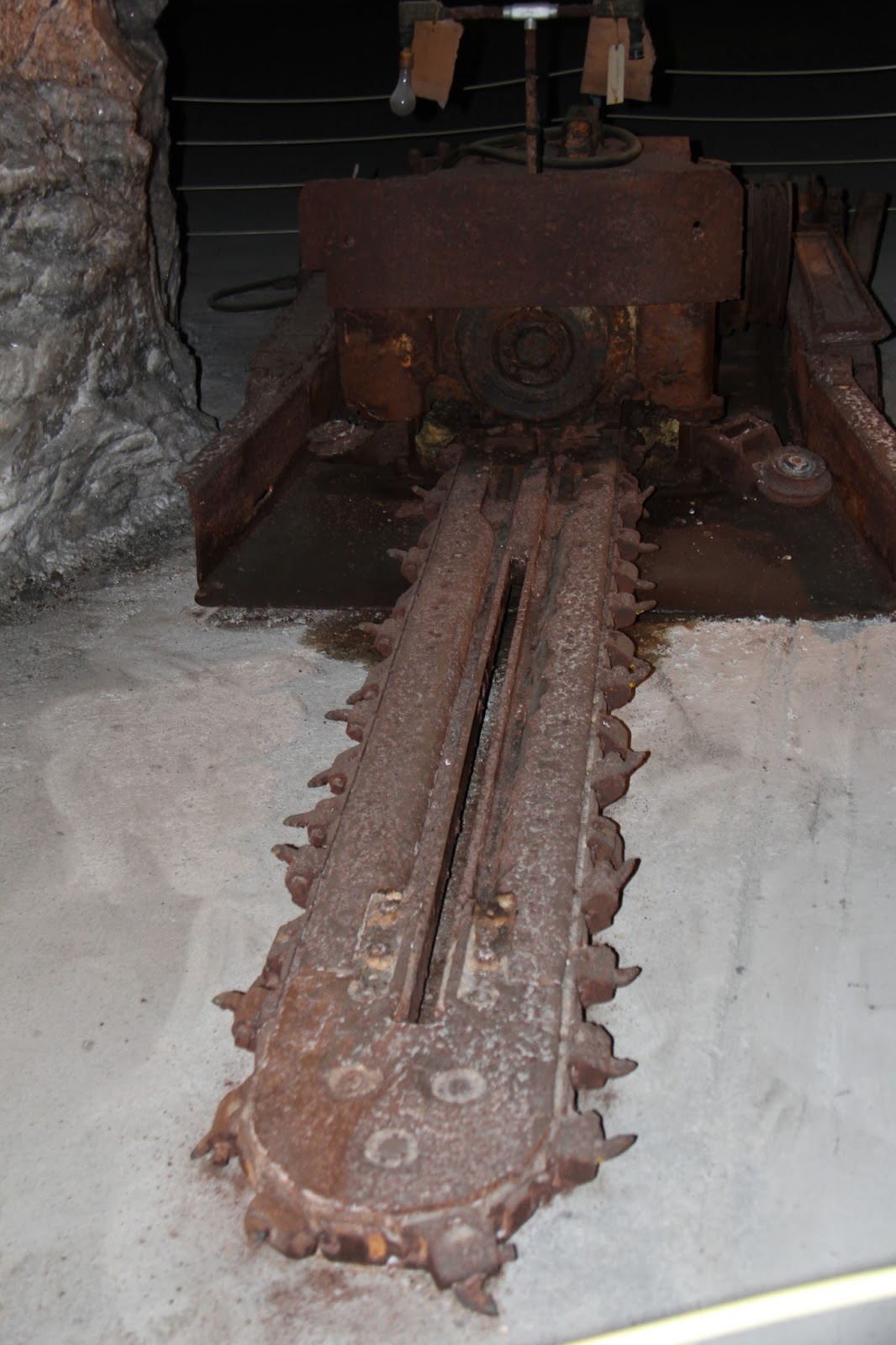
 Kids read every sign in their geology exhibit, listened to short history videos, and checked out the equipment.  As Chicago residents (and people who need to get to work, no matter what the weather), we need to really appreciate this place - it's a source of the salt used to melt the ice and snow on our roads.  The museum fund raises to expand the exhibit. 


We bought the Blast Pass ($19 adult, children $12.50).  Besides admission, you get two tours:  1.  Dark Ride (30 minute tram tour explaining air flow and mine hazards), and 2.  Train Ride (15 min. Salt Mine Express shows the active areas of 1940s and 50s including the garbage that never disintegrated).  Kids tend to love hands on activities, so when the tour gave them a small bag and told them they had a few minutes to pick a piece of salt from a pile, they were excited to find their own souvenir.


The salt mine also serves as a secure storage facility, holding original Hollywood movies and many other documents.  An exhibit explains.

For a real treat, the museum offers special Scout and 4-H overnights.  Boy Scouts may earn their Geology and/or Mining in Society merit badge.


6.09.2018

Transportation Lesson #2: Mail Boat Delivery Jump Tour (Lake Geneva, WI)

Lake Geneva, Photo by Krenda
"Neither snow, nor rain, nor heat...", we all hear about how the United States Post Office employees deliver mail despite bad weather.  We also hear about the many different transportation methods needed throughout history to transport the mail - horse drawn wagons, airplanes, trucks, etc.  There's stories about mail delivered by bush pilots in Alaska and mule train to the Havasupai Indians at the bottom of the Grand Canyon.  To learn more, you can take your kids to the Smithsonian National Postal Museum.  
The museum includes an exhibit about the relationship between mail and our national parks "Trailblazing 100 Years of Our National Parks."

Then I heard about an experiential learning opportunity on CBS News Sunday Morning segment in which Bill Geist describes a timeless place where the arrival of summer is announced by the first mailboat.  In Lake Geneva, Wisconsin, mail still gets delivered by boat daily from June to September.  It began approximately 100 years ago before the government built roads around the lake.  Before the summer season, Gage boat company holds tryouts for mail jumpers who will ride the boat, jump onto the pier, put mail in and out of the mailbox, and jump back on the boat.

You can take your kids on the Gage boat tour "U.S. Mailboat Tour".  The 2.5 hour tour takes you on a cruise around Lake Geneva to watch a mail jumper in action.  He or she delivers the mail to about 75 homes on the lake with approximately 160 tourists watching.  The service continues as a free service.  To watch the action on Wadsworth 11, the only mail jumping boat in the U.S., you'll need to pay $38 for adults and $22 for children.
Our mail jumper had skills.  He'd sprint to the mailbox.  At one point, he had to jump off the boat and put mail in an entire row of mailboxes, run about a mile, and time it right to jump back on the moving boat.  He really showed off by jumping off a dock and then doing a cartwheel before placing mail into the box.  Everyone cheered for him.  The residents also seem to enjoy the service.  Some would sit on their pier in big wooden chairs waiting for the mail delivery and waving to the tourists.  Another resident waited by his box for a hand delivery.
Besides the entertainment, the boat emcee provides history lessons about the mansions surrounding the lakes and the famous business families like Wrigley owning them.

Today email works fast.  But think about the years of news delivered by the mailman.  Letters from soldiers, love letters, holiday cards, postcards giving you a glimpse of a place far away.  I still find joy in sending and receiving postcards.  Thanks to the U.S. Postal Service employees for delivering through difficult weather or taking a risk to fall in the lake so residents can open a envelope of joy.