Showing posts with label education. Show all posts

1.02.2021

NPS #11: Ulysses S. Grant National Historic Site in St. Louis, Missouri

Ulysses S. Grant Home
When you think of National Park Service (NPS) operated sites within or near St. Louis, you likely think of The Gateway Arch.  Build in extra time for another site near the city - the Ulysses S Grant National Historic Site, also operated by NPS.  Ulysses S. Grant was known as a victorious Civil War general who saved the Union and the 18th President of the United States, serving two terms.  Grant's military career helped him find his love on a plantation called the White Haven.  Grant's former West Point roommate, Frederick T. Dent, invited him to the 850 acre plantation.  It's where Grant met Fred's sister Julia.

Taking the tour
After serving in the Mexican-American War, Grant returned to marry Julia.  You can step onto the porch where he proposed.  Grant lived with his wife Julia and their four children, Julia's parents and siblings, and enslaved African Americans who lived in separate cabins in the 1850s.  They also worked on the farm, growing fruits and vegetables.  The home has been many shades from beige to gray to green to white and returned to green, the color chosen by the Grant family.  Green was a popular color during the Victorian Era.
Photo by Krenda

President Abraham Lincoln appointed Grant as Commanding General of the U.S. Army.  After the Civil War, the Grants began purchasing the property and had a dream of making it a horse-breeding operation.  Julia was an equestrian, enjoyed nature, and had fond memories of the home.  

Time your visit right for a guided tour (offered every 30 minutes or hour), the only way to enter the home.  Budget approximately 45 minutes for the tour.  After the official tour, you can also see the other remaining structures which include the ice house, chicken house, summer kitchen, and horse stable.  It's the horse stable where you will find the park museum with multiple exhibits.  Before or after the tour, consider learning more through a 22-minute orientation film.

Years prior we had also learned about Grant by visiting Grant's birthplace in Point Pleasant, Ohio (located Southeast of Cincinnati).  It's operated locally and admission is only $3.  The house was donated to the State of Ohio and the state invested over a million dollars to restore the house in 2013.  Nearby, you will also see his schoolhouse.  In his later years, Grant lived in New York.  Grant Cottage in Mt. McGregor, New York is a national historic landmark and you can tour for $9.


8.07.2020

Art Lesson #13: Six Giant Troll Statues at Morton Arboretum

The Six Forgotten Giants in Copenhagen, Denmark, designed by artist Thomas Dambo, is celebrated art in Europe.  Travel is restricted to Europe, but you can find the artist's work in the United States.  The Morton Arboretum in Lisle, Illinois is home to Thomas Dambo's first large-scale exhibit in the United States.  Since Thomas is known for using recycled materials and promoting sustainability, it's fitting that an arboretum combines such art with nature.

I've visited the Morton Arboretum before the pandemic.  My friend had a membership and invited me to Passport Europe Festival one September afternoon.  The festival is so big that the event holds multiple stages simultaneously.  You have to choose between dancing and musical performances.  Often lots of audience interaction, joy, and laughter.  My friend certainly giggled when successfully volunteering me to learn Polish dancing in front of an audience.  I was so impressed with the park.  It's much larger than I expected.  I later learned it covers 1,700 acres and has 222,000 live plants combined with scientific research, making it internationally known.

During the pandemic, it's still a great place to visit.  The crowd is limited by timed-entry with non-refundable tickets.  With such wide, open spaces, social distancing feels so easy.  While more expensive than local or state parks ($15 per adult, $10 child ages 2-17), you also contribute to a great cause.  Joy Morton, son of the founder of Arbor Day and founder of Morton Salt Company, created the arboretum after studying botanical gardens in Europe.  The non-profit organization collects and studies plants from around the world.  From your ride through the forest, you can visit the East Loop and West Loop and see distinct outdoor exhibits of Asian, European, and North American Collections.

Tip #1:  Use the App to Help Find the Six Giant Trolls

Without the map, it could be a challenge to find all six trolls, some hidden in the woods after a trail.  Even with the map and signs with arrows, it still feels like a hunt.

Tip #2:  Drive the Troll Hunt

If you don't drive, finding the trolls would take a six to seven mile hike.  From a parking lot, the hike does not feel strenuous.  It takes a two feet to three-quarters of a mile hike from the nearest parking lot.  You'll still get your family moving.  One hike took you up a hill and you could look over both the arboretum and the highway, along with the super tall troll.  Rocky Bardur:  visible from road, easy walk from parking lot #1

Tip #3:  Plan for a Couple Hours

Once we started the hunt, my daughter insisted we find all six sculptures.  Kids enjoy finding the cute trolls and parents admire the details of reclaimed wood with different natural colors, twigs, and pincones combining for character.  Due to the pandemic, trolls are now fenced off.  You can still get great photos of Rocky Bardur, Sneaky Socks Alexa, Joe the Guardian, Furry Ema, Niels Bragger, and Little Arturs.  I've placed Destination Asia Festival my wish list for post-pandemic entertainment in August.  Culture, nature, and art come together at the Morton Arboretum.

7.13.2020

Transportation Lesson #6: Ticket to Ride, Lebanon Ohio & 9 Train Rides

Depot, Photo by Krenda
Games, geography, history, and trains.  You can combine them for your kids.  Kids love trains, so you'll have a hit.  Bring in the edutainment, starting with the game Ticket to Ride.  This board game for kids 8 sets the scene of a 1900 adventure.  The game requires strategy as you choose routes across the US, completing trips and competing for longest route.  It's rated 5/5 stars on Amazon and while you play on the map board game, the kids will likely learn geography, searching for cities.  Credit to my brother-in-law for introducing us to the US Ticket to Ride game.  When my son got older, my sister bought him Ticket to Ride Europe, a bit more complicated with tunnels and stations.


For parents with kids under 8, you may jump to train activity #2:  take a train ride!  My friend from Atlanta visited us in Ohio and we bought tickets for the LM&M, Lebanon, Mason, & Monroe train.  Most trips include a history lesson, explaining that the locomotive CNRY is one of the oldest GP& locomotives still operating and the coaches 101-104 were built in 1931.  You can get outside to view the countryside because the train includes an open car built in 1934 as a freight gondola.  This special excursion brought history to life by acting out a train robbery.

Facts:
Typical tickets cost $13 adult, $8 children.  Themed outings at a premium:
-Fall: Harvest Flyer adults $19, kids $16
-Winter: The North Pole Express including the reading of The Polar Express book cost $20.50 adults, $15.50 for kids.
 http://lebanonrr.com/


Here's 9 other train trips to consider:
1.  Durango & Silverton Train - Colorado - 45 miles narrow gauge railroad takes you through the San Juan National Forest, originally built to carry gold and silver down from the peaks; my friend got married on the enclosed Prospector Car; enjoy the beautiful mountain views, $85 adults, $51 kids

2.  Heber Valley Railroad - Utah - Heber Valley & Provo Canyon, steam and diesel trains, adventure outings take you to whitewater rafting


3.  Thunder Mountain Line - Horseshoe Bend, Idaho - ride along the Payette River & thru the Boise National Forest, explore gold mining exhibit in Banks


4.  Mount Washington Cog Railway - Marshfield Station, NH - 3 miles up the steepest railroad tracks in North America to get to views of New Hampshire, Maine, and Vermont; kids $39, Adults $69


5.  Strasburg Railroad - Ronks, PA - coal burning steam train thru countryside and Amish area, look for special outing Day Out with Thomas


6.  Virginia & Truckee Railroad - NV - 90 min. ride from Carson City to Virginia City, pass thru tunnels and near cemeteries and abandoned mines


7.  Grand Canyon Railway - Williams, AZ - ride through desert and mountains to reach the Grand Canyons South Rim


8.  Cass Scenic Railway - Cass, WV - 11 mile journey within the state park includes a steep incline and great views of the mill town Cass


9.  Great Smoky Mountain Railroad - Tuckasegee River Excursion - Bryson City, NC - 32 miles through railroad towns and meadows.  Check if special for kids free with paying adult on Tue. is offered. 


11.03.2019

Art Lesson #11: Salvador Dali Museum in St. Petersburg Florida

Salvador Dali Museum, Photo by Krenda
Before you even enter the Salvador Dali Museum in St. Petersburg, Florida, you are looking at art.  The 75 foot tall building built in 2011 has a geodesic glass bubble known as the "enigma".  Ask your kids to guess the number of triangles! Answer equals 1,062.  With gardens and a waterfront location on Tampa Bay, it's a nice place to stroll too.  With the long line to enter the museum, I was glad we had architecture and nature to admire.  Entry fee is $25 adults, $10 kids age 6-12.  Time it right for discounted Thursday after 5PM ($12.50 adults, $8 kids).  The evening also gives you a cool interior lighted view.

Go to the third floor for a cool view over the garden and waterfront and admire the helical staircase celebrating spirals too.  While I have a preference from Impressionist art, this museum boasts of having the most Dali masterworks in any one location, 8 of the 18 masterworks.  The museum also impresses you with the breadth of Salvador Dali art with landscapes, portraits, still lifes, and religious paintings.  Totaling over 2,400 works by Dali, you should budget a few hours.  Patricia Schultz's book 1,000 Places to See Before You Die breaks down the articles, "Today the museum's collection encompasses works from every major period of Dali's long career, spanning the years 1917 through 1976 including 95 oil paintings; more than 100 watercolors and drawings, 1,300 sketches, sculptures, photographs and objects d'art: and a large archival library.

The kids surprised me at the amount of attention that they paid to each painting.  I think the Dali app with history stories really helped them understand the significance.  During high school, I studied Dali prior to being an exchange student to Spain.  Dali grew up in Figueras Spain, studied in Barcelona and Madrid, and became the world's best known Surrealist painter.  Surrealists, inspired by Sigmund Freud, explore subconscious images.  They can place common place objects in juxtaposed or deformed positions, use optical illusions, and symbolisms.  Some paintings had big crowds and others had peace.  Many gathered and stared at The Hallucingenic Toreador, inspired by Dali's wife's dislike for bullfighting.

We had the fortune of visiting while the museum also offered the Dali & Schiaparelli Paris special exhibition.  As a friend, Dali influenced fashion designer Elisa Schiaparelli (1890-1973).  Elsa was born in Rome, Italy and lived in the UK, France, and United States and became one of the most prominent figures in fashion between the two World Wars.  Challenging the status quo, she used dream-based designs, imagery, fantasy, vibrant colors, experimental fabrics, and handmade decorations.  Some described her art as elegant, brazen, and unrestrained.  The exhibit featured haute couture gowns and new designs by Bertrand Guyon for Maison Schiaparelli.  


4.17.2019

Thinking Global in the USA #5: Korean Friendship Bell (San Pedro California)

Korean Friendship Bell, Photo by Krenda
Viewed by some Koreans as the West Coast Statue of Liberty, the Korean Friendship Bell in San Pedro California is a good place to talk to kids about the friendship between Korean and the United States. Korean bells were believed to have the power to restore peace.  It is fitting that the Korean Friendship Bell has an inscription "May this bell ring and sound forth the hope and resolve of our two nations in their common devotion to enduring prosperity, liberty, and peace."

The bell sits within a beautiful pavilion in a grassy area overlooking the Pacific Ocean and giving you a view of the Los Angeles harbor.  Drive to the Angel Gate Park in San Pedro.  You'll notice two totem poles with the artist name Jong-heung Kim.  After visiting, it inspired me to learn more.  Jong-heung Kim is a traditional Korean Totem Pole Master.  He presented his work to Queen Elizabeth II, President Bush, and President George W. Bush.  Korean traditional totem poles were meant to protect Korean villages against evil spirits or other disasters.  They don't tell stories, but also meant to bring good fortune.  One male with description 'Great General Under Heaven' and 'Great General Under Earth' make the park even more interesting.

The pagoda-like structure housing the bell was constructed by craftsmen in Korea.  The 12 columns represent the 12 designs of the Oriental Zodiac.  In 1976, both the pavilion and the bell were given to the people of Los Angeles from Korea for the U.S. Bicentennial.  By 1978, the bell was declared a Los Angeles Historic Monument.  The United States now has the second-largest Korean population living outside Korea.  China ranks #1.  Within the US, Los Angeles area has the highest population of Korean Americans, followed by New York City area.

When you approach the Belfry of Friendship Pavilion, the bell size will impress you at 7 feet high, 7.5 feet in diameter, and 17 tons in weight.  Patterned after the Bronze Bell of King Sondok which was cast in 1771 A.D, these bells are among the largest bells in the world.  In comparison, there's only one Korean Bell Pavilion on the East Coast, Korean Bell Garden in Virginia, and it weighs 3 tons.  The bell structure goes straight down versus curving outward and is rung by a log.  If you want to see the bell rung, you need to choose your visit to specific dates - 1) US Independence Day (July 4th), 2) National Liberation Day of Korea (August 15th), 3) New Year's Eve, 4) Constitution Week (September 17th), and Korean-American Day (January 13th).

Visiting this site won't take the entire day, so visit the nearby Marine Mammal Care Center and Point Fermin Lighthouse too.


3.16.2019

Transportation Lesson #3: Endeavour & 3 Other Space Shuttle Sites

Endeavour, Photo by Krenda

Space is an exciting subject for kids, opening up the imagination and wonder.  To make it more real, take your kids to see a retired space shuttle.  We visited the California Space Center in Los Angeles California to see the Endeavor space shuttle.  It had quite the media attention when flown from Florida to California and then moved through the streets of Los Angeles with 1.5 million spectators.  If you are too young to recall the news, you can see video at the museum.  Imagine the preparation to move a 78 foot wide, 57 food high, and 122 foot long shuttle.  When you enter the Samuel Oschin Pavilion on the property, the numbers become real and you feel awe at the size and mission.  I found it really cool to walk underneath and be so close.  Close enough to touch, but you can't touch.  Just take photos and listen to the stories of volunteers.  The volunteers were so kind to answer my curious kids numerous questions.
California Space Station

Endeavor sounds like an inspirational name coming from the dictionary, using the meaning "try hard to do or achieve something" or "an attempt to achieve a goal".  From research, I was surprised that the name actually came from a contest won by school children.  The contest required the name to come from an exploratory or research vessel.  Endeavor name came from a ship chartered to explore the South Pacific.  Explorer James Cook and crew had sailed to observe the transit of Venus at Tahiti.

The government authorized Endeavor's construction, the fifth Space Shuttle orbiter, as a replacement for Challenger in 1987.  It served from 1992 to 2011, completing 25 missions and spending 299 days in space.  Endeavor made the first service mission to the Hubble Space Telescope and also worked on the International Space Station.With the arrival to the California Space Center and the restoration on the External Tank (ET), the center will be the only place in the world where you can see a complete shuttle stack - orbiter, external tank (like the "gas tank"), and solid rocket boosters with all real flight hardware in launch configuration.  When visiting the museum, plan for plenty of time to see the multiple exhibits. 

The museum's main building also recognizes other firsts.  It has a full-scale engineering model of Casseni spacecraft and Huygens probes, teaching about the first spacecraft ever to orbit Saturn.  A full-scale engineering model of the Viking Lander is on display, celebrating the first U.S. spaceship ever to land on Mars.  You'll see the Wright Glider replica, recognizing the first successful heavier-than-air powered aircraft.  

Giant Kelp Forest
This museum has more than transportation science exhibits.  Check out their ecosystems extreme zones including the giant kelp forest in a 188,000 gallon tank with sharks, eels, fish and a diver twice a day answering audience questions.  You can also purchase tickets for an IMAX movie.
Unfortunately the Challenger and Columbia space shuttles were completely destroyed during missions.  However, you can visit three other retired space shuttles:

1.  Space Shuttle Enterprise (1977-2012) - Intrepid Sea, Air, & Space Museum - New York $33

2.  Discovery (1984 -2011) - National Air and Space Museum, free

3.  Atlantis (1985-2011) - Kennedy Space Center Visitor Complex, Cape Canaveral, Florida $57


8.04.2018

World of Difference #2: Best Friends Animal Sanctuary

Years working in the pet industry made me especially enthusiastic about helping pet adoption.  I looked forward to our volunteer day every year.  The entire office team worked together to upgrade an adoption facility.  Lots of heavy lifting, planting, and painting and everyone left on the bus with a smile.

The National Geographic book 100 Best Affordable Vacations lists volunteer work as a vacation idea.  In the section "nurture the big cats", the author highlights Best Friends animal sanctuary, "The country's biggest no-kill sanctuary, Best Friends of Kanab, Utah, welcomed volunteers to work with it's dogs, cats, horses, waterfowl, pigs, parrots, and rabbits to name its most common residents.  On an average day, the shelter is home to 2,000 animals, rescued all across the country."  The sanctuary rents cabins at reasonable rates.  We chose to rent a log home offsite and make the sanctuary part of our vacation.  

Due to the popularity, I recommend you plan ahead and understand whether you can schedule volunteer spots ahead.  We lucked out with an extra special tour guide.  As the grandson of the original land owner, he had historical stories to share while driving the mini-van around the site.  He stopped and showed us the key buildings, taking time to introduce us to the animals.  We hit the timing in which well known, televised pitbulls were being rescued.  We cuddled with the cats.  We heard about the onsite cafeteria and so glad we hit lunch timing.  We ate our salad buffet lunch outside on the patio with an amazing view.  Meanwhile, my dad and stepmom ate indoors with a bigger surprise - the founder joined their lunch table!

We had such a great experience, we rearranged our vacation schedule to fit in another afternoon at the sanctuary.  This time we watched the horse demonstration and learned about their training techniques.  By donating financially, we became part of their magazine mailing and every month, we are reminded by the amazing work at the Best Friends animal sanctuary.

8.02.2018

Lighthouse Lesson #9: Assateague Lighthouse in Virginia

Looking for a small workout while traveling and learning with the kids?  Climb the 175 steps of the Assateague Lighthouse in Virginia.  The steep stairs seemed like no challenge going up.  On the way down, the cast-iron spiral staircase challenged a few muscles going down.  Can you imagine the keeper taking oil up on an hourly basis?  Of course, our kids bounded down in fast fashion with seemingly no effort at all.

The view certainly makes the climb worth the effort.  You will get a view of Assateague and Chincoteague Islands and the Atlantic Ocean.  Look up at the light.  The lamp flash every five seconds and still brings safety to vessels between the Atlantic Coast and Cape Henlopen.  A nearby museum exhibits the original Fresnel light.

The view from the ground is also delightful.  The tall red-and-white striped lighthouse looks iconic.  At 142 feet high, the lighthouse is easy to see.  Noah Porter, who also built Ocracoke Lighthouse, constructed the original lighthouse in 1833.  The original stood only 45-feet tall and deemed not effective enough at that height.  The current lighthouse, constructed in 1867, took the light to a higher level.  The lights could then be seen 19 miles out to sea.  The red-and-white painting of the conical lighthouse didn't happen until 1968.

The lighthouse has connections to multiple organizations.  Your $5 fee will help support the lighthouse.  While the Coast Guard transferred the lighthouse to the Fish & Wildlife Service in 2002, the U.S. Coast Guard still maintains the active navigational light.  The Chincoteague National Wildlife Refuse takes responsibility for preserving the lighthouse.  The non-profit Chincoteague National Historic Association restores the lighthouse and makes the lighthouse accessible to the public.  The lighthouse made the National Register of Historic Places list.

You can only tour the lighthouse between April and November.  Check the timing.  While open throughout the week during the summer, visits are limited to weekends in Spring and Fall.  Also, it closes during their lunch hour.  The Old Keepers Quarters moved offsite and not open to the public.


4.18.2018

Global Thinking in the USA #3: Chicago Botanic Garden's Japanese Garden


Chicago Botanic Garden, Photo by Krenda
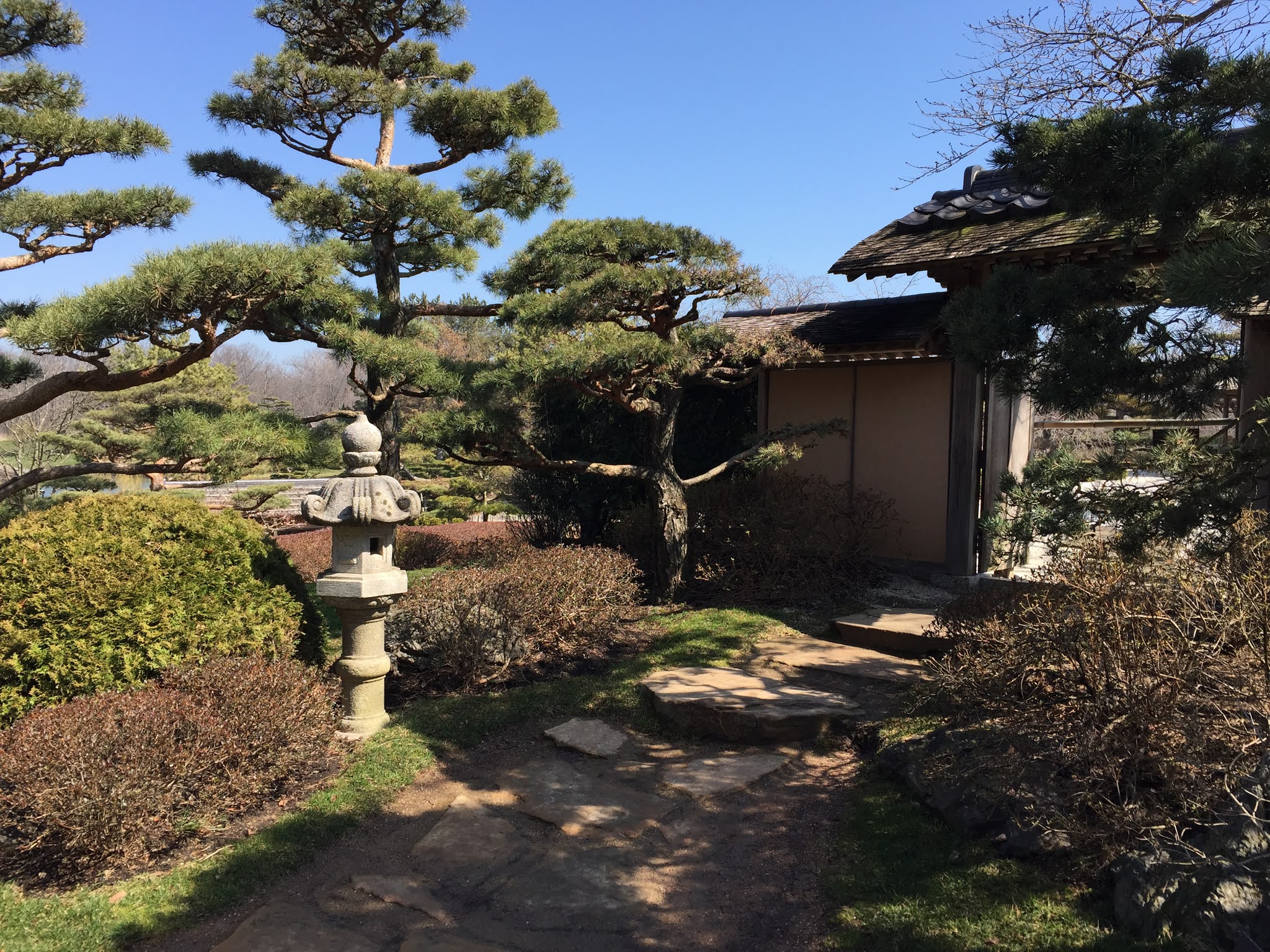
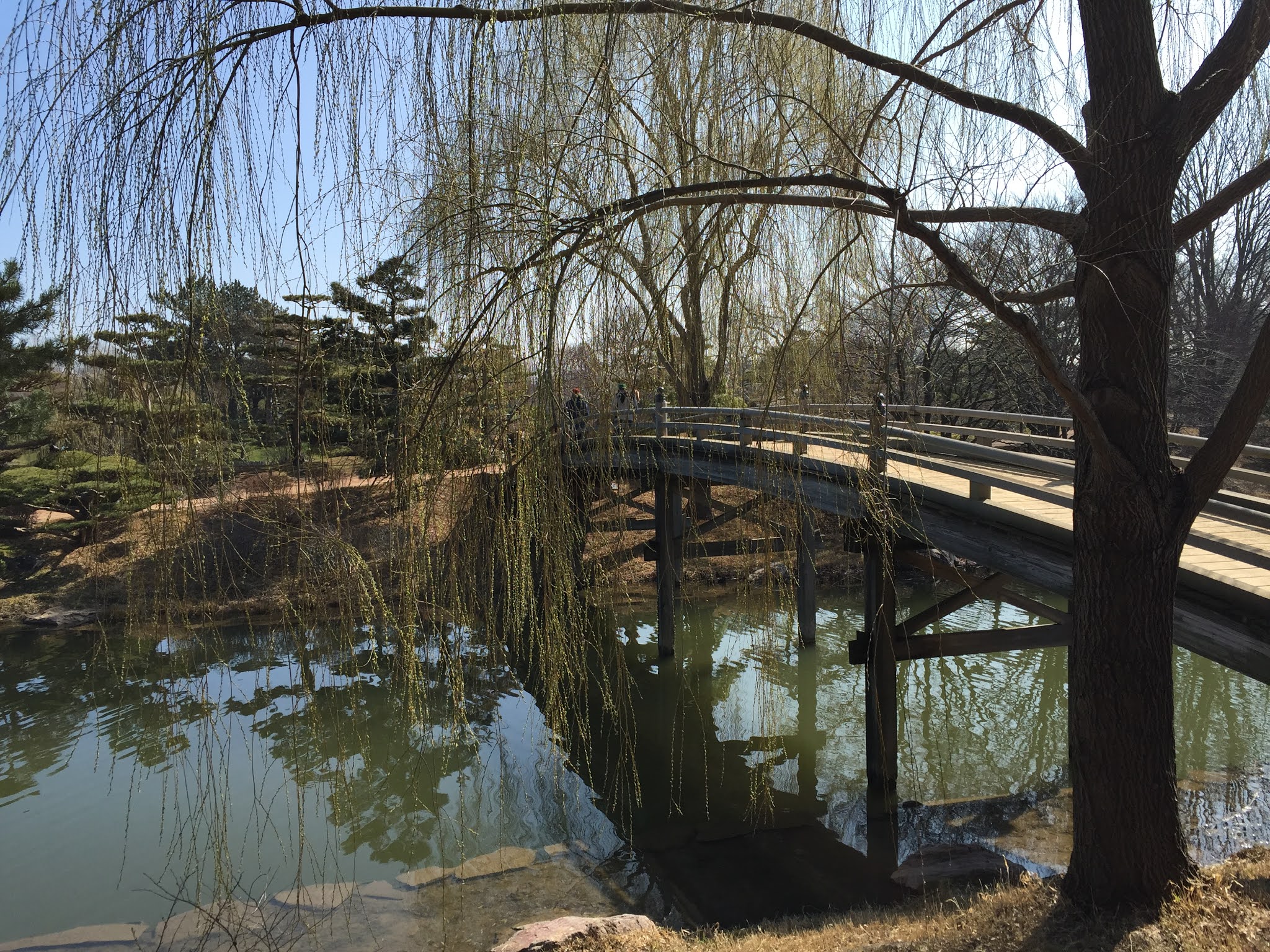
Chicago Botanic Garden in Glencoe, Illinois (Chicago suburb) is a great place for kids to learn about horticulture.  Look on their website for special events.  I've been to the garden multiple times, but I most enjoyed a Girl Scout event that included dividing houseplants and planting the new plant to help earn a badge.  At the end of the event, we had a private tour of the garden including the Elizabeth Hubert Malott Japanese Garden and greenhouses.  The Chicago Botanic Garden is huge with over 27 gardens within 385 acres.  It's no wonder over 1 million people visit annually.  With approximately 50,000 members, it's the largest membership of any U.S. public garden.  Considering the size and diversity, I'll focus on how kids can learn about horticulture and the Japanese culture in the same place.

To get the lay of the land, the Japanese garden has 17 acres and includes three islands:  1) Seifuto (Island of Clear, Pure Breezes), 2) Keiunto (Island of the Auspicious Cloud), and 3) Horaijima (Island of Everlasting Happiness).  The first two island has public accessibility.  You most likely won't have a guide, so I suggest downloading the garden app, so you and your kids can learn the meanings of the sites.  I've taken a short snapshot of the descriptions provided on the website for you:
Stop 1:  The Ken - viewing point where all three islands can be seen at one spot
Stop 2:  The "Waterfall" - plants create nature scene (boxwoods = stones, cotoneaster flowing downhill = flowing water)
Stop 3:  Kasugastone Lantern - name from Kasuga Shrine where there are nearly 1,000 lanterns
Stop 4: Japanese Garden Bridge - link between this world + paradise with an arch representing the difficulty of the path
Stop 5:  Keiunto - most formal of the gardens


Stop 6:  Dry Landscape Garden - smooth gravel represents calm matter, raked rippled patterns represent waves breaking on a shore; peek into the garden from the house


Stop 7:  Arbor - house adapted from a building at Kodai-jiya Koyota temple, built in Japan and assembled in Chicago

Stop 8:  Crouching Basin - tradition to wash hands and rinse mouth before entering teahouse

Stop 9:  Zig Zag Bridge - legend tells story that people can avoid evil spirits by crossing a zigzag bridge because evil spirits believed to move only in a straight line

Stop 10:  Seifuto - stone lantern and grouping of boulders; rocks are thought to be the bones of the earth

Stop 11:  Boat Landing Stones - 2 large granite slabs for an ornamental boat landing

Stop 12:  Dry Garden and Arbor House - smaller dry garden than on Keiunto; notice the water basin and lantern

Stop 13:  Willow - uneven pathway of stones to make you step more deliberate; notice the pruned willow

Stop 14:  Pine Tres - symbols of long life in Japanese culture

Stop 15:  Shoin House:  Recreated garden retreat of an Edo-period feudal lord built in Japan

Stop 16:  Water basin at the Shoin House

Stop 17:  Snow-Viewing Lantern - yukimi lantern built with sturdy legs and broad umbrella, enabling it to bear the snow

Stop 18:  Puryear Point - bridge views and sculptures

The Forest Preserve District of Cook County owns the garden and the Chicago Horticultural Society manages the garden.  There's an agreement for free admission (beyond the $25-$30 parking fee per day) until 2022, so visit now.


11.04.2017

Art Lesson #10: The Getty Museum - Los Angeles, California

The Getty, Photo by Krenda
When you combine stunning art, architecture, and gardens, the beauty amazes the senses.  I recommend you visit The Getty Center in Los Angeles, California.  Patricia Schultz, author of travel book 1,000 Places to See Before You Die, also recommends the site.  She describes the museum as a "futuristic shrine to the art of the past" and describes the buildings "the hilltop citadel is a work of art itself, done in gleaming off-white travertine marble and glass.


You could spend the day just exploring outdoors because of the multiple gardens and beautiful views of the Santa Gabriel mountains, Pacific Ocean, and Los Angeles city.  Everything has a grand scale.  The Central Garden uses 134,000 square-feet to house over 500 varieties of plants.  My photograph shows the Cactus Garden which has quite the view.  Also walk through two sculpture gardens - Lower Terrace Sculpture Garden and The Fran and Ray Stark Sculpture Terrace.

 The buildings within the $1.3 billion Center have such striking, modern lines and curves.  The building itself is art.  From a distance you can tell it has grand scale.  When you take the tram up the hill and immerse yourself in the campus, it is even more impressive.  Architect Richard Meier designed the campus to encompass nature and culture, using 16,000 tons of travertine stone from Tivoli, Italy.  He designed the rooms to let natural light show off the paintings.  You can see it from my photo.  Sunshine outdoors and bright, light rooms make you feel sunny.

Exploring inside could take many visits including four pavilions:

1) North Pavilion - paintings up to 1600, Medieval and Renaissance, sculptures

2) East Pavilion - 17th century Baroque art, including Dutch, French, Flemish, and Spanish

3) South Pavilion - decorative arts and furnished rooms

4) West Pavilion - sculpture and Italian decorative arts and Center for photographs

If you feel pressed for time, don't miss the famous Vincent Van Gogh painting "Irises".  I stayed until the last minute, also providing time to watch the sunset over the city and the campus to light up in the night sky.

Free admission, but you need to consider parking and whether you need to purchase food.  If I visited again, I'd take advantage of their parking special - one fee ($20) for both Getty Center and Getty Villa when visited same day (except Mon. or Tue.) and confirmed at information desk.  I'd begin at the Villa to admire ancient world art, drive to a restaurant for lunch, and drive the 20-45 minutes to Getty Center.   Besides saving on the parking, the timing could save me from expensive museum meals.  Other Getty Center parking deals include $15 after 3PM or $10 after 6PM on Saturday.