Showing posts with label nature. Show all posts

1.08.2022

Geography Lesson #4: Stingray Encounter in Cozumel, Mexico

I've always found stingrays fascinating.  If an aquarium has a stingray exhibit, I know I'll spend extra time just watching their graceful movement.  Often the aquariums will make the stingray section a hands-on exhibit and you can feel their softness.  
Stingrays at Singray Beach, photo by Krenda

Stingrays have existed since the Jurassic period 150 million years ago.  They belong to the cartilaginous fish family like sharks because they have cartilage skeletons rather than bones.  Also similar to sharks, they have Lorenzeni sensors to pick up electrical signals from their prey.  Stingray prey include bivalves, worms, and crustaceans.  The stingray defend themselves with camouflage light colored bellies that reflect the ocean floor, barbs at the base of their tail, and venom.  Stingrays classify as dangerous sea creatures and thousands of injuries occur each year, so pay attention to the safety talks of the experts.  We learned that you should shuffle your feet in the sand, so you don't accidently step on a resting stingray.  Stingrays are bottom dwelling sea animals, bury themselves in sand, and like the shallow warm water.

We took a Spring Break cruise and I felt excitement about the Stingray Beach excursion which allows you to feed stingray in the ocean. In researching the facility, they take care of their animal health, especially watching for healthy babies or 'pups' each year.  The Ray Encounter excursion includes 30 minutes for an educational orientation and feeding.  The employees break the group into smaller groups and you enter a shallow area.  Tourists take turn feeding stingrays, feeling their mouth suck up food.  Kids may even giggle or squeal to feel the stingrays.  One of the stingrays even gave me a kiss.  After the feeding, the excursion includes 30 minutes for snorkeling in the deeper portion of the fenced ocean section.  After the guided snorkeling, the instructor let us stay longer in this section.  At up to 18 feet deep, we enjoyed both observing stingrays and fish.  The kids also liked the inflatable trampoline and the resident iguana.

In the wild, I don't think you'd likely see so many stingray gathered.  Stingray tend to have solitary behavior and then they gather for breeding and migration.  Their dark brown or gray flattened topside and sand burying behavior could make them undetected if not looking carefully.  Plus they are nocturnal.  Many other cruise ports offer stingray experiences including Antigua, Balmoral Islands Bahamas, Discover Cove Jamaica, Shark Alley in Belize, and the most visited stingray city in Cayman Islands.


8.07.2020

Art Lesson #13: Six Giant Troll Statues at Morton Arboretum

The Six Forgotten Giants in Copenhagen, Denmark, designed by artist Thomas Dambo, is celebrated art in Europe.  Travel is restricted to Europe, but you can find the artist's work in the United States.  The Morton Arboretum in Lisle, Illinois is home to Thomas Dambo's first large-scale exhibit in the United States.  Since Thomas is known for using recycled materials and promoting sustainability, it's fitting that an arboretum combines such art with nature.

I've visited the Morton Arboretum before the pandemic.  My friend had a membership and invited me to Passport Europe Festival one September afternoon.  The festival is so big that the event holds multiple stages simultaneously.  You have to choose between dancing and musical performances.  Often lots of audience interaction, joy, and laughter.  My friend certainly giggled when successfully volunteering me to learn Polish dancing in front of an audience.  I was so impressed with the park.  It's much larger than I expected.  I later learned it covers 1,700 acres and has 222,000 live plants combined with scientific research, making it internationally known.

During the pandemic, it's still a great place to visit.  The crowd is limited by timed-entry with non-refundable tickets.  With such wide, open spaces, social distancing feels so easy.  While more expensive than local or state parks ($15 per adult, $10 child ages 2-17), you also contribute to a great cause.  Joy Morton, son of the founder of Arbor Day and founder of Morton Salt Company, created the arboretum after studying botanical gardens in Europe.  The non-profit organization collects and studies plants from around the world.  From your ride through the forest, you can visit the East Loop and West Loop and see distinct outdoor exhibits of Asian, European, and North American Collections.

Tip #1:  Use the App to Help Find the Six Giant Trolls

Without the map, it could be a challenge to find all six trolls, some hidden in the woods after a trail.  Even with the map and signs with arrows, it still feels like a hunt.

Tip #2:  Drive the Troll Hunt

If you don't drive, finding the trolls would take a six to seven mile hike.  From a parking lot, the hike does not feel strenuous.  It takes a two feet to three-quarters of a mile hike from the nearest parking lot.  You'll still get your family moving.  One hike took you up a hill and you could look over both the arboretum and the highway, along with the super tall troll.  Rocky Bardur:  visible from road, easy walk from parking lot #1

Tip #3:  Plan for a Couple Hours

Once we started the hunt, my daughter insisted we find all six sculptures.  Kids enjoy finding the cute trolls and parents admire the details of reclaimed wood with different natural colors, twigs, and pincones combining for character.  Due to the pandemic, trolls are now fenced off.  You can still get great photos of Rocky Bardur, Sneaky Socks Alexa, Joe the Guardian, Furry Ema, Niels Bragger, and Little Arturs.  I've placed Destination Asia Festival my wish list for post-pandemic entertainment in August.  Culture, nature, and art come together at the Morton Arboretum.

9.29.2018

NPS #7: Sleeping Bear Dunes National Lakeshore & 2 Other Dunes


A new environment can make getting outside and exploring fun.  Dunes are a geological wonder enabled by wind.  Diverse in size, the hills and ridges add to the visual wonder.  Did you know Michigan is home to the largest dune system in the world?
 
Let's start with the dunes operated and protected  by the National Park Service (NPS).  The federal government created the national lakeshore in 1970.

Trip One:  At 450 feet above Lake Michigan, our kids enjoyed the challenge of climbing dunes at Sleeping Bear Dunes in Michigan. The book Amazing Places to Take Your Kids puts the size in perspective, "The dunes are among the largest in the world, matched only by those in Colorado, the Sahara, and Saudi Arabia." As a toddler, my daughter didn't go far.  Her bigger brother gleefully ran higher up a dune than her.  She still had fun in the giant sandbox.  We returned with the kids as teenagers and we all enjoyed hiking to breathtaking views.  At the top, we stood in awe with other tourists and the Park Ranger providing stories.  The blue water, the light sand, and surrounding greenery make it a picture perfect spot.
 
Trip Two:  On a later vacation, we visited sand dunes protected by the state park system.  Jockey's Ridge State Park has the tallest sand dunes on the Atlantic Coast.  While located on the Outer Banks, Nags Head, North Carolina, the dunes are not located on the coastline beaches.  Geologists believe hurricanes blew sand inland.  At a height of 80 to 100 feet, my kids, niece, and nephew enjoyed doing cartwheels on the sand.  We enjoyed the beauty of the sunset over the water.

Trip Three:  On our most recent vacation, we sought out another state park with a sand dune.  Coral Pink Sand Dunes State Park in Utah has fabulous salmon pink sand created by iron oxide and minerals.  It comes from Navajo sandstone from the geologic period called Middle Jurassic.  Although the dunes have an estimated age of 10,000 to 15,000 years old, the landscape quickly changes.  The hills can move as much as 50 feet in just one year.  This time my kids, niece, and nephew ran up and down the hills.  Those moving at a slower pace found the rare Coral Pink Sand Dunes tiger beetle, only found within the 500 acres of the Coral Pink Sand Dunes.  Conservationist worry about their extinction.  A 370-acre conservation area was established in which off-roach vehicle use is prohibited.  ATV trails are just beyond the park and you can schedule a guided four-seater tour or be the ATV drive with Coral Pink ATV Tours.

Here's 7 other sand dunes in the United States for your kids to explore:
1.  Juniper Dunes, Washington (WA) for hiking, wire keeps out the off road vehicles (ORV) and motorcycles http://www.wta.org/go-hiking/hikes/juniper-dunes-wilderness

2.  Syracuse Sand Dunes, Kansas for the family into adventure and able to use ORVs http://www.syracusesanddunes.com/

3.  Killpecker, WY, another play zone for ORVs http://www.blm.gov/wy/st/en/field_offices/Rock_Springs/rec/dunes.html

4.  Christmas Valley Sand Dunes, Utah (UT), the largest inland shifting system in the Pacific Northwest http://www.blm.gov/or/resources/recreation/site_info.php?siteid=85

5.  Oregon Dunes, Oregon, if your kids are old enough, the family can go horseback riding on the dunes  http://oregondunes.org/horse-riding.html

6.  Great Sand Dunes National Park, 35 miles north of Alamosa, Colorado (CO), kids can even sled on the dunes  http://www.nps.gov/grsa/planyourvisit/directions.htm

7.  Indiana Dunes National Lakeshore, Indiana (IN)  http://www.nps.gov/indu/forkids/index.htm

We've also been to the Indiana Dunes.  It's also fun for kids, but don't expect perfect scenery...a few smokestakes could be in your horizon.

4.18.2018

Global Thinking in the USA #3: Chicago Botanic Garden's Japanese Garden


Chicago Botanic Garden, Photo by Krenda
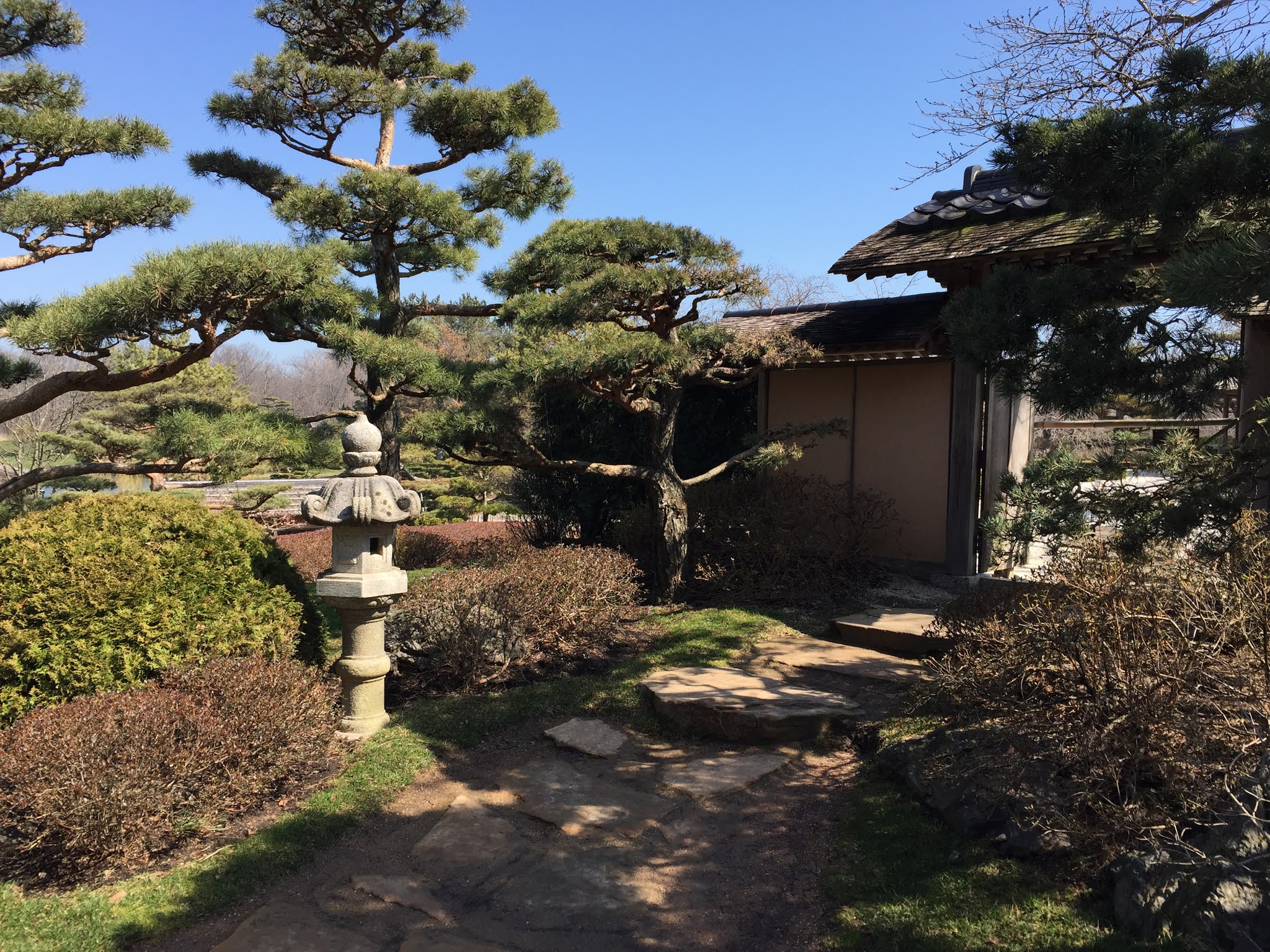
Chicago Botanic Garden in Glencoe, Illinois (Chicago suburb) is a great place for kids to learn about horticulture.  Look on their website for special events.  I've been to the garden multiple times, but I most enjoyed a Girl Scout event that included dividing houseplants and planting the new plant to help earn a badge.  At the end of the event, we had a private tour of the garden including the Elizabeth Hubert Malott Japanese Garden and greenhouses.  The Chicago Botanic Garden is huge with over 27 gardens within 385 acres.  It's no wonder over 1 million people visit annually.  With approximately 50,000 members, it's the largest membership of any U.S. public garden.  Considering the size and diversity, I'll focus on how kids can learn about horticulture and the Japanese culture in the same place.

To get the lay of the land, the Japanese garden has 17 acres and includes three islands:  1) Seifuto (Island of Clear, Pure Breezes), 2) Keiunto (Island of the Auspicious Cloud), and 3) Horaijima (Island of Everlasting Happiness).  The first two island has public accessibility.  You most likely won't have a guide, so I suggest downloading the garden app, so you and your kids can learn the meanings of the sites.  I've taken a short snapshot of the descriptions provided on the website for you:
Stop 1:  The Ken - viewing point where all three islands can be seen at one spot
Stop 2:  The "Waterfall" - plants create nature scene (boxwoods = stones, cotoneaster flowing downhill = flowing water)
Stop 3:  Kasugastone Lantern - name from Kasuga Shrine where there are nearly 1,000 lanterns
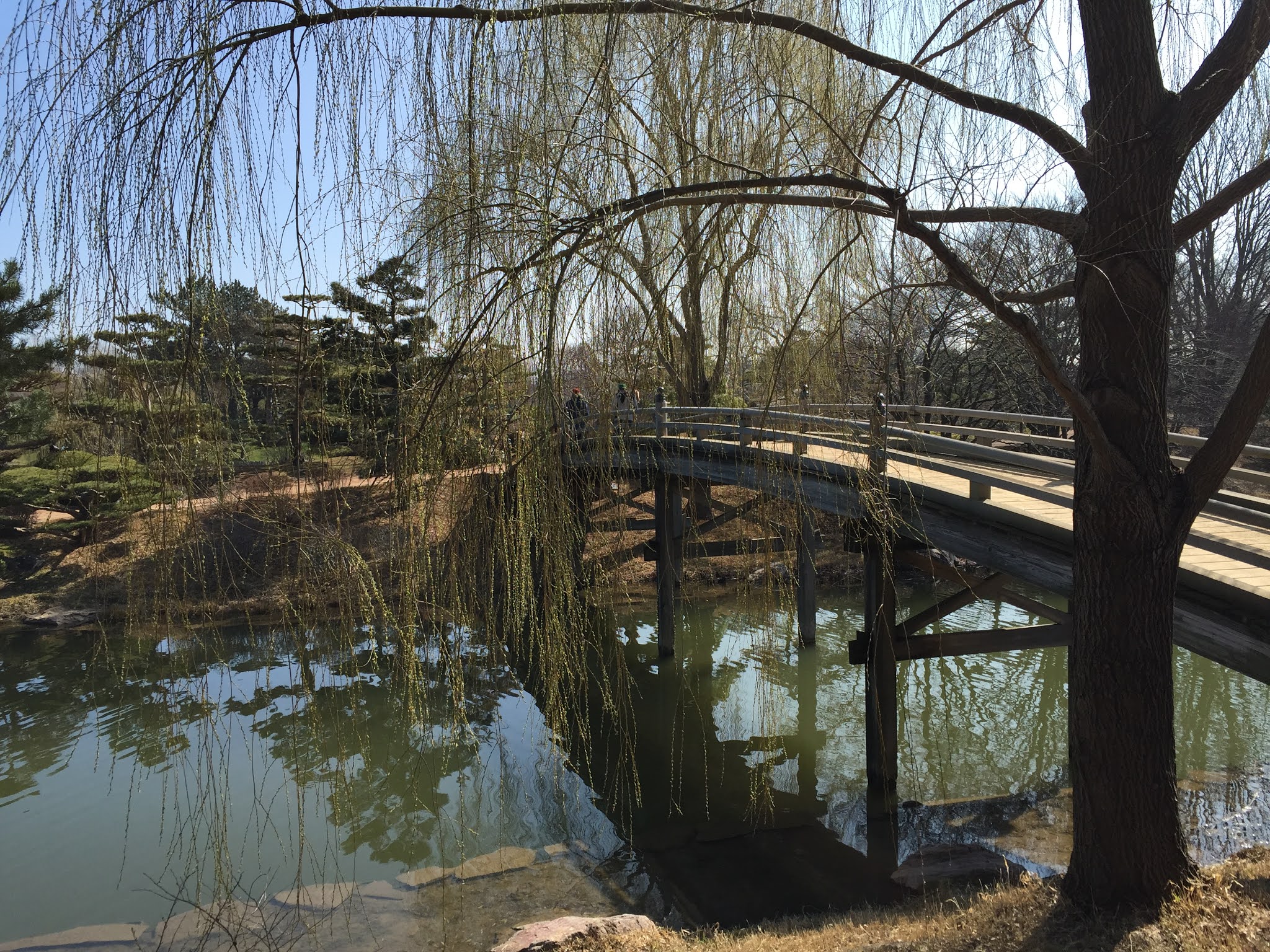
Stop 4: Japanese Garden Bridge - link between this world + paradise with an arch representing the difficulty of the path
Stop 5:  Keiunto - most formal of the gardens


Stop 6:  Dry Landscape Garden - smooth gravel represents calm matter, raked rippled patterns represent waves breaking on a shore; peek into the garden from the house


Stop 7:  Arbor - house adapted from a building at Kodai-jiya Koyota temple, built in Japan and assembled in Chicago

Stop 8:  Crouching Basin - tradition to wash hands and rinse mouth before entering teahouse

Stop 9:  Zig Zag Bridge - legend tells story that people can avoid evil spirits by crossing a zigzag bridge because evil spirits believed to move only in a straight line

Stop 10:  Seifuto - stone lantern and grouping of boulders; rocks are thought to be the bones of the earth

Stop 11:  Boat Landing Stones - 2 large granite slabs for an ornamental boat landing

Stop 12:  Dry Garden and Arbor House - smaller dry garden than on Keiunto; notice the water basin and lantern

Stop 13:  Willow - uneven pathway of stones to make you step more deliberate; notice the pruned willow

Stop 14:  Pine Tres - symbols of long life in Japanese culture

Stop 15:  Shoin House:  Recreated garden retreat of an Edo-period feudal lord built in Japan

Stop 16:  Water basin at the Shoin House

Stop 17:  Snow-Viewing Lantern - yukimi lantern built with sturdy legs and broad umbrella, enabling it to bear the snow

Stop 18:  Puryear Point - bridge views and sculptures

The Forest Preserve District of Cook County owns the garden and the Chicago Horticultural Society manages the garden.  There's an agreement for free admission (beyond the $25-$30 parking fee per day) until 2022, so visit now.


1.14.2017

Animal Lesson #9: 9 Places in Florida Where Your Kids Might Spot a Manatee


Not only kids have curiosity about animals.  Travel & Leisure magazine article 12 Places to Swim with Animals states "your travel bucket list just got 12 items longer."  The article included swimming with manatees in Florida as one of the twelve places.  I admit that it was on my list.

All three species of manatees (West Indian, West African, Amazonians) have endangered animal status.  The Florida Manatee and Anitillean Manatees are subspecies of the West Indian species.  If you are a globe trotter, perhaps you visit the Anitillean Manatee in Puerto Rico or Mexico or the African Manatee in Kissama National Park in Angola, Africa.  Boat traffic and cold stress from temperatures below 68 degrees present risk factors for manatees.  If you go on a tour, the guide will reinforce instructions on how to observe without disturbing and rules such as not touching the manatees.

One of the few places to swim or snorkel with the Florida manatees is the Crystal River, north of Tampa.  In fact the book 1,000 Places to See Before You Die by Patricia Schultz lists "Swimming with Manatees" in Crystal River, FL and claims the river as the exclusive place "This is the only place in the world where you can have a face-to-face encounter with these gray-blue marine mammals."

A tour makes it easy, providing you wet suits and a short boat ride (under 30 minutes).  Make certain to arrive early to watch the mandatory regulations video.  Related to the elephants, these gentle giants or "sea cows" typically grow to 10 feet in length and can weigh over 3,000 lbs.  Manatees can live 50 to 60 years.

We saw manatees both active and swimming around us and manatees sleeping at lower levels.  Even during napping, manatees surface for air every twenty minutes.  Manatees eat large quantities of vegetation each day including sea grass, aquatic plants, algae, and mangrove leaves.  These friendly creatures swim gracefully.  It's a magical treat to swim near them.

The best time to spot manatees is during the winter and early spring when manatees gather near warmer water such as near springs or electric company channels.

If you take a Crystal River tour, swimming skills help.  You'll likely be in cool water for an hour and a half.

If seeing manatees from a boardwalk sounds most appealing, I highly recommend the Crystal River National Wildlife Refuge in Crystal River.  It is part of the United States National Wildlife Refuge System.  Look online for office directions.  After parking, a shuttle bus takes you to the refuge. 

There's many places to observe manatees including these 9 places:

1.  Citrus County's Homosassa River, paddle toward Ellie Schuller Homosassa Springs Wildlife State Park

2.  Weeki Wachee River, warm Weeki Wachee Springs; check out Paddling Adventures located next to Weeiki Wachee Springs Park for a 5 mile, 3 hour paddle

3.  Merritt Island National Wildlife Refuge observation area near Cape Canaveral, plus look nearby at Bairs Cove Boat Ramp

4.  Manatee Springs State Park Chiefland, Suwanee River, 100 million gallons of clear water comes from the springs


5.  Blue Spring State Park, north of Orlando, although access prohibited in winter

6.  Edward Ball Wakulla Spring Park, Wakulla Springs, the deepest freshwater spring in FL

7.  Lee County Park, Fort Meyers, discharge canal from electric company, check out Calusa Blueway Outfitters

8.  Manatee Lagoon, West Palm Beach, near electric company

9.  TECO Manatee Viewing Center, Apollo Beach near discharge canal

Experts estimate the total Florida manatee population at approximately 4,000, so you are not guaranteed to spot a manatee.  If you don't want to disappoint your kids, consider the Lowry Park Zoo or Miami Seaquarium. 


11.04.2015

Science Lesson #4: Geology - Where to See Liesegang Bands

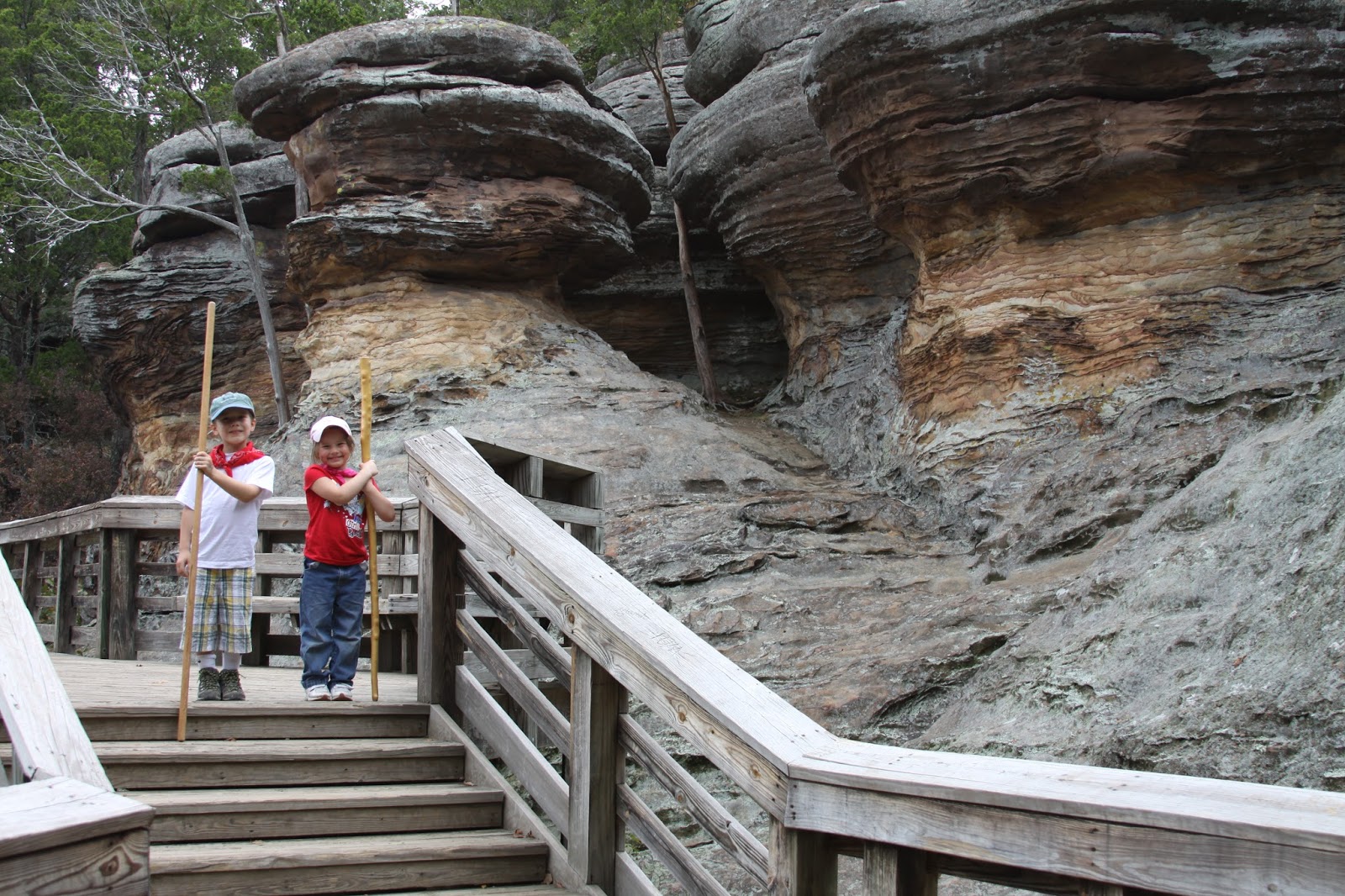
     USA Today lists Illinois Garden of the Gods as the most natural wonder in the state according to it's article "The most beautiful natural wonder in every state, from Lake Tahoe to Niagara Falls."  It's taken over 320 million years to sculpt the beauty of the Garden of the Gods State Park in Hebron, IL (not to be confused with Garden of the Gods in Colorado).  Take a day to visit Shawnee National Forest.  Enjoy the panoramic views and appreciate the geology. 


     According to the University of Illinois Institute of Natural Resource Sustainability Illinois State Geological Survey, Garden of the Gods park in IL is one of the most geographically complex areas of Illinois.  Bring water and snacks for the car ride and use the restrooms ahead.  You'll only find pit toilets at the park, even in the campground.
For edutainment, hike the easy 0.25 mile Observation Trail.  When described as easy, this does not mean safe - there's no rails and rocks can be slippery.  Described as an interpretive trail, the trail includes history and geology informational signs.


The "Bizzare Bands" sign helped explain the geology:  "Bizarre Bands.  The dark, reddish-brown swirls and rings on these rocks are called liesegang bands (pronounced L EE' ZEH GANG) named after German chemist Raphael Liesegang.  Long ago when this sandstone was underground, it was saturated with groundwater mixed with iron.  Chemical changes caused the iron to solidify as rust between the rock particles.  Held together by iron, the raised dark bands have resisted weathering as compared to the softer, light-colored rock.  the pattern of bands are the result of these chemical changes.


1.03.2015

Science Lesson #2: 2 Free Venus Fly-Trap Viewings + 4 Other Botanical Gardens


Meat-eating plants!  Oh my!  Plants eating ants, flies, spiders, and other insects sound like a bizarre science-fiction film, but you and your kids can see the process in action.  Visit a fly-trap farm or botanical center with venus fly traps, pitcher plants, bladderworts, and sundews.  
 
How does a plant capture an insect?  The venus fly-trap emits a fruity scent that attracts insects.  Tiny bristles within the leaf trigger the plant to close when an insect brushes against it.  Once the insect gets captured inside, the plant has a "green stomach", producing digestive enzymes and transporters to take up nutrients.  It can take several days to digest the insect.  
The venus fly-trap is native to Cape Fear, North Carolina.  The loss of habitat has led to 95% of the original plants to disappear.  There's now less than 30,000 plants in the wild.  However, farmers grow the plants and sell them at their nursery or online.

We visited the largest botanical collection of carnivorous plants on display to the public in the US.  Located 45 minute north of San Francisco in Sebastopol, CA, California Carnivores is open Thur. to Mon. 10AM-4PM to the public.  The owner has grown carnivorous plants for nearly 50 years, wrote the book The Savage Garden:  Cultivating Carnivorous Plants, and featured on Martha Stewart Living.  Unfortunately the plane transportation meant we couldn't buy plants onsite.  However, it inspired us to visit our local home improvement stores and we easily found a kit to buy.

 Another way to see the plants for free - visit The United States Botanic Garden Savage Gardens in Washington D.C. from 10AM to 5PM.  Here's four other botanical gardens featuring meat-eating plants:

1.  MOSI Museum of Science & Industry Coleman-Lienhart Savage Garden, Tampa, FL, adults $27, child $21

2.  Frederick Meijer Garden Kenneth E. Nelson Carnivorous Plant House, Grand Rapids, MI, adults $15, children under age 13 for $7, over 150 acres

3.  Dallas Arboretum and Botanical Garden The Carnivorous Plant Bogs located in Rory Meyers Children's Adventure Garden, adult $15, child under age 12 for $10

4.  Franklin Park Conservatory and Botanical Garden Savage Gardens, Columbus, OH; $14 adults, $7 child under age 17, plants and sculptures


8.02.2014

State Park #3: Wailu River State Park - Kauai's Fern Grotto


My parents first took me to Hawaii and I fell for the tropical, natural beauty of the state...like every other tourist. I particularly fell for the island of Kauai.  Not many restaurants or stores, the waterfalls, parks, and beaches stood out as the main attraction.  The people didn't seem hurried.  They wanted to tell you their story.  On the Fern Grotto boat, a guide told us about the Wailua River, the only navigable river in Hawaii, and how we would pass the wettest place on earth.  Another guide told his personal story.  He explained with pride that he stared in the 1961 movie Blue Hawaii with Elvis.  We needed to watch the movie because he blows the conch shell near the hotel entrance.  Some stories draw you back to a place.  Someday I would return.

A little over a decade, we returned.  More people this time because we expanded our family.  We eagerly returned to the Wailua River State Park for another open-air boat ride by the Smith family.  This park has the only navigable river in Hawaii and contains two waterfalls (Opaeka'a Falls and Wailua Falls)  After the nature hike and songs played at the grotto, we boarded the boat back to the marina.  Dancers taught us the hula while moving on the river.  Then a guide took the microphone and explained that he stared in the 1961 movie Blue Hawaii with Elvis.  We needed to watch the movie because he blows the conch shell.  I watched the movie after returning home.

I'm not the only one impressed with the friendly local people.  Author Patricia Schultz lists "Kauai" in Hawaii as a must see site in her book 1,000 Places to See Before You Die.  She notices the people, "Kauai's people are known as the friendliest in the fiftieth state, and tend to live a rural and unrushed old-time Hawaiian lifestyle, in which natural beauty and not overly plush Maui-style resort life is the focus."  

Dance can tell you stories too.  In ancient Hawaii, hula was used to keep history.  Watch the hand gestures.  The missionaries suppressed the hula, but King David Kalakaua restored hula.  The biggest hula festival and competition is the Merrie Monarch Festival held in Hilo, Hawaii.  If you want to get see hula and learn more about the Hawaiian culture without the long flight, consider taking the family to the following festivals:

1) Heritage of Aloha; Heritage Park in Santa Fe Springs, CA; May
Hawaiian and Polynesian music and dance with free admission

2) 3 Days of Aloha in the Pacific Northwest; Vancouver, WA; July
Hula competition and workshops on language, chant, and outrigger canoe paddling

3) Hawaiian Hula Days; Itasca, IL; Oct.
Held by the Hula Association of the Midwest; registration and workshop fees

7.12.2014

NPS #3: Elk & Bison at Grand Teton National Park


Grand Teton National Park Entrance, Photo by Krenda
The year after visiting Yellowstone & Grand Teton, I asked my son where he'd like to visit on vacation.   He exclaimed "where there's bison!".  You can show your kids bison and elk at both Yellowstone National Park and Grand Teton National Park.  The Jackson elk herd takes claim as the largest herd in North America.  The park objective given states having a herd of approximately 11,000 elk migrating between Grand Teton National Park and the National Elk Refuge.  In Yellowstone, we found the most elk in the Mammoth area (North Side) where they wandered among the campground lawns.  In the Grand Teton National Park, we saw them grazing in the fields.

Mountains, boats, and lake at Grand Teton
Grand Teton National Park offers more than viewing animals in nature.  The park offers educational talks, mountain scenery perfect for photography, plenty of hiking trails, and even a boat ride on the lake.

Author Patricia Schultz lists Grand Teton National Park in Wyoming as a must see site in her book 1,000 Places to See Before You Die.  While she notes the overall photographic beauty, she points out a particular place, "At the foot of the range, glacial advance gouged a string of deep, cold, sapphire-blue lakes, of which Jenny Lake is one of the most beautiful and therefore most popular and visited."  For a reasonable rate, you can rent a kayak or take a ferry.  

If you want to show your kids elk, you can also find them in the eastern part of the United States. Consider a trip to the Great Smoky Mountains National Park.


Bison at Teton National Park; Photo by Krenda
1.  Cataloochee Valley, Great Smoky Mountains National Park:  Park released elk in 2001 and now nearly 140 elk live in the area.  Besides elk, visit the 9 historic buildings.  If you need to rent a nearby cabin, contact me or check out Lightning Bug Lodge or Indigo Moon Lodge. 


2.  Ponca Elk Center in Ponca, AR:  Drive into the Boxley Valley near the Buffalo National River, elk wer re-introduced and now there's nearly 450 elk along the river.  Visit the center for education open 5 days a week (closed Tue./Wed.); free admission.


3.  Elk Country Visitor Center in Benezette, PA:  Learn at the center which opened in 2010.  Most people drive to Winslow Hill with viewing areas and off road parking.  If you want to camp near elk, try Sinnemahoning State Park which has a small herd.


Exhausted kids after hiking and searching for animals.


2.02.2014

Science Lesson #2: Geology and Two Caves in KY

Photo by Krenda
I find when I combine reading a book or watching a movie and then visiting the site, I learn even more.  You can set up trips to make this experience happen for your kids. 

This article covers two caves in Kentucky and their connection to literature.

1.  Mammoth Cave National Park
The National Seleogoical Society lists cave books, including one focused on Mammoth Cave, Mammoth Cave National Park by Ruth Radlauer.  They also list Amazing Bats by Frank Greenaway and Cave Life (Look Closer) by Christiane Gunzi. 

Mammoth Cave fits it's name; it's mammoth with over 365 miles mapped. Took the tour as a child and as an adult and enjoyed it.
Tips
There's multiple tour options.  Read online to select the right one for you and book early.  Tours fill up!

2.  Cave Springs Cavern
If you want to combine nature and literature with your kids, consider staying 6 miles away at Oak Hill Farm and Cabins in Smith Grove, KY.  While the Mammoth Cave is impressive, I found the Cave Springs Cavern on Oak Hills Farm to be even more interesting and mysterious.  Formerly used as a rare Native American ceremonial site, "the family" radio carbon dated 30 BC.  The owner and protector, Bill J Marohonic, gave us a personal tour included in our stay.

If you plan ahead, have your children read one of his books:  Dream Catcher How We Saved A Kentucky Time Capsule or My Conversion from a Humanist to a Believer.  You can also look up the PBS 9 minute video - that's how I learned about the unique site.

Bill will also tell you about his love for nature and animals.  He rescues horses and you can visit them.  His 17 acre estate includes a nature preserve.  At night, stay up to watch the bats circle under the moon light.

Tips
Book the bed & breakfast stay, tour no charge. If you have children and have a choice, choose the older log cabin, nicer than the new cabin.  Bill also rents out rooms in his 1857 antebellum home.

8.31.2013

Nature: Loving Strong Trees at Armstrong Redwoods State Natural Preserve

Parson Jones Tree
Show your kids the strength of trees and nature by taking them to a redwood forest located in Northern California to Southern Oregon.  Redwoods extend their roots more than 50 feet from the trunk to create strength to withstand powerful winds and floods.  Redwood forests thrive in temperate rainforests, the dense dripping fog environment with moist, well drained soil.  So strong in nature, but weak to humans who logged approximately 95% of the California local redwood forests since the California Gold Rush.  Fortunately parks protect these majestic trees now.

Redwoods exist in other countries, but none like the coast redwood known as the tallest trees in the world.  The dawn redwood grows only in a remote area of central China, but it grows to only about one-third the height of Coast Redwood.  Coast Redwood typically grow 200-250 feet and live 500 to 1,000 years. 

If you visit the Armstrong Redwoods State Natural Reserve just north of Guerneville, CA, you will find examples of older and taller redwoods.  The Parson Jones tree measures as the tallest tree in the grove at 310 feet in height, longer than the length of a football field.  Colonel Armstrong stakes claim to the oldest tree in the grove, estimated to be over 1,400 years old.  Colonel Armstrong tree was named after a lumberman who chose to preserve this portion of the park.


According to WWF (World Wildlife Fund), the United Nations designated Redwood National and State Parks a World Heritage Site in 1980.  From postcards sent to me from around the world thanks to postcrossing.com, people are proud to send UNESCO (United Nations Educational Scientific and Cultural Organization) site postcards.  Intrigued, I looked up the UNESCO sites.  You can find 1,092 results worldwide, but only 23 sites in the United States.  UNESCO doesn't list all national parks, just select parks like the Great Smoky Mountains National Parks and lesser known places like Monumental Earthworks of Poverty Point in Louisiana.  You may note that Armstrong Redwoods classifies as a reserve.  It changed from a State Park to reserve to recognize it's ecological significance and gain increased protection.


Coast Redwoods are also known as Sequio Sempervirens; sempervirens means "always green".  A non-profit called Sempervirens Fund cares for redwood forests of the Santa Cruz Mountains.  This organization created the Skyline-to-the-Sea Trail, a 31 mile trail.  You can show your support by visiting their website and purchasing a trail patch.

 If you visit the Armstrong Redwoods State Natural Reserve, bring your hiking shoes and water and no worries.  The Colonel Armstrong Loop covers 1.3 miles and as a flat trail, you'll find it easy to cover... even your little girl wearing a dress.  Besides the impressive trees, you'll find peace in the fern covered ground and look above at the beautiful sky.  Go early in the day to avoid the crowds.

TripSavvy recommends other forests in CA including 1) Prairie Creek Redwoods State Park, 2) Redwood National Park, 3) Muir Woods National Park, 4) Yosemite National Park, 5) Big Basin Redwoods State Park, 6) Petrified Redwood Forests, and 7) Sequoia National Park.  I hiked Muir Woods with college friends and Yosemite National Park with cousins.  I'd recommend these parks too.