Showing posts with label lesson. Show all posts

1.01.2023

Art & Sculpture #3: International Snow Sculpture Championship (Lake Geneva, WI)

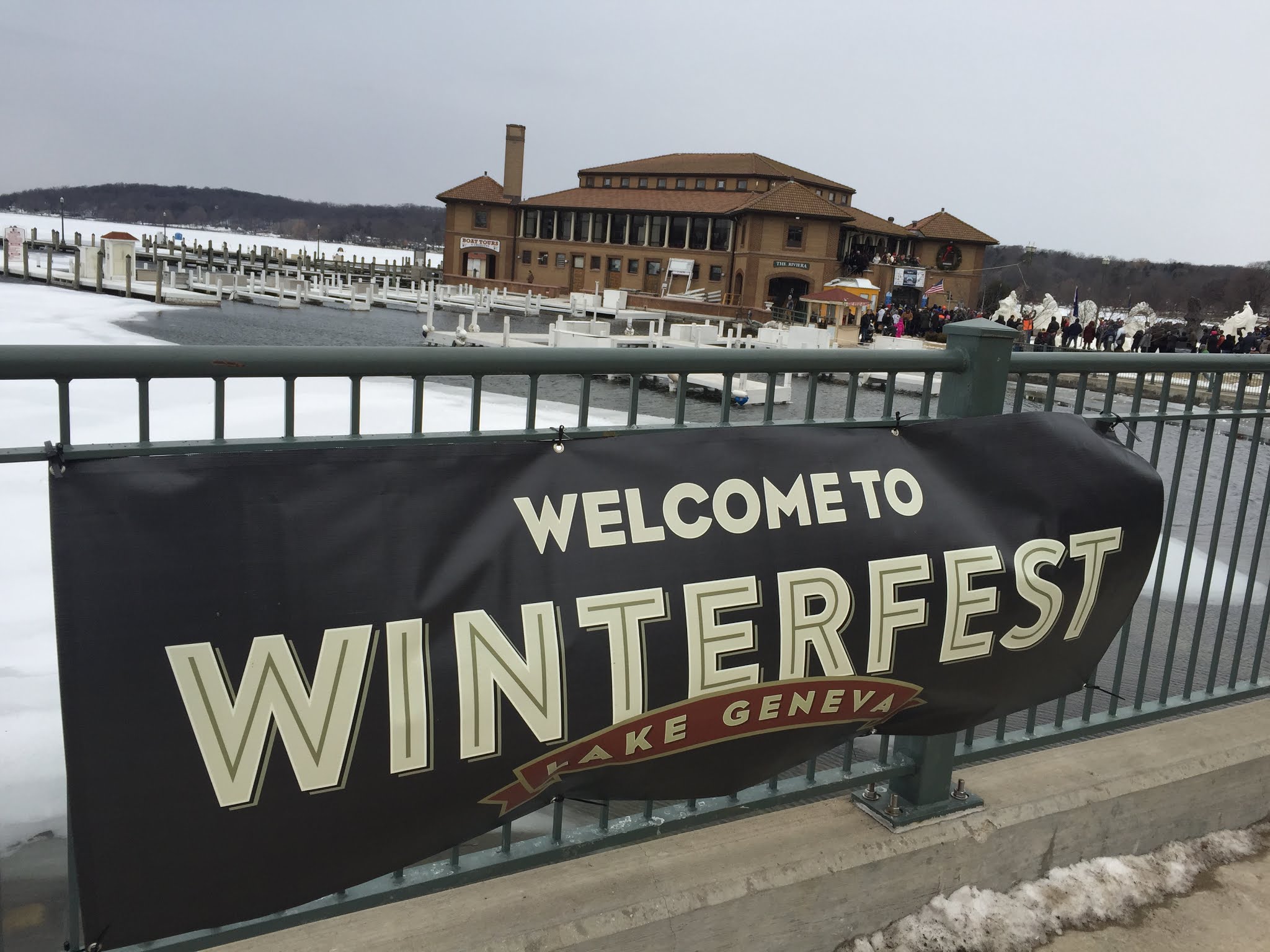
What kid doesn't like to play with snow?  When kids go to the beach, they can't wait to sculpt the sand.  Why not try sculpting snow?  You can do more than build a snowman.  If you want to see the professional art, inspire your kids at the International Snow Sculpture Championship in Lake Geneva, Wisconsin.  Lake Geneva has hosted the event for 26 years.

Winterfest in Wisconsin, Photo by Krenda

Sculptors tend to dream a theme, draw it, and begin with a blank 8 feet or 12 feet blocks of snow.  It takes days to create the sculpture.  If you go to the competition early in the festival, you can see their drawings and watch them work with shovels, hand saws, and wooden spoons.  I like to return to see their finished art.  I timed it right to stay for the award ceremony and cheering.

Sculptors hope for quality snow block and the right temperature.  They wish for snow without dirt, ice, or rocks.  They hope for Goldilocks weather, not too frigid and not too warm.  Too cold makes it hard to carve and melting, slushy snow makes it difficult to keep the details crisp.

Some sculptures look so smooth.  Other sculptures so intricate.  Some had humor.  Others tried to convey deep meaning.  With approximately 15 teams and 15 sculptures, everyone strolls along the pathways finding their favorite. 

If you go to Lake Geneva, just pay for parking.  One year people decided to park on the lake, but the lake didn't totally freeze and cars and trucks sank.  With a free event, paid parking doesn't seem too much.

What if you don't live close to Lake Geneva?  Find earlier events, ones that may decide which sculptors participate in the National competition or just bring joy at winter festivals.  Here's seven other snow sculpting events:

1.  Illinois Snow Sculpting Competition - Rockford, IL, Sinnissippi Park, 10 sculptures

2.  Minnesota State Snow Sculpting Competition - St. Paul, Vulcan Snow Park

3.  Wisconsin Snow Sculpting Competition - Fond du Lac, WI, compete and possibly win a trip to the U.S. Championship

4.  Ely's Snow Sculpting Symposium - Ely, MN, Ely's winter Festival at Whiteside Park, lit by candles at nigh

5.  Zehnder's Snowfest - Frankenmuth, Michigan, fireworks every night

6.  Woodstock Flurry - Vermont, state contest, free

7.  Winter Arts Snow Sculpting Festival - Dubuque, Iowa, Washington Park

If you want to go beyond U.S. competitions, consider a trip to Breckenridge, Colorado for the International Snow Sculpture Championships.  Often combined with the Viking inspired week of winter games called Ullr Fest, you can see approximately 16 teams hand-carve 20-ton bricks.

9.25.2021

Transportation Lesson #9: U.S. Largest Wooden Passenger Collection at Mid-Continent Railway Museum

One of the thrills of traveling in China was the opportunity to take the Shanghai Maglev (magnetic levitation train), which we called to bullet train, from the Shanghai Pudong International airport to Longyang Road Station.  We could have take a taxi, but the $13 round-trip ride on the fastest commercial electric train in the world offered an adventure.  It has a maximum speed of 430 kmph.  The passenger train had an electric sign that announced the train speed, so we had fun just watching the speed climb.  It began service in 2007 and my co-workers and I took a ride in 2011.  The train has transported over 50 million passengers, so there's many people around the world sharing the story of adventure this high-speed passenger train.

You don't need to travel to China to teach your kids about the Golden Age of U.S. train travel (1900-1940's).  You can travel to the Mid-Continent Railway Museum in North Freedom, Wisconsin.  Owning 34 passenger cars, this museum earns the title of the United States largest wooden passenger museum collection.  The museum offers public visitation May thru October on weekends with no admission (donations appreciated).  They also offer train rides for a fee, three times a day.

The indoor/outdoor museum has two coach sheds.  In these sheds, I appreciated the historical stories and ability to peek into the glamorous interiors.  I found three passenger cars especially interesting:

1) Copper Range 

Difficult to miss this train with it's orange color.  The museum restored the car to the standard Milwaukee Road orange paint, the color it would have donned in 1911.  The American Car & Foundary (Jeffersonville, Indiana) built the train in 1903.  The train transported people during the Golden Age in Copper Country of Upper Michigan and operated until 1946.  Peek inside and see the restored gold leaf striping and oak veneer ceiling.

2) Milwaukee Lake Shore & Western Railway

Built by the Barney & Smith Co. in Dayton, Ohio, this train first served the northeast regions of Wisconsin (1872-1893).  The Chicago & North Western Railway purchased the train and the train retired in 1930.  Peek inside to see the polished cherry wood and curved panels.  Since I worked in Dayton and traveled by train into Chicago for work years later, I found this train story feeling close to home.

3) Wisconsin Fish Commission (labeled Badger #2)

The sign for this train especially caught my attention, connecting trains, fish, and the World's Fair.  The introduction explained need that led to the combination of passenger transportation with fish transportation, using steel under frames to carry fish.  The story begins with the problem "In 1873 the U.S. Fish Commission began experimenting with shipping live fish across the country by rail.  Like many other states, Wisconsin began hauling eggs, fry and fingerlings in milk cans stacked in baggage cars hauled by local railways.  It was an expensive and labor-intensive journey often complicated by heat, cramped conditions, and missed connections.  A better means to safely transport more fish, greater distances, was needed..."  The restoration of the car cost nearly $1 million and you can see it for free.


1.02.2021

Transportation Lesson #8: Illinois Railway Museum & 6 Other Midwest Rail Museums

Here comes the train

You probably recall the American folk song "I've been working on the railroad" from your childhood.  Kids still hear it today on Loony Tunes or Barney.

The Golden Age of Railroading was considered to take place from period of 1880 to 1916.  That's when the United States had an unprecedented rate of expansion from 93,000 to 254,000 miles of track, according to Iowa University Libraries.  You may not be able to go back in time, but you can get close to trains.  Do you know that you can still work on trains, even without experience?  Most train museums operate with mostly volunteers.  You could greet visitors, demonstrate technology, help organize archive & collections, sell items in the gift shop, work in the office, sell tickets, and/or refurbish locomotives. 

All aboard
"Can't you hear the captain shouting , 'Dinah, blow your horn."  If you don't have time to volunteer, take your kids to the train museum and meet the engineers.  One of our family outings took us to the Illinois Railway Museum.

Location:  Union, Illinois (approx. 1 hour Northwest of Chicago, IL)

Cost:  $15 or less per person, depending on season and age; Free parking

Includes unlimited train rides (except for special-fare days) and access to all the exhibits

If you go, wear your walking shoes for the self-guided tour.  This museum holds the largest collection of historic railway equipment in America from restored Pullman sleeping cars in Barn 3 to trolleys in Barn 7.  We visited every barn and took both the train rides (street car that loops around the property for 15 minutes and the transfer to main line diesel train - available in summer).  Don't miss the Nebraska Zephyr, the only remaining articulated streamliner of it's type and star of the move "A League of Their Own."  I also recommend this movie!

Photo by Krenda

Tip:  We ate at the diner, but you could save by bringing your own food and using a picnic table.

"Fee, fie, fiddy-i-o, Strummin' on the old banjo"  Perhaps you are looking for a smaller or different experience.  Here's other Midwest Railway musuems to consider:

1.     Hooiser Valley Railroad Museum (North Judson, IN) - 1.5 hours Southeast of Chicago

- free admission, but train rides cost $12

- Guest Engineer Program, 18 and over $240 learn how to pull back on the throttle, ring the bell, blow the horn in the cab of a diesel, 1 hour of operation

2. National New York Central Railroad Museum (Elkhart, IN) - 2 hours Southeast of Chicago

- $6 admission, family membership $40, largest surviving example of a NYC Steam locomotive

- The New York Central was once the second-largest railroad in the U.S.

3.  Monticello Railway (Monticello, IL) - 2 hours South of Chicago

- Wabash depot, Nelson Crossing depot, locomotives, cabooses, passenger cars, freight cars

- Housing for volunteers to stay overnight at The Villas at Hodge Park

The train returns
- $10 train rides Sat. & Sun. in summer; $20 surcharge for cab ride; max 2 cab riders per trip

4. Mid-Continent Railway Museum (North Freedom, WI) - 3 hours Northwest of Chicago 

- largest collection of wooden passenger cars in the U.S., 13 steam, 7 diesel locomotive

- 7-mile heritage railroad passing through the former mining community of La Reu, special 1 hour rides from $22 (Coach in Sept., Harvest Limited, Santa Express in Nov./Dec.)

5.  Galesburg Railroad Museum (Galesburg, IL) - 3 hours Southwest of Chicago

-$6 admission Fri./Sat/Sun. or by appointment, Galesburg history where once >3.3K rail employees

-Visit during Railroad Days, a festival with 300 tables of model trains, >50 vendor tables of toys, arts & crafts market, Firefighter's water fights, car cruise in, festival has extra fees

6.  National Railroad Museum (Ashwaubenon, WI) - 3.5 hours North of Chicago, near Green Bay, WI

- popular museum with over 100,000 visitor per year and 300 volunteers

- $11 entrance, $2 for a 25-minute train ride with museum admission 

- Don't miss the Union Pacific #4017 Big Boy, only 25 constructed & weighs 1.1 million pounds

 "Can't you hear the whistle blowing.  Rise up so early in the morn."  It's your cue to get up early and listen to the sounds of the whistles and clickety clack of the rails.
11.28.2020

Gym Class #13: Ski Jumping from Norway to Illinois

Ski Jump, Photo by Krenda
 Ski jumping is one of three nordic skiing disciplines which includes cross-country skiing, ski-jumping, and nordic combined (cross-country plus jumping).  In 1808, ski jumping began in Norway and the first public competition was also held in Norway 54 years later (1862).  Not much longer, the sport came to the United States.  With so much publicity about skiing in Colorado, you might have thought it began in the West.  It actually began in the Midwest.  The first US ski-jump located in Red Wing, Minnesota.  Three Norwegians came over and started the ski club.

The places with ski jumping history still play an important role in ski jumping.  Norway holds the most medals (398 total).  For comparison, the US holds 17.  Mikkel Hemmerstvedt, a Norwegian immigrant, earned the first US distance record in Red Wing (1887) and then later Mikkel set a new world record (102 feet).  You can visit The American Ski Jumping Hall of Fame and Museum at the St. James Hotel in Red Wing, Minnesota.  This HOF is separate from the National Ski Hall of Fame, only focused on ski jumping.

The sport spread from the Midwest to the West and East.  Wisconsin now lists the most ski jump locations (Camero, Eau Claire, Madison, Wisconsin Rapids, Iola, and Westby).  While Illinois only has one ski jump location listed (Fox River Grove, Illinois), we fortunately live close enough to drive for an event without a hotel stay.  The Norge Ski Club in Fox River Grove began early (1905) and remains a volunteer club to prepare athletes for Olympic-level competition.  It's considered one of the top learning centers for Olympic ski jumping in the USA with 5 jumps.  The jumps have availability year round and range from beginner to advanced jumps.  In 2018, three Norge Ski Club Olympic athletes (Mike Glader of Casey, Kevin Bickner formerly of Wauconda, Casey Larson of Barrington) traveled to Red Wing, Minnesota to accept the honor of American Ski Jumping Hall of Fame induction.

The sport has both Junior Tournaments and Masters Competitions (age 30 and older).  The International Ski Federation (FIS) organizes events.  Ski jumping existed in the Winter Olympics since 1924.  The FIS Nordic Ski Championship begin in 1925.  First held in France, the US held the competition in 1950 - the first championship outside Europe.  Switzerland hosted the first FIS Junior World Championship (1977) and the US hosted twice (Lake Placid, NY 1986, Park City 2017).  

If you live near Illinois, you should visit the Norge Ski Club Annual Tournament in the end of January.  For a small entrance fee, you can watch the skiers fly.  We especially were impressed with the kids flying off the 150 foot jump.  The crowd watches for the longest jump after descending from the ramp.  The announcer broadcasts the results and the crowd cheers.  There's some costumes and beer drinking, but a nice family event with many fearless adrenaline driven athlete.


10.03.2020

Transportation Lesson #7: 8 Ways to Ride a Stagecoach

Mahaffie Stagecoach Stop & Farm: Olathe, Kansas
Transportation vehicles can take your kids mind back in time.  Imagine moving at 10 miles per hour with your ten pound or less luggage in heat, cold, dust, and bumpy roads.  Makes you appreciate your last airplane flight a bit more.  In the 19th centuries, stagecoaches acted as a main transportation mode, more rugged and stronger than carriages with thin wheels.  Slower than a horse, but taking heavier loads, stagecoaches delivered mail, freight, and passengers.  At one time, the US had over 150 stagecoach stations between Kansas and California.  The railroad competed and decreased stagecoaches.  The automobile put stagecoaches to a halt. 

We drove out west to see stagecoaches at the Mahaffie Stagecoach Stop and Farm in Olathe, Kansas.  The living history farm provides six rides on Saturday and one ride on Sunday ($7 adults, $5 youth entrance).  During the work week, you can get a reduced entrance fee to see the exhibits and barn, but no ride.

Here's seven other places your family can take a stagecoach ride:
1.  Yellowstone National Park; we visited the park but did not know you could take a stagecoach ride at Roosevelt area for only $15
2.  Jackson Hole, Wyoming; visiting the square, we were aware of the stagecoaches circling the square; 10 minute ride $6-10, Memorial Day to Labor Day
3.  MacDonald's Ranch, AZ; 26540 N Scottsdale Rd, Scottsdale, AZ, 48 minutes $48 adult/$45 child; moonlight ride 1 hour $85, 1.5 hour $100; however fee to farm with no ride $0
4.  Tombstone, AZ; Allen St. in front of OK Corral, 20 minute narrated tour of historic town; adult $10, children $5
5.  Harris Stage Lines, CA; 5995 N River Rd, Paso Robles, CA 1.5 hour tour including stagecoach ride $50/person with $200 minimum; also offers camps and clinics
6.  Knott's Berry Farm, CA;  8039 Beach Blvd, Buena Park, CA; Butterfield Stagecoach ride is an attraction; admission $45 (online) to $75 (gate ticket)/person; other rides include Bigfoot Rapids, Calico mine ride, and Calico railroad
7.  Old Sturbridge Village, MA; 1 Old Sturbridge Village Road, Sturbridge, MA; May to Oct. rides in reproduction 19th century stagecoach, $3 ride


4.29.2020

Transportation Lesson #5: Drive-It Yourself Carriage Tour (Mackinac Island, Michigan)

Selfie View, Photo by Krenda
If you enjoy horses, Mackinac Island feels like a dream location.  You step back in time, including transportation.  No cars allowed.  Everyone walks, bikes, or gets transportation via horse.  In the winter, residents can use snowmobiles.  However, as a tourist, you will likely visit in the Spring, Summer, or Fall, and enjoy the clip-clop sound in surround sound.

Back View
In planning our third trip to Mackinac Island, I wanted to find a unique experience.  Most people likely take the Mackinac Island Carriage Tours sightseeing tour that covers a lot of ground (Surrey Hills Museum, Arch Rock, Fort Mackinac, and Grand Hotel) in approximately 2 hours and $34 fee per person.  You might take a horse taxi to your hotel.  I wondered whether we could ride a horse or drive a carriage.  You can do both on Mackinac Island.

Side View - Driver
Four generations of the Gough family have operated such service.  It began with Taylor Gough who rented drive-yourself horse and buggies.  In 1953, Taylor's sons Jack and Burton established Jack's Livery Stable.  The family expanded the business to include Cindy's Riding Stable too.  Both Jack's and Cindy's rent horses ($50 per hour) for passengers up to 250 pounds.  Jack's rents carriages ($80/hour 2 passengers, $100/hour 4 passengers, and $120/hour for 6 passengers.  You'll figure out the time you need by looking at the maps with estimated timing.  We chose a path to go through woods and past the Grand Hotel.

Island Traffic
You don't need experience to drive the carriage.  They give you instructions.  Here's your opportunity to use the terms "Giddy up" and "Whoa".  You do need one designated driver.  Also, you should think about the age of your passengers.  One of the rules states "parents are asked to hold on to their small children to keep them from falling out of the buggy."  With teenagers, we didn't need to worry.

Reservations taken one day in advance.  You can also see whether available on the same day.  If you don't want to drive the carriage, but you want a private tour, both Mackinac Island Carriage Tours and Gough Carriages offer for $160/hour for up to 4 guests.

If we had more time, horse riding lessons or carriage driving lessons would also provide a memorable learning experience.  Check out the Mackinac Horsemen's Association lessons, including intro to riding (2 hours $110), private lessons ($55/hour), and semi-private 2 person ($45/hour each).  I learned about their programs through the tv show Best of America by Horseback.  They had a special two part episode featuring Mackinac Island.  Giddy up to Mackinac Island and appreciate the horses.


8.08.2019

Art & Sculpture #4: International Sculpture Park and 4 More Sculpture Parks in IL

Smithsonian Magazine lists "Six of the World's Most Spectacular Sculpture Parks...from New York to Norway". (Jennifeer Nalewicki, May, 6, 2019) and I've only been to one of them, twice (Olympic Sculpture Park, Seattle, Washington).

Even with travel restrictions, if you live in Illinois, you can share the joy of sculpture art with your kids.  For our staycation, we planned visits to places that felt connected to other countries.  We chose the International Sculpture Park in Schaumburg, IL.  A partnership between The Chicago Anthenaeum Museum of Architecture and Design and the Village of Schumburg turned this 20 acres of meadow, forest, and prairies into a park for art lovers.  Then we connect to Greece.  Ioannis Karalias, a Greek architect, planned the garden.

Here's good news for moms - no admission fee, no parking fee, open from sunset to sunrise, and the open space makes it easy to socially distance.

You'll enter the grounds of the Robert O. Atcher Municipal Center with free parking at the Prairie Center for the Arts.  You likely won't see the sculpture garden entry sign from the lot.  Take the prairie trail back towards the entrance.  You will see the entrance sign and "Together", an 18 foot sculpture by Jerry S. Kenar.

You can connect back to Greece with "Chairs" sculpture by Argyro Konstantinidou showcasing Greek themes and images from the history of Mexico, Egypt, and Greece.  "Athys" by Charles de Montaigu provides another connection to Europe since it represents contemporary art in Switzerland.  "Touch Heaven" connects you to Israel designed by Oded Italahmy and inspired by Judaic culture and iconography.  "Vinland" intrigued us so much that we looked up more about the sculpture by Jarle Rosseland of Oslo, Norway.  The sculpture commemorates the 1,000 year anniversary of the Viking explorer, Leif Eriksson and his discoveries of the Americas.  With that background, we could see the ship form.  Another favorite was "Thought Rise in Vacuum" by Hans-Christian Berg, combining the numbers "zero" and "ones" in a cloud-like pattern.

Fortunately we researched the park ahead.  My daughter knew we missed sculptures, even though the path seemed to end near a road.  Trace back to the parking lot and walk across the street for other sculptures.  We had a picnic lunch near the prairie and now we found lots of other picnics near the small lake.

My daughter particularly wanted to see "Awaking Muse" by Don Lawler.  It takes a lot of horizontal space at 40 feet across.  The female figure inspired by Greek mythology appears to awaken from her sleep.  Keep walking and you'll find the colorful "Ecceltora" meaning "Behold the Hour".  May you enjoy your hour at the sculpture park.

Here's four additional sculpture parks to consider visiting in Illinois:

1) West Street Sculpture Park, Galena, IL, 2 acres

2) Goldman-Kuenz Sculpture Park at Cedarhurst in Mount Vernon, IL (Southern IL)

3) Scovill Sculpture Park in Decatur, IL near zoo and museum

4) Koehnline Sculpture Park, part of Koehnline Museum of Art on Oakton Community College campus- Des Plaines, IL (north of O'Hare airport), 25 sculptures

For more sculpture parks in the Midwest, visit my article "Pyramid Hill and 4 More Sculpture Parks in the Midwest".

7.08.2019

History Lesson #9: Archaeology and Colonial Michilmackinac in Michigan

Gun demonstration at the fort
 When you think of archaeology sites, you might think of Egypt, Cambodia, or Peru.  In the United States, you'd likely think of sites in the West.  Did you know that the longest-running archaeological dig is actually in the Midwest?  It's Colonial Michilmackinac in Mackinac, Michigan and it's open to tour. 

I had visited the Mackinac historical sites as a child and recall the place as loud and exciting.  I realize now that my parents timed the visit to a special event with a reenactment.  This time we took our kids to Colonial Michilmackinac and heard a few loud bangs from gun demonstrations, but not the flurry of costumed soldiers running.  Costumed interpreters showed off their gardens and talked about crafts and trade.  The site not only has stories of fighting, it served as a transhipment center and refueling post for upper great lakes fur trade.

Photo by Krenda
The National Historic Landmark acts as a reconstructed 18th-century fort and fur trading village, taking visitors back in time to 1779 during the American Revolution.  Since my spouse has an ancestor who fought in the American Revolution with George Washington, it makes the stories even more interesting.  French soldiers constructed the fort in 1715 and they fought the Fox and later Chicksaw.  The American Indian later attack the French at he fort.  British take control of the fort in 1761, but they moved the buildings to Mackinac Island.  The British feared an attack by American rebels and the island was more secure.  They burnt remaining buildings, but archaeologists discovered well preserved walls of the underground ammunition building called the Powder Magazine.  Archaeologists have found over 1 million artifacts such as ceramics, silver, and gun parts in the past 60 years.  The dig continues and you may see archaeologists working in the summer.

Dogs on leash allowed
You can see from my photos that we had no crowd at the site.  Possibly our late afternoon/evening timing helped.  The fort stays open later during the summer, until 7PM.  You still need to arrive by 6PM.  You'll want to arrive earlier anyway.  With 16 buildings to tour and interpreter talks, you could easily spend two hours at the fort.
16 buildings to tour

Costumed Interpreters

You can follow the history tour by next visiting the reconstructed fort on the island.  We bought the Mackinac Family Heritage Pass, approximately $85 family season pass, even though we only had a week vacation in Michigan.  The pass is worth the price because it gives you admission to multiple sites and we visited 5 of them:  1) Fort Mackinac (island), 2) Colonial Michilmackinac, 3) Historic Mill Creek Discovery Park, 4) Old Mackinac Point Lighthouse, and 5) Mackinac Art Museum (island).  Search my blog for stories about the other sites.

The Kings Garden


3.02.2019

History Lesson #8: 7 Midwest Places to Bring Native American History to Life


Drums thundered, chants echoed, feathers and beads flung side to side, and the bright regala swirled to the beat.  On a Saturday afternoon, the sounds and colors filled the large Field House at UW Madison.  I sat in the stands mesmirized, impressed, and inspired.  I had convinced my sister and cousin to join my adventure.  They were happy to follow me to a traditional Pow Wow and turkey and potatoe meal.

Fast forward a decade plus, the beat of a drum softly beat as my two year old played under a grass thatched roof.  No crowds clapping, just the sound of wind through the feathers of geese landing on the grounds.  Sun Watch Indian Village in Dayton, Ohio consists of 3 acres and opened to the public in 1988 after 17 years of excavation.  We talked about what it would be like living in a village, hunting and preparing for winter.  You can read about it in a book...but when you walk through a village, the experience brings the lesson to life and inspires two year olds to ask lots of questions.

Lesson Idea
You too can immerse your kids in Native American history by visiting a museum, mound, park, or festival.  To prove you don't need to take a long trip out West for the history lesson, here's 7 sites in the Midwest:


1.  Sun Watch Indian Village / Archaeological Park - Dayton, Ohio (OH)
$5 entrance includes museum and village (pictured above)
2.  Effigy Mounds - near Harpers Ferry, Iowa (IA)

3.  Cahokia Mounds - near East St. Louis, MO

4.  Hopewell Cultural Artifacts - Chilicothe, Ohio (OH)

5.  Pawnee Indian Village State Historic Site - Republic, Kansas

6. Serpent Mounds - Memorial, Ohio (OH)
7. Native American Heritage Museum State Historic Site - Highland, Kansas

Check their websites for events like a pow wow.  For a list of National Parks with Native American education, see my other blog http://www.lightningbuglodge.blogspot.com/


9.05.2018

Animal Lesson #12: Rare Alligators at Newport Aquarium in Newport, KY

While alligator populations have risen and were removed from the Endangered Species List in 1987, it's rare to see white alligators.  There's two types: 1) albino, meaning lack of melanin resulting in white shin and red eyes, and 2) leucism, meaning partial loss of pigmentation resulting in white or patchy skin and normal color eyes.  Biologist estimate only 100 white alligators in the world and two of them are at the Newport Aquarium in Newport, KY (across the river from Cincinnati, OH).  Leucistic alligators are even more rare with 12 believed remaining, two featured at Gatorland in Orlando, Florida.  

While the white alligators may lure you to the Newport Aquarium, you'll also like the kid friendly activities.  Included in your admission, approximately $28, is three unique activities: 

1) Shark Touch at Shark Central where you can touch sharks with two fingers

2) Tide Pool Touch where you can touch sea stars, horseshoe crabs, and anemones

3) Shark Bridge - dare your kids to cross a 75-foot suspended rope bridge to walk across a 385,000 gallon shark exhibit.  

I like that these activities are for everyone vs. an extra charge.  There's also many exhibits including 

1) Shipwreck Realm of the Eels - batfish, frog fish, green moray eels, and spiny lobsters

2) Seahorses Unbridled Fun - seahorses, sea dragons, razor fish, and pipefish

3) Stingray Hideaway

4) Gator Alley - see two white gators named Snowball (male) and Snowflake (female)

5) Penguin Palooza

6) Freshwater Falls - tunnel underneath a Kentucky waterfall landscape includes bass, black crappie, and perch

7) Coral Reef - rays, eels, unicorn fish

8) Amazon Tunnel - 32 foot tunnel and 117,000 gallons of freshwater with exotic species including Arapaina and Pacu

Also, consider the aquarium for a business event.  I attended a training at the Newport Aquarium and having a penguin as the surprise lunch guest certainly makes a joyful impression.

For more information visit the Newport Aquarium website http://www.newportaquarium.com/; for a couple more personal photos visit "Newport, KY" set at http://www.flickr.com/photos/krenda/sets/.

If you want to see more white alligators, here's two more places open to the public for viewing:

1) Clyde Peeling's Reptileland in Allenwood, PA ($16)

2) St. Augustine Alligator Farm Zoological Park St. Augustine, FL ($28)


8.24.2018

Agriculture Lesson #8: Frankfurt Germany's Market Hall & 15 U.S. Farmers' Markets

When my business partners take me to local sites, it's a real treat to learn about the culture, history, and local agriculture.  I appreciated my business partners taking me to the Klein Market Halle in Frankfurt, Germany.  The market had a building built in the early 19th century, but it World War II destroyed it.  Reconstructed in the mid-Fifties, you can now appreciate the European art deco style.  With over 1,200 sq m of space and 156 market stalls, you can find a wide variety of fresh produce and flowers including wurst, mustard, dried fruit, and Frankfurt's famous green sauce.  The fishmonger resides downstairs and we treated ourselves to fresh oysters upstairs, overlooking the market.

You don't need to fly to Germany to give your kids the experience of buying fresh produce from farmers.  Visit your local farmers' market.  When you plan a vacation, look up the dates and places of farmers' markets.

As a college student at the University of Wisconsin, I enjoyed beautiful summer and fall days at the Dane County Farmers' Market on the Square.  Located on the sidewalks surrounding the State Capitol, the smells, bright colors, and sounds was like a weekly celebration.  Instruments played, people laughed and ate on the lawn.  Who can resist bread full of melted cheese?  I'm not the only one who enjoyed the experience.  I met Peter Greenberg, New York Times Bestselling Author and fellow UW-grad, and he included Madison in "Best Places to Visit Food Markets" within his book The Best Places for Everything:  "Guess where my favorite farmers' market in the country is located.  Napa Valley?  New York City?  Nope.  It's in Madison, Wisconsin.  The Dane County Farmers' market is the largest producer-only farmers' market in the United States.  The "no resale" rule means that the person behind the tables is the same person who grew or made the product."

I've sold behind the table a few times, invited by my aunts, uncles, and cousin who are the farmers growing the produce.  It's healthy to buy local and fresh.  If you visit the Quad Cities (Davenport, Bettendorf, Rock Island, Moline), stop by the farmers' market say "hi" to the farmers and purchase vegetables or flower. 

The 2014 Fodor "America's 15 Best Farmers' Markets" includes the Dane County Farmers' Market and these 14 other markets:
1.  Portland Farmers' Market on Portland State University's campus (WA) - 140 vendors
2.  Union Square Greenmarket (NY) - 140 farmers, open year-round
3.  Pike Place Market (Seattle,WA) - 80 farmers
4.  Santa Fe Farmers (NM) - 150 vendors
5.  Charleston Farmer's Market (SC)
6.  Davis Farmer's Market (CA)
7.  Green City Market (Chicago, IL) near Lincoln Park - 55 vendors
8.  Ferry Plaza Farmers Market (San Francisco, CA)
9.  Eastern Market at D.C.'s historic Capitol Hill
10.  St. Paul Farmers' Market (MN)
11.  Santa Monica Farmers' Market (CA)- 75 farmers
12.  Sweet Auburn Market near Atlanta (GA) - 20 vendors
13. Crescent City Farmer's Market New Orleans (LA)
14.  Burlington Farmers' Market (VT) - 40 vendors, Sat. May to Oct. since 1980

8.02.2018

Lighthouse Lesson #9: Assateague Lighthouse in Virginia

Looking for a small workout while traveling and learning with the kids?  Climb the 175 steps of the Assateague Lighthouse in Virginia.  The steep stairs seemed like no challenge going up.  On the way down, the cast-iron spiral staircase challenged a few muscles going down.  Can you imagine the keeper taking oil up on an hourly basis?  Of course, our kids bounded down in fast fashion with seemingly no effort at all.

The view certainly makes the climb worth the effort.  You will get a view of Assateague and Chincoteague Islands and the Atlantic Ocean.  Look up at the light.  The lamp flash every five seconds and still brings safety to vessels between the Atlantic Coast and Cape Henlopen.  A nearby museum exhibits the original Fresnel light.

The view from the ground is also delightful.  The tall red-and-white striped lighthouse looks iconic.  At 142 feet high, the lighthouse is easy to see.  Noah Porter, who also built Ocracoke Lighthouse, constructed the original lighthouse in 1833.  The original stood only 45-feet tall and deemed not effective enough at that height.  The current lighthouse, constructed in 1867, took the light to a higher level.  The lights could then be seen 19 miles out to sea.  The red-and-white painting of the conical lighthouse didn't happen until 1968.

The lighthouse has connections to multiple organizations.  Your $5 fee will help support the lighthouse.  While the Coast Guard transferred the lighthouse to the Fish & Wildlife Service in 2002, the U.S. Coast Guard still maintains the active navigational light.  The Chincoteague National Wildlife Refuse takes responsibility for preserving the lighthouse.  The non-profit Chincoteague National Historic Association restores the lighthouse and makes the lighthouse accessible to the public.  The lighthouse made the National Register of Historic Places list.

You can only tour the lighthouse between April and November.  Check the timing.  While open throughout the week during the summer, visits are limited to weekends in Spring and Fall.  Also, it closes during their lunch hour.  The Old Keepers Quarters moved offsite and not open to the public.


6.17.2017

Architecture Lesson #2: Chicago Water Taxi and 3 Boat Tours

A trip to a big city gives you an opportunity to showcase architecture.  You can talk about building types and materials and structural concepts.  Before your outing, draw together different structures such as a suspension bridge, arch, column, post and beam, and dome.  Then on your trip, see who finds the structure first.  You can really make the adventure fun by taking a boat ride and viewing the buildings from the river.

Thanks to our cousins for taking us on the Chicago water taxi.  Tickets cost only $10 for an all day pass and you can buy them onsite at 400 North Michigan and Trump Plaza.  If you want to outsource the architecture lessons to an expert, Chicago has several architecture tours:

1.  Chicago's First Lady Cruises - 90 min, $40 daytime, $43 night ride - Riverside Garden site, learn design of 50 buildings; now ranked by Trip Advisor on the list "10 Great US Tours"
http://www.cruisechicago.com/

2.  Wendella Chicago River Architecture - 75 min tour, $30 adult, $15 children under age 11 - dock near Trump Tower, learn about the architects;
https://www.wendellaboats.com/


3.  Shoreline Architecture Tours - 75 min. tour, adult $35 day, child $21 day, $29 adult night tour, $13 child night - see the Wrigley Building, Trump Tower, Marina City and more.  Depart at Navy Pier's Polk Bros Park;
http://shorelinesightseeing.com/


If you prefer to combine sports and architecture, use your muscle and kayak the river with Kayak Chicago: $69/person 
http://www.kayakchicago.com/tours/architectural-tour/


After the trip, talk about the types of building people live in today.  Perhaps you live in a house, but you saw a lot of apartments in the big city.  Ask your kids about other structures from the past (igloo, teepee, log cabin, pyramid).
"The Bean", Photo by Krenda

 We ended the trip walking to Millennium Park and admiring the Cloud Gate sculpture.  The reflective steel sculpture commonly called "The Bean" was the first public artwork in the US by the famous artist Anish Kapoor.


11.01.2016

Art Lesson #8: Chihuly Garden and Glass in Seattle Washington


For a short history of glass art, your kids will find it interesting that glassmakers were once forbidden to leave Venice or teach their skills to foreigners.  It's interesting how change creates new connections.  The secrecy of the craft was maintained until 1962.  Harvey Littleton started teaching glass blowing at the University of Wisconsin in 1962 and Dale Chihuly was enrolled in the first glass program.  Chihuly was the first American invited to work at Veneni glass factory in Venice.  In 1998, Chihuly created Chihuly Over Venice exhibit and installed them over canals and piazzas of Venice.  His art connected him back to Venice.  

The year 1962 wasn't only the first glass program in the United States, it was also the year Seattle hosted the World's Fair.  Ever since then, the Space Needles has remained an icon.


  Born in Washington, Chihuly was invited by the Wright family who owns the Space Needle to present his work.  In 2011, the Chihuly Garden and Glass construction began.  Chihuly repurposed an existing building on 1.5 acres near the Space Needle for a long-term exhibit.  His art connected back to his community.

You and your family will really enjoy the visually spectacular space and glass of the Chihuly Garden and Glass exhibit in the Seattle Center.  While it's not close to free admission ($32 per adult, $49 package with nearby Space Needle), it's such a unique experience to see Chihuly art both inside and outside.  I've seen his art in botanical garden installation, but not the close up exhibit which includes his Macchia series.  Macchias was one of his collections in the 1980s, along with Seafoams, Venetians, and Persians.  Macchia comes from the Latin word macula meaning a stain or spot. Chihuly began Macchia with an inspiration to use all 300 colors in his hotshop, fusing colored glass chips on the the exterior layer to create a spotted effect.  If you want to buy a Macchia art piece, it will cost you 6 to 9 thousand dollars.  Now the $32 entrance doesn't sound too bad.

After buying your ticket, you will enter the indoor exhibits which includes eight galleries.  In a dark room, the Chihuly glass in vibrant color lights up the room.  Other people walked into the room and we all stared in silence.  Ikebana and Float Boats pictured here is one of the two wooden boats used as a base for the exhibit.  Chihuly presented his first chandelier piece at t 1992 exhibition at the Seattle Art Museum.  In Seattle, you can see impressive chandeliers hanging from the ceiling at this location.  A green one, a blue and white one, a red one, and the green one photographed here.

You'll proceed to the glass house.  There is something about art combined with space and light that has a wow factor and luxurious feel.  The 40-foot tall glass and steel structure covers 4,500 feet.  Light fills the room and you'll admire the 100-foot long orange and yellow glass sculpture suspended above you.  

You'll continue to see different art pieces in the gardens outside such as icicle towers and reeds on logs.  I was fortunate to time my visit right to a live glass demonstration.  While in Seattle, I also recommend you visit Pike Place Market and it's free entry!  Read my blog story about my experience.