Showing posts with label museum. Show all posts

9.25.2021

Transportation Lesson #9: U.S. Largest Wooden Passenger Collection at Mid-Continent Railway Museum

One of the thrills of traveling in China was the opportunity to take the Shanghai Maglev (magnetic levitation train), which we called to bullet train, from the Shanghai Pudong International airport to Longyang Road Station.  We could have take a taxi, but the $13 round-trip ride on the fastest commercial electric train in the world offered an adventure.  It has a maximum speed of 430 kmph.  The passenger train had an electric sign that announced the train speed, so we had fun just watching the speed climb.  It began service in 2007 and my co-workers and I took a ride in 2011.  The train has transported over 50 million passengers, so there's many people around the world sharing the story of adventure this high-speed passenger train.

You don't need to travel to China to teach your kids about the Golden Age of U.S. train travel (1900-1940's).  You can travel to the Mid-Continent Railway Museum in North Freedom, Wisconsin.  Owning 34 passenger cars, this museum earns the title of the United States largest wooden passenger museum collection.  The museum offers public visitation May thru October on weekends with no admission (donations appreciated).  They also offer train rides for a fee, three times a day.

The indoor/outdoor museum has two coach sheds.  In these sheds, I appreciated the historical stories and ability to peek into the glamorous interiors.  I found three passenger cars especially interesting:

1) Copper Range 

Difficult to miss this train with it's orange color.  The museum restored the car to the standard Milwaukee Road orange paint, the color it would have donned in 1911.  The American Car & Foundary (Jeffersonville, Indiana) built the train in 1903.  The train transported people during the Golden Age in Copper Country of Upper Michigan and operated until 1946.  Peek inside and see the restored gold leaf striping and oak veneer ceiling.

2) Milwaukee Lake Shore & Western Railway

Built by the Barney & Smith Co. in Dayton, Ohio, this train first served the northeast regions of Wisconsin (1872-1893).  The Chicago & North Western Railway purchased the train and the train retired in 1930.  Peek inside to see the polished cherry wood and curved panels.  Since I worked in Dayton and traveled by train into Chicago for work years later, I found this train story feeling close to home.

3) Wisconsin Fish Commission (labeled Badger #2)

The sign for this train especially caught my attention, connecting trains, fish, and the World's Fair.  The introduction explained need that led to the combination of passenger transportation with fish transportation, using steel under frames to carry fish.  The story begins with the problem "In 1873 the U.S. Fish Commission began experimenting with shipping live fish across the country by rail.  Like many other states, Wisconsin began hauling eggs, fry and fingerlings in milk cans stacked in baggage cars hauled by local railways.  It was an expensive and labor-intensive journey often complicated by heat, cramped conditions, and missed connections.  A better means to safely transport more fish, greater distances, was needed..."  The restoration of the car cost nearly $1 million and you can see it for free.


1.02.2021

Transportation Lesson #8: Illinois Railway Museum & 6 Other Midwest Rail Museums

Here comes the train

You probably recall the American folk song "I've been working on the railroad" from your childhood.  Kids still hear it today on Loony Tunes or Barney.

The Golden Age of Railroading was considered to take place from period of 1880 to 1916.  That's when the United States had an unprecedented rate of expansion from 93,000 to 254,000 miles of track, according to Iowa University Libraries.  You may not be able to go back in time, but you can get close to trains.  Do you know that you can still work on trains, even without experience?  Most train museums operate with mostly volunteers.  You could greet visitors, demonstrate technology, help organize archive & collections, sell items in the gift shop, work in the office, sell tickets, and/or refurbish locomotives. 

All aboard
"Can't you hear the captain shouting , 'Dinah, blow your horn."  If you don't have time to volunteer, take your kids to the train museum and meet the engineers.  One of our family outings took us to the Illinois Railway Museum.

Location:  Union, Illinois (approx. 1 hour Northwest of Chicago, IL)

Cost:  $15 or less per person, depending on season and age; Free parking

Includes unlimited train rides (except for special-fare days) and access to all the exhibits

If you go, wear your walking shoes for the self-guided tour.  This museum holds the largest collection of historic railway equipment in America from restored Pullman sleeping cars in Barn 3 to trolleys in Barn 7.  We visited every barn and took both the train rides (street car that loops around the property for 15 minutes and the transfer to main line diesel train - available in summer).  Don't miss the Nebraska Zephyr, the only remaining articulated streamliner of it's type and star of the move "A League of Their Own."  I also recommend this movie!

Photo by Krenda

Tip:  We ate at the diner, but you could save by bringing your own food and using a picnic table.

"Fee, fie, fiddy-i-o, Strummin' on the old banjo"  Perhaps you are looking for a smaller or different experience.  Here's other Midwest Railway musuems to consider:

1.     Hooiser Valley Railroad Museum (North Judson, IN) - 1.5 hours Southeast of Chicago

- free admission, but train rides cost $12

- Guest Engineer Program, 18 and over $240 learn how to pull back on the throttle, ring the bell, blow the horn in the cab of a diesel, 1 hour of operation

2. National New York Central Railroad Museum (Elkhart, IN) - 2 hours Southeast of Chicago

- $6 admission, family membership $40, largest surviving example of a NYC Steam locomotive

- The New York Central was once the second-largest railroad in the U.S.

3.  Monticello Railway (Monticello, IL) - 2 hours South of Chicago

- Wabash depot, Nelson Crossing depot, locomotives, cabooses, passenger cars, freight cars

- Housing for volunteers to stay overnight at The Villas at Hodge Park

The train returns
- $10 train rides Sat. & Sun. in summer; $20 surcharge for cab ride; max 2 cab riders per trip

4. Mid-Continent Railway Museum (North Freedom, WI) - 3 hours Northwest of Chicago 

- largest collection of wooden passenger cars in the U.S., 13 steam, 7 diesel locomotive

- 7-mile heritage railroad passing through the former mining community of La Reu, special 1 hour rides from $22 (Coach in Sept., Harvest Limited, Santa Express in Nov./Dec.)

5.  Galesburg Railroad Museum (Galesburg, IL) - 3 hours Southwest of Chicago

-$6 admission Fri./Sat/Sun. or by appointment, Galesburg history where once >3.3K rail employees

-Visit during Railroad Days, a festival with 300 tables of model trains, >50 vendor tables of toys, arts & crafts market, Firefighter's water fights, car cruise in, festival has extra fees

6.  National Railroad Museum (Ashwaubenon, WI) - 3.5 hours North of Chicago, near Green Bay, WI

- popular museum with over 100,000 visitor per year and 300 volunteers

- $11 entrance, $2 for a 25-minute train ride with museum admission 

- Don't miss the Union Pacific #4017 Big Boy, only 25 constructed & weighs 1.1 million pounds

 "Can't you hear the whistle blowing.  Rise up so early in the morn."  It's your cue to get up early and listen to the sounds of the whistles and clickety clack of the rails.

10.05.2019

Transportation Lesson #4: Iowa 80 Trucking Museum & 3 Other Truck Museums


Iowa 80 Trucking Museum, Photo by Krenda
If you love to travel within the United States, odds are you have shared the road with a lot of truck drivers and know commercial transportation is big business.  The highway serves as a network, enabling food, clothing, and other items to move from port to store.  In the majority of states, truck driving is the most common profession.  It employs nearly 4 million truck drivers who transport approximately 70% of all freight tonnage and drive approximately 140 billion miles each year.  The average driver will drive over 100,000 miles per year.  The industry consists of mostly small businesses.  Many truck drivers are owner operators.

Living in the Midwest, I've traveled many times on Interstate 80 (I-80) with trucks.  It's the second longest highway covering 2,899 miles.  You can go east-west from New Jersey to San Francisco, California.  US20 take claim for the longest highway, stretching from Boston to Newport, Oregon.  It's fitting that I-80 has the world's largest truck stop and the Iowa 80 Trucking Museum.

While driving from Davenport, Iowa or another of the Quad Cities to Des Moines, take a stop in Walcott, Iowa and admire the truck stop.  While it targets truck drivers with 900 truck parking spaces, there's room for your car too, considering the 200 car parking spaces.  The facility includes 36 fuel pumps, 10 restaurants, 24 private shower rooms, RV wash, and pet wash.

While your kids might like the food and shopping, they'll learn more about the truck industry by visiting the nearby Iowa 80 Trucking Museum.  No admission fee - although we bought souvenirs and gave a donations at the exit.  This museum is highly organized and clean with an impressive amount of trucks - over 100 on display.  Besides trucks, look up and around for antique metal signs, gas pumps, and vintage toys.  I always like to hear personal stories, so stop a moment and take a seat to watch a short film about the industry.


3.16.2019

Transportation Lesson #3: Endeavour & 3 Other Space Shuttle Sites

Endeavour, Photo by Krenda

Space is an exciting subject for kids, opening up the imagination and wonder.  To make it more real, take your kids to see a retired space shuttle.  We visited the California Space Center in Los Angeles California to see the Endeavor space shuttle.  It had quite the media attention when flown from Florida to California and then moved through the streets of Los Angeles with 1.5 million spectators.  If you are too young to recall the news, you can see video at the museum.  Imagine the preparation to move a 78 foot wide, 57 food high, and 122 foot long shuttle.  When you enter the Samuel Oschin Pavilion on the property, the numbers become real and you feel awe at the size and mission.  I found it really cool to walk underneath and be so close.  Close enough to touch, but you can't touch.  Just take photos and listen to the stories of volunteers.  The volunteers were so kind to answer my curious kids numerous questions.
California Space Station

Endeavor sounds like an inspirational name coming from the dictionary, using the meaning "try hard to do or achieve something" or "an attempt to achieve a goal".  From research, I was surprised that the name actually came from a contest won by school children.  The contest required the name to come from an exploratory or research vessel.  Endeavor name came from a ship chartered to explore the South Pacific.  Explorer James Cook and crew had sailed to observe the transit of Venus at Tahiti.

The government authorized Endeavor's construction, the fifth Space Shuttle orbiter, as a replacement for Challenger in 1987.  It served from 1992 to 2011, completing 25 missions and spending 299 days in space.  Endeavor made the first service mission to the Hubble Space Telescope and also worked on the International Space Station.With the arrival to the California Space Center and the restoration on the External Tank (ET), the center will be the only place in the world where you can see a complete shuttle stack - orbiter, external tank (like the "gas tank"), and solid rocket boosters with all real flight hardware in launch configuration.  When visiting the museum, plan for plenty of time to see the multiple exhibits. 

The museum's main building also recognizes other firsts.  It has a full-scale engineering model of Casseni spacecraft and Huygens probes, teaching about the first spacecraft ever to orbit Saturn.  A full-scale engineering model of the Viking Lander is on display, celebrating the first U.S. spaceship ever to land on Mars.  You'll see the Wright Glider replica, recognizing the first successful heavier-than-air powered aircraft.  

Giant Kelp Forest
This museum has more than transportation science exhibits.  Check out their ecosystems extreme zones including the giant kelp forest in a 188,000 gallon tank with sharks, eels, fish and a diver twice a day answering audience questions.  You can also purchase tickets for an IMAX movie.
Unfortunately the Challenger and Columbia space shuttles were completely destroyed during missions.  However, you can visit three other retired space shuttles:

1.  Space Shuttle Enterprise (1977-2012) - Intrepid Sea, Air, & Space Museum - New York $33

2.  Discovery (1984 -2011) - National Air and Space Museum, free

3.  Atlantis (1985-2011) - Kennedy Space Center Visitor Complex, Cape Canaveral, Florida $57


11.04.2017

Art Lesson #10: The Getty Museum - Los Angeles, California

The Getty, Photo by Krenda
When you combine stunning art, architecture, and gardens, the beauty amazes the senses.  I recommend you visit The Getty Center in Los Angeles, California.  Patricia Schultz, author of travel book 1,000 Places to See Before You Die, also recommends the site.  She describes the museum as a "futuristic shrine to the art of the past" and describes the buildings "the hilltop citadel is a work of art itself, done in gleaming off-white travertine marble and glass.


You could spend the day just exploring outdoors because of the multiple gardens and beautiful views of the Santa Gabriel mountains, Pacific Ocean, and Los Angeles city.  Everything has a grand scale.  The Central Garden uses 134,000 square-feet to house over 500 varieties of plants.  My photograph shows the Cactus Garden which has quite the view.  Also walk through two sculpture gardens - Lower Terrace Sculpture Garden and The Fran and Ray Stark Sculpture Terrace.

 The buildings within the $1.3 billion Center have such striking, modern lines and curves.  The building itself is art.  From a distance you can tell it has grand scale.  When you take the tram up the hill and immerse yourself in the campus, it is even more impressive.  Architect Richard Meier designed the campus to encompass nature and culture, using 16,000 tons of travertine stone from Tivoli, Italy.  He designed the rooms to let natural light show off the paintings.  You can see it from my photo.  Sunshine outdoors and bright, light rooms make you feel sunny.

Exploring inside could take many visits including four pavilions:

1) North Pavilion - paintings up to 1600, Medieval and Renaissance, sculptures

2) East Pavilion - 17th century Baroque art, including Dutch, French, Flemish, and Spanish

3) South Pavilion - decorative arts and furnished rooms

4) West Pavilion - sculpture and Italian decorative arts and Center for photographs

If you feel pressed for time, don't miss the famous Vincent Van Gogh painting "Irises".  I stayed until the last minute, also providing time to watch the sunset over the city and the campus to light up in the night sky.

Free admission, but you need to consider parking and whether you need to purchase food.  If I visited again, I'd take advantage of their parking special - one fee ($20) for both Getty Center and Getty Villa when visited same day (except Mon. or Tue.) and confirmed at information desk.  I'd begin at the Villa to admire ancient world art, drive to a restaurant for lunch, and drive the 20-45 minutes to Getty Center.   Besides saving on the parking, the timing could save me from expensive museum meals.  Other Getty Center parking deals include $15 after 3PM or $10 after 6PM on Saturday.

9.12.2015

Science Lesson #3: Geology - Salt Mine -Strattaca in Kansas

 Few salt mines allow the public to tour.  There's the Bavaria Mountains and Salt Mines tour in Salzburg, but when I visited Salzburg, I opted for the Mozart tour and The Sound of Music Tour.  Poland has the Wieliczka Salt Mine Tour and Pakistan's Khewra Salt Mines attracts approximately 250,000 visitors per year.  I'm not sure when I'll take my kids to Poland or Pakistan. 

After researching US tours, I found one place - Strattaca, located in Hutchinson, Kansas.  Thanks to the Reno County Historical Society and two companies, the Hutchinson Salt Company and Underground Vaults and Storage company, the Kansas Underground Salt Museum opened to the public in 2007.  It's the only working museum that exists in a working salt mine anywhere in the Western Hemisphere.  Voters named it one of the "Eight Wonders of Kansas" (2008).

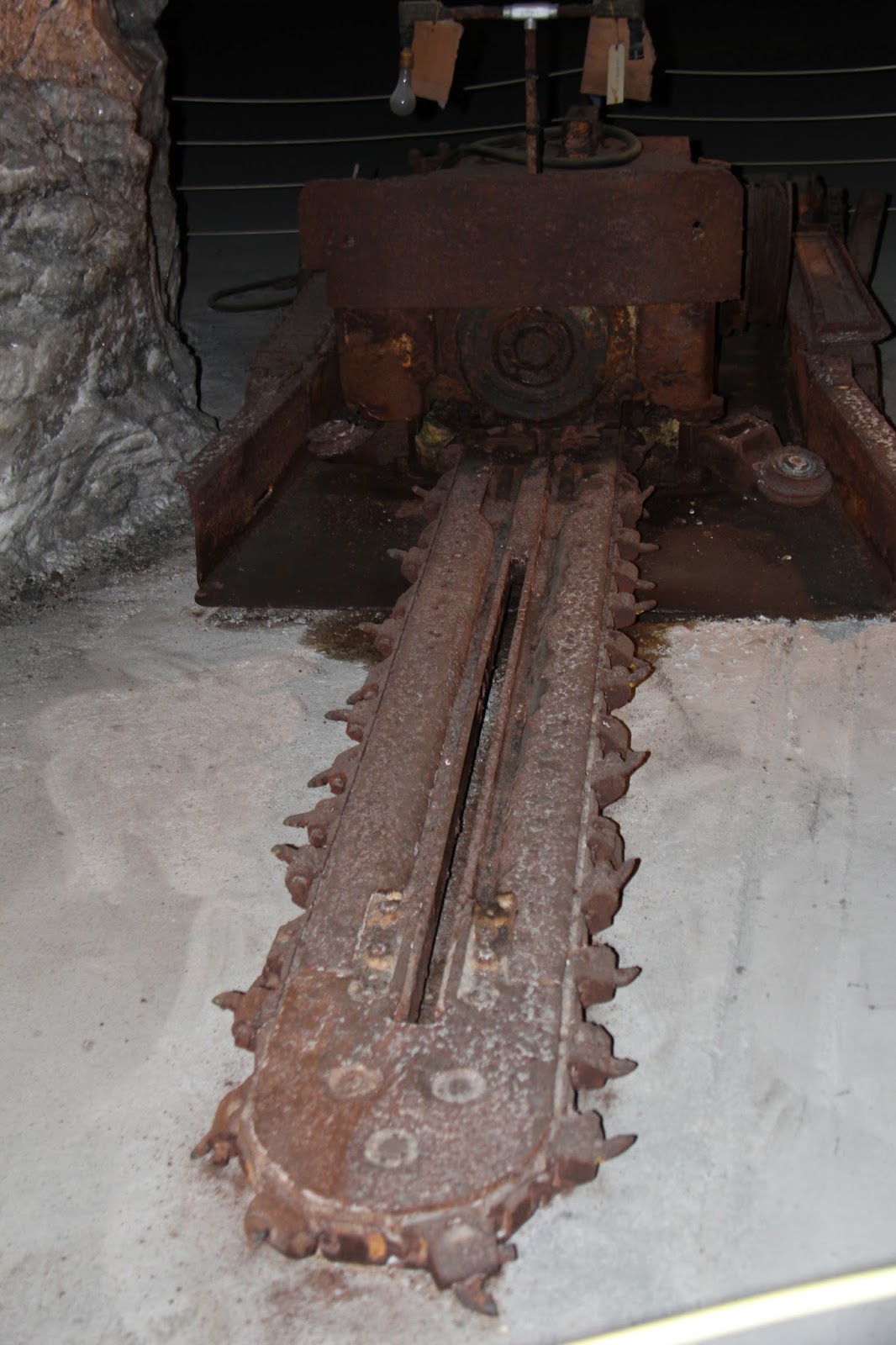
Formed 275 million years ago when the Permian Sea dried up, it's one of the largest salt mines in the world and still mined today.  When you descend 650 feet below the prairie surface on an industrial elevator (and our group chose to keep the lights off - cool!!!), you walk out and see the vast space.  It's 300,000 square feet of mined out area.  Ceilings are 10 to 17 feet high.

 Kids read every sign in their geology exhibit, listened to short history videos, and checked out the equipment.  As Chicago residents (and people who need to get to work, no matter what the weather), we need to really appreciate this place - it's a source of the salt used to melt the ice and snow on our roads.  The museum fund raises to expand the exhibit. 


We bought the Blast Pass ($19 adult, children $12.50).  Besides admission, you get two tours:  1.  Dark Ride (30 minute tram tour explaining air flow and mine hazards), and 2.  Train Ride (15 min. Salt Mine Express shows the active areas of 1940s and 50s including the garbage that never disintegrated).  Kids tend to love hands on activities, so when the tour gave them a small bag and told them they had a few minutes to pick a piece of salt from a pile, they were excited to find their own souvenir.


The salt mine also serves as a secure storage facility, holding original Hollywood movies and many other documents.  An exhibit explains.

For a real treat, the museum offers special Scout and 4-H overnights.  Boy Scouts may earn their Geology and/or Mining in Society merit badge.


7.11.2015

History Lesson #5: Maritime History in Outer Banks North Carolina


 Roanoke Island Festival Park and Elizabeth II offers historical lessons about both Native Americans and the Roanoke Voyage of 1585.  This 25 acre interactive historic site represents the first English settlement attempt in 1585.  The museum had several interactive exhibits capturing the kids imagination including 16th-century and pirate costumes and ship ropes to pull. 

Taking a wooded path, you will discover the American Indian Town educating tourists about the homes and agriculture of the Algonquian culture.  Two longhouses represent the historical homes of American Indians, including one measuring 30 feet long.  Outside stands a ceremonial dance circle. 

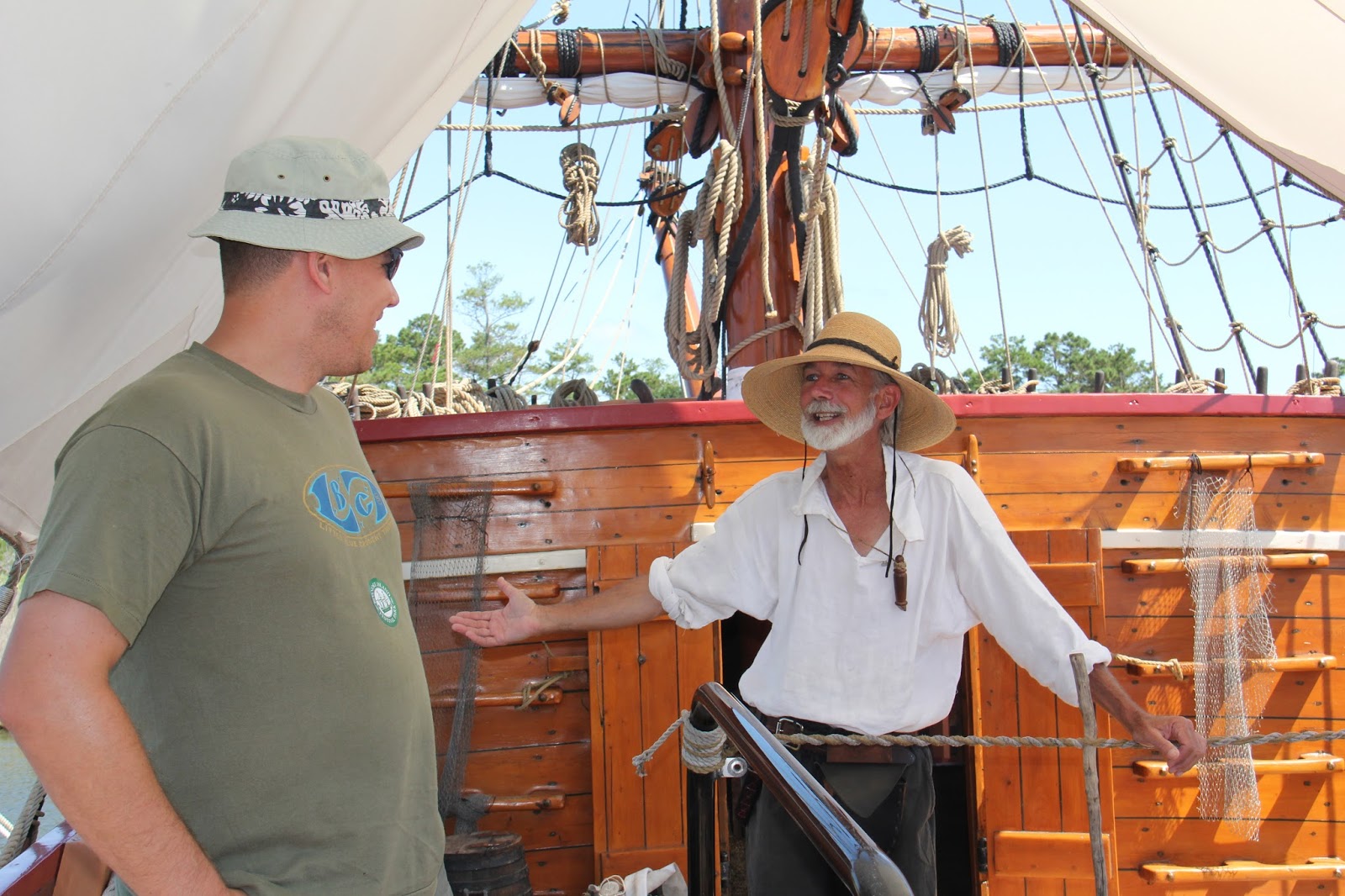
The kids most enjoyed the 16th century representative ship of Elizabeth II located in Shallowag Bay.  It represents one of the seven English merchant vessels from the Roanoke Voyage.  Enthusiastic interpretive staff encouraged the kids to turn the capstan to raise the ship's anchor.  The kids examined the lines and riggings while the adults simply appreciated the views from the quarterdeck. 

The square-rigged sailing ship replica has a relatively short history; constructed in Manteo (across the waterfront), it was dedicated in 1984 and even Her Royal Highness Princess Anne attended.  The admission cost ($10 adult, $7 children age 3-17) was well worth the cost.  Tip:  check the website ahead for a $1 coupon.

 If you want to find other maritime museums in the United States, check out the Council of American Maritime Museums (CAMM) website with an extensive list including:

1.  Hawaii Maritime Museum (Honolulu, Hawaii)
2.  Maine Maritime Museum (Bath, Maine)
3.  Portland Harbor Museum (Portland, Maine)
4.  Fells Point Maritime Museum (Baltimore, MD)
5.  American Merchant Marine Museum (Kings Point, NY)
6. Toms River Seaport Society Maritime Museum (Toms River, NJ)
7.  Michigan Maritime Museum (South Haven, MI)


6.06.2015

Agriculture Lesson #4: North Carolina Zoo Bee Exhibit & 7 National Pollinator Events


  Bees serve us in so many ways, most importantly as a pollinators of fruits, vegetables, and flowers.  The world has other pollinators, but bees perform about eighty percent of all pollination worldwide.  Bees also produce honey from the sugary secretions of the plants, aka floral nectar.

When I toured the Google headquarters and ate lunch on a picnic bench, I noticed they had their own beehives for fresh honey - impressive!  In exploring the Fairmont Edmonton, Canada patio grounds, I delighted in the inclusion of beehives.  You don't need a special invite to a corporate headquarters or luxury hotel in Canada to show your kids beehives.

The United States is a major honey producer, ranked third after China and Turkey.  If you search events, you can likely connect your child to a local beekeeper who manages hives of domesticated bees.  Also, I like to look for bee products at farmers markets such as honeycombs or flavored wax honey sticks.  The kids love to taste sweet honey.


My family took time to explore bee hives and educational materials at the North Carolina Zoo located 75 miles west of Raleigh, NC in Asheboro, North Carolina.  Entry costs approximately $15 for adults and $11 for children.  We also watched a live hive at the KU Biodiversity Institute and Natural History Museum.  Admission is a suggested $7 for adults and $4 for children.  If you can't visit an exhibit or museum, go the to the KU Natural History Museum website for a link to the live bee cam.  Kansas designated the honeybee as the official state insect.
Unfortunately pesticides, air pollution, habitat destruction, and drought contribute to bees dying.  According to Greenpeace, worldwide bee colony collapse occurs as winter losses exceed the norm - especially in the United States.  Europe has placed more restrictions on pesticides.  You and your family can celebrate and support bees by joining events during National Pollinator Week in June.  Visit the website pollinator.org for updated events.  Here's 7 examples of past events across the country:  
1.  Bees & Brew at the Botanical Conservatory; Fort Wayne, IN
Suit up for a beekeeping experience with live beehives, sample raw honey, make DIY beeswax candles at the Foellinger-Freeman Botanical Conservatory
2.  Bee Bee Q; Detroit, MI
Fundraiser with silent and live auction, live music
3.  Wild! Heritage Pollinator Party: Huntington, WV
Make your own pollinator plant pot out of recycled materials at the Heritage Farm Museum and Village, see a colony of bees
Couldn't resist the costume.  He's so sweet, he's my Honey!
4.  BeeFest; Salt Lake City, UT
Enter your kids in the kids pollinator costume contest.  Event entrance free and you can support by buying plants or honey-baked items.
5.  Meadowbrook BeeBlitz; Urbana, IL
Train on how to photograph bees and upload photos to Bee Spotter, meet at the Garden Pavilion 
6.  Bugs & Brews; Denton, NE
Take an evening walk through the prairie and enjoy refreshments and presentation by biologist working with farmers and conservation groups
7.  Meet Our Beekeper; The Episcopal Church of the Advocate; Chapel Hill, NC
Watch Piedmont Patch beekeeper demonstrate the equipment at the hive besides pond where volunteers planted over 1,000 native grasses and wildflowers

She's my Honey too!


4.06.2009

Art Lesson #1: Chihuly at Indianapolis Children's Museum


I've met many famous people, but never Dale Chihuly. Yet, everytime I see his art, I feel connected.  The University of Wisconsin Madison's Art Center held his first solo exhibit in 1968. It was earlier than my time, but a special school to me too as my alma mater.
Everytime I see his artwork, I feel inspired. Dale took glassblowing to a whole new level, making it a fine art, a contemporary art full of imagination and a kalediscope of color.   

You can find Chihuly's art on permanent display:
While visiting the Indianapolis Children's Museum, the largest children's museum in the world, I photographed his glass displayed in the ceiling. The kids looked up in awe at the bright colors and seashell-like shapes.

The Chihuly Garden and Glass In Seattle Center opened in 2012.  This center provides a much bigger collection of his art with both indoor and outdoor exhibits.  I was fortunate to visit at time which included local artists demonstrating glass blowing.  Visit my blog article to read about my visit and experience.

Also, look online for Chihuly's traveling art:
Cactus flowers bloomed, the sun set over the horizon, and I thoroughly enjoyed strolling past Chihuly art in sun and darkness at the Desert Botanical Garden in Phoenix, Arizona.

You may find his art at other botanical gardens or museums such as Chihuly Catalina Island Museum (Avalon, CA), New York Botanical Garden (The Bronx, NY), Crystal Bridges Museum of American Art (Bentonville, Arkansas).

There's so many artists creating beautiful glass art.  If you'd like to inspire your children's creativity by viewing glass art, here's 6 other museums to explore:
1.  Charles Hosmer Morse Museum of American Art (Winter Park, FL), the most comprehensive collection of Louis Comfort Tiffany http://morsemuseum.org/
3.  Musuem of Glass (Tacoma, WA) focusing on contemporary and Pacific Northwest glass art http://museumofglass.org/
4.  National Heisey Glass Museum, (Veterans Park, Newark, OH)
http://heiseymuseum.org/
5.  The New Bedford Museum of Glass (New Bedford, Massachusetts) opened 2010 in former textile building  http://www.nbmog.org/
6.  Toledo Museum of Art including The Glass Pavilion, (Toledo, OH) The Glass Pavilion with curved glass walls and a Dale Chihuly sculpture opened in 2006 http://www.toledomuseum.org/glass-pavilion/
7.  Corning Museum of Art, (Corning, NY) Finger Lake area, $15 adult, free for kids
http://www.cmog.org/visit/hours-and-admission