6.09.2018

Transportation Lesson #2: Mail Boat Delivery Jump Tour (Lake Geneva, WI)

Lake Geneva, Photo by Krenda
"Neither snow, nor rain, nor heat...", we all hear about how the United States Post Office employees deliver mail despite bad weather.  We also hear about the many different transportation methods needed throughout history to transport the mail - horse drawn wagons, airplanes, trucks, etc.  There's stories about mail delivered by bush pilots in Alaska and mule train to the Havasupai Indians at the bottom of the Grand Canyon.  To learn more, you can take your kids to the Smithsonian National Postal Museum.  
The museum includes an exhibit about the relationship between mail and our national parks "Trailblazing 100 Years of Our National Parks."

Then I heard about an experiential learning opportunity on CBS News Sunday Morning segment in which Bill Geist describes a timeless place where the arrival of summer is announced by the first mailboat.  In Lake Geneva, Wisconsin, mail still gets delivered by boat daily from June to September.  It began approximately 100 years ago before the government built roads around the lake.  Before the summer season, Gage boat company holds tryouts for mail jumpers who will ride the boat, jump onto the pier, put mail in and out of the mailbox, and jump back on the boat.

You can take your kids on the Gage boat tour "U.S. Mailboat Tour".  The 2.5 hour tour takes you on a cruise around Lake Geneva to watch a mail jumper in action.  He or she delivers the mail to about 75 homes on the lake with approximately 160 tourists watching.  The service continues as a free service.  To watch the action on Wadsworth 11, the only mail jumping boat in the U.S., you'll need to pay $38 for adults and $22 for children.
Our mail jumper had skills.  He'd sprint to the mailbox.  At one point, he had to jump off the boat and put mail in an entire row of mailboxes, run about a mile, and time it right to jump back on the moving boat.  He really showed off by jumping off a dock and then doing a cartwheel before placing mail into the box.  Everyone cheered for him.  The residents also seem to enjoy the service.  Some would sit on their pier in big wooden chairs waiting for the mail delivery and waving to the tourists.  Another resident waited by his box for a hand delivery.
Besides the entertainment, the boat emcee provides history lessons about the mansions surrounding the lakes and the famous business families like Wrigley owning them.

Today email works fast.  But think about the years of news delivered by the mailman.  Letters from soldiers, love letters, holiday cards, postcards giving you a glimpse of a place far away.  I still find joy in sending and receiving postcards.  Thanks to the U.S. Postal Service employees for delivering through difficult weather or taking a risk to fall in the lake so residents can open a envelope of joy.

6.04.2018

Lighthouse Lesson #8: Eagle Bluff in Fish Creek, Wisconsin (Door County)

Eagle Bluff Lighthouse in Fish Creek, Wisconsin tells the story of three different keepers and their families that helped protect sailors passing through the Strawberry Channel.  The light helped sailors pass between the Strawberry Islands and Door County Peninsula.

Henry Stanley served as the first keeper, beginning in 1868.  An immigrant from Norway, he had an adventurous spirit, looking for gold in California, sailing the Great Lakes, and then raising two kids with his wife in the lighthouse.  The Fresnel lens at this time shone 16 miles out.

The second keeper story continues since the youngest son helped Door County Historical Society in restoring the lighthouse and donating items for the interior.  William Dulcon served for 35 years and raised seven sons with his wife.  The boys formed a band, making them known in the community.

The third and final keeper, Peter Coughlin, served until the light was automated in 1926.  If you take the $8 tour, you'll learn more about the families.  You need to arrive between 10AM and 3:30PM during the season.  Tours happen every 30 minutes.

The lighthouse has stories of change and survival like others.  The rock wall was built in 1877, barn added in 1893, and oil house in 1890.  Twice the lighthouse went vacant (1906 to 1930).  Then the Fruit Growers Union Cooperative leased the place as an office.  After the Wisconsin State Conservation Commission gained the lighthouse, park employees lived in it.  It went vacant again in the 1950s.  Fortunately, the Door County Historical Society made restorations beginning in 1961.

If you miss the tour, you'll still want to see the grounds and view.  The lighthouse stands on a bluff 76 feet above water.  The cream-colored brick two-story dwelling looks like the Chambers Islands lighthouse, but purposely has a different shaped tower to help sailors differentiate them.  The Eagle Bluff lighthouse tower stands 9 feet and 4 inches.  Since the lighthouse is located within the State Park, you'll need an admission sticker.


6.03.2018

Lighthouse History Lesson #7: Cana Island Lighthouse

The kids get wet.  The parents have an opportunity to hike and climb a lighthouse.  What a great combination!

If you want this experience, drive up northeast of Bailey's Harbor in Door County, Wisconsin.  Park the car and take a complementary hayride to the island.  Note that while the lighthouse remains open 10AM to 5 PM during the season (May to October), the last tractor hay-wagon leaves the parking lot at 4:15PM and the last tower climb begins at 8:30PM.  You'll see the lighthouse from afar as the tower stands 89 feet tall.  

The peninsula separates Moonlight Bay and North Bay.  We took the hayride to the lighthouse, but the kids begged to walk across the lake on the way back.  So guess who waded in two feet of cold lake water?!?

The triangular island spans across 8.7 acres.  When you arrive at the island, you buy your ticket to climb the tower ($12 adults, $10 kids age 5 to 17 years old).  To climb, you must be at least 5 years old and 42 inches tall.  Take a short hike to the lighthouse and climb the 97 cast iron steps up a spiral staircase.  At the top, step onto the balcony and admire the view.  You'll also notice the

Fresnel lens made in France and once fueled by lard.

 Many years ago, President Andrew Jackson reserved Cana Island in Wisconsin for the light, but only in the last decade can visitors climb the tower.   The lighthouse was built in 1870.  The tower stood as the tallest brick structure in Door County when it was completed.  In 1970, control of the island and lighthouse was given to Door County Maritime Museum.  In 1976, the lighthouse was added to the National Register of Historical Places.  In 2008, visitors were allowed to climb the tower and gain a spectacular view from the lantern room.

If you want to visit Cana Island through a tour, consider attending the Spring Door County Lighthouse Festival (early June) or Fall Door County Lighthouse Festival.  Tickets become available months earlier, so plan ahead.  Here's five tours:

1) Door County Trolley Lighthouse 7.5 hour Tour:  $82 to see 5 lighhouses including Cana Island, lunch included
2) Narrated Naturalist 6.5 hour Tour:  $87 to see 5 lighthouses including Cana Island and lunch
3) Lakeshore Lighthouse 2 hour Cruise:  $52 to see 3 lighthouses including Cana Island
4) Cana Island Kayak 4 hour Expedition:  $80 for kayak and climb Cana tower
5) Bailey's Harbor Kayak 3 hour Expedition:  $80 see 3 lighthouses including Cana


6.02.2018

Lighthouse Lesson #6: Mission Point Lighthouse Michigan

Old Mission Peninsula, rated as one of the top ten coastal drives in America, has 19 miles of beauty.  First settled by Peter Doughtery, a Presbyterian minister sent to established a church and school for Native Americans, he planted the first cherry tree on the peninsula.  When Peter moved from the peninsula, his new location was called "New Mission", so the peninsula was called "Old Mission".  Now visitors enjoy the cherry trees, beaches, and sea kayaking.  You should enjoy the Mission Point Lighthouse.

A postcard perfect lighthouse, so I entered the gift shop to buy a postcard.  It reads "Mission Point Lighthouse, built in 1870 on a sand dune, located 18 miles north of downtown Traverse City, Michigan at the end of Old Mission Peninsula."  During the 1860's, a large ship hit a shallow reef and sank in the area.  Congress set aside funds and the lighthouse first lit in 1870.  The lighthouse guided mariners through West Grand Traverse Bay from 1870 to 1933.  Built on a dune, mariners could see the light 13 miles away.  The dune location meant the lighthouse didn't need to be constructed super high.  The first lighthouse had a cylindrical shape.  The second and present lighthouse is the white painted wood lighthouse with black trim and the tower stands only 36 feet high.  After a buoy with light replaced the need for the lighthouse, the lighthouse sat abandoned for awhile and hurt by vandals who also stole the Fresnel lens.  Then 43 residents purchased the lighthouse and volunteers operate the museum and gift shop.  The lighthouse was added to the National and State Historic Register.

In 2011, the Coast Guard lent a fifth-order Fresnel lens to the lighthouse.  You can see lighthouse items and learn more about the history by paying a $5 fee to enter the small museum and climb the stairs to the tower.

Besides learning about maritime history, check out the sign about the 45th Parallell North.  The actual point is offshore, but the sign explains you are nearly halfway between the North Pole and the Equator.

Situated between beach and forest, also take time to enjoy the nature.  Only 37 steps down to the boardwalk and beach.  The volunteer lighthouse keepers keep the sand out of the lighthouse and paths, so take a moment to thank them.  Bring the swimsuits.  The water is a beautiful blue and kids might look for Petoskey stones.  Besides making purchases at the gift shop, you can also support the lighthouse by purchasing a special lighthouse wine from Bowers Harbor Vineyard.  If you visit in the winter, you can't go inside the lighthouse (only open May to October, 10AM-5PM).  You can stroll along the beach and trails and look for a snowy owl.


Lighthouse Lesson #5: Sturgeon Bay Canal Lighthouse & North Pierhead Lighthouse

Sturgeon Bay Canal, Photo by Krenda
Walk the breakwall
If you want a quick stop to discuss the history of transportation, stop at the U.S. Coast Guard Station.  Considering my passion for lighthouses, the kids can wonder how much time could get spent at a lighthouse.  You have to consider the tour, walking up the stairs, and taking time for the view.  In this case, you can't wander on the grounds and the government offers no tour (except during annual lighthouse festival).  It's an active Coast Guard station.  You have a quick stop, walking from the parking lot to the north breakwall.  It does give you a nice view of two lighthouses.  The first lighthouse, Sturgeon Bay Canal Lighthouse, has a cylindrical design and stands tall at 78 feet.  Originally painted a reddish brown, it was repainted white in 1900.  The second lighthouse, Ship Canal North Pierhead Lighthouse, originally had white paint and later painted red.  It stands 35 feet above water at the end of the jetty.

Ship Canal North Pierhead
You also have a waterfront view.  The Sturgeon Bay Ship Canal connects Sturgeon Bay with Lake Peninsula. The approximately 7 mile canal provides a shortcut to the southern end of Green Bay.  It allows ships to avoid the dangerous "Death's Door" passage at the northern tip of the Door Peninsula.  At the end of the jetty when you are close to the Pierhead Lighthouse, turn around and take a photos of the Sturgeon Bay Canal Lighthouse too.

The lighthouses evolved over time to solve problems, whether adding a fog horn, better light, electricity, or larger keeper house, the government invested for marine safety.  The Sturgeon Bay Canal Lighthouse had structural issues from the wind vibration, so a steel framework was added.


4.28.2018

Lighthouse Lesson #4: Point Betsie Lighthouse in Frankfurt, Michigan

Point Bestie Lighthouse, Photo by Krenda
Take a trip to Frankfurt, Michigan and go north to Point Betsie Lighthous.  Point Betsie Lighthouse was originally named Pointe Aux Bec Scies, meaning point point of sawbill ducks, by French explorers. The lighthouse provided safety to the ships coming from the southern entrance to the Manitou Passage.

The combination of the beautiful hipped-roofed lighthouse and location with amazing views (Lake Michigan, Sleeping Bear, and Manitou Islands), it's no wonder it is one of the most photographed lighthouses.  It sits upon a dune, placing it 52 feet above lake level.  Locals recognize the site too.  It's rated as #1 lighthouse according to a Michigan resident survey (10,000 voters) about things they love about Northern Michigan.  All ages will appreciate the surrounding beautiful nature and nearby beach.

The site has had multiple buildings for many years.  Even with the light and sound of the fog horn warning ships getting close to the shore, a life-saving station was deemed necessary.  It opened in 1877 to rescue shipwrecked victims.  The lighthouse has been operating since 1858 and changing throughout time. It was later painted white to increase visibility during the day.  To house two families, the house was enlarged in 1895 and the hip roof replaced the gambrel design.  The fog signal building was rebuilt in 1912 and moved from locomotive whistles to chime whistles.  Electric bulb installed in 1921.  It was one of the last lighthouses in Michigan to be automated.  The fourth-fresnel lens once removed in 1996 was returned.  The Friends of Point Betsie Lighthouse led the restorations and recognized for their achievements with The Governor's Award for Historic Preservation.  It's recognized as the oldest standing structure in Benzie County and also listed in the National Register of Historic Places.  Coast Guard now operates using an automated light. 

You can take a tour for only $5 and that includes the climb up the 34-step tower.  You'll see the Boathouse Museum and Fog Signal Building.  Note that you must be at least 3 1/2 feet to climb the tower.  When you make purchases at the gift shop, you also help support the lighthouse.  The lighthouse needs high financial support.  With climate change, the lake has record high water levels that erode the shoreline.   The Shoreline Protection System (SPS) installed in 1869 and reconstructed in 1944 needs updates to keep protecting the lighthouse.  You can donate directly to the capital campaign.


4.18.2018

Global Thinking in the USA #3: Chicago Botanic Garden's Japanese Garden


Chicago Botanic Garden, Photo by Krenda
Chicago Botanic Garden in Glencoe, Illinois (Chicago suburb) is a great place for kids to learn about horticulture.  Look on their website for special events.  I've been to the garden multiple times, but I most enjoyed a Girl Scout event that included dividing houseplants and planting the new plant to help earn a badge.  At the end of the event, we had a private tour of the garden including the Elizabeth Hubert Malott Japanese Garden and greenhouses.  The Chicago Botanic Garden is huge with over 27 gardens within 385 acres.  It's no wonder over 1 million people visit annually.  With approximately 50,000 members, it's the largest membership of any U.S. public garden.  Considering the size and diversity, I'll focus on how kids can learn about horticulture and the Japanese culture in the same place.

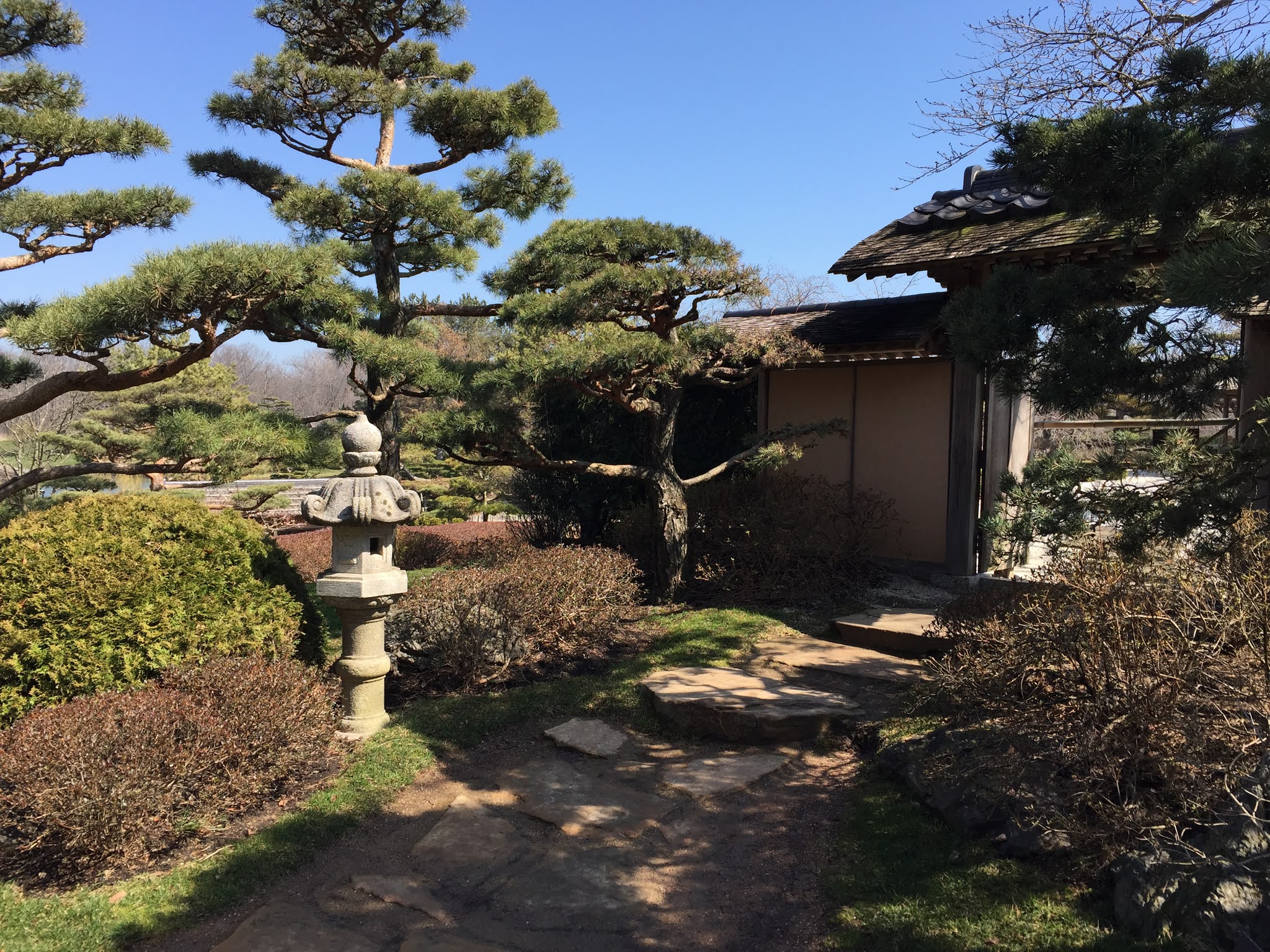
To get the lay of the land, the Japanese garden has 17 acres and includes three islands:  1) Seifuto (Island of Clear, Pure Breezes), 2) Keiunto (Island of the Auspicious Cloud), and 3) Horaijima (Island of Everlasting Happiness).  The first two island has public accessibility.  You most likely won't have a guide, so I suggest downloading the garden app, so you and your kids can learn the meanings of the sites.  I've taken a short snapshot of the descriptions provided on the website for you:
Stop 1:  The Ken - viewing point where all three islands can be seen at one spot
Stop 2:  The "Waterfall" - plants create nature scene (boxwoods = stones, cotoneaster flowing downhill = flowing water)
Stop 3:  Kasugastone Lantern - name from Kasuga Shrine where there are nearly 1,000 lanterns
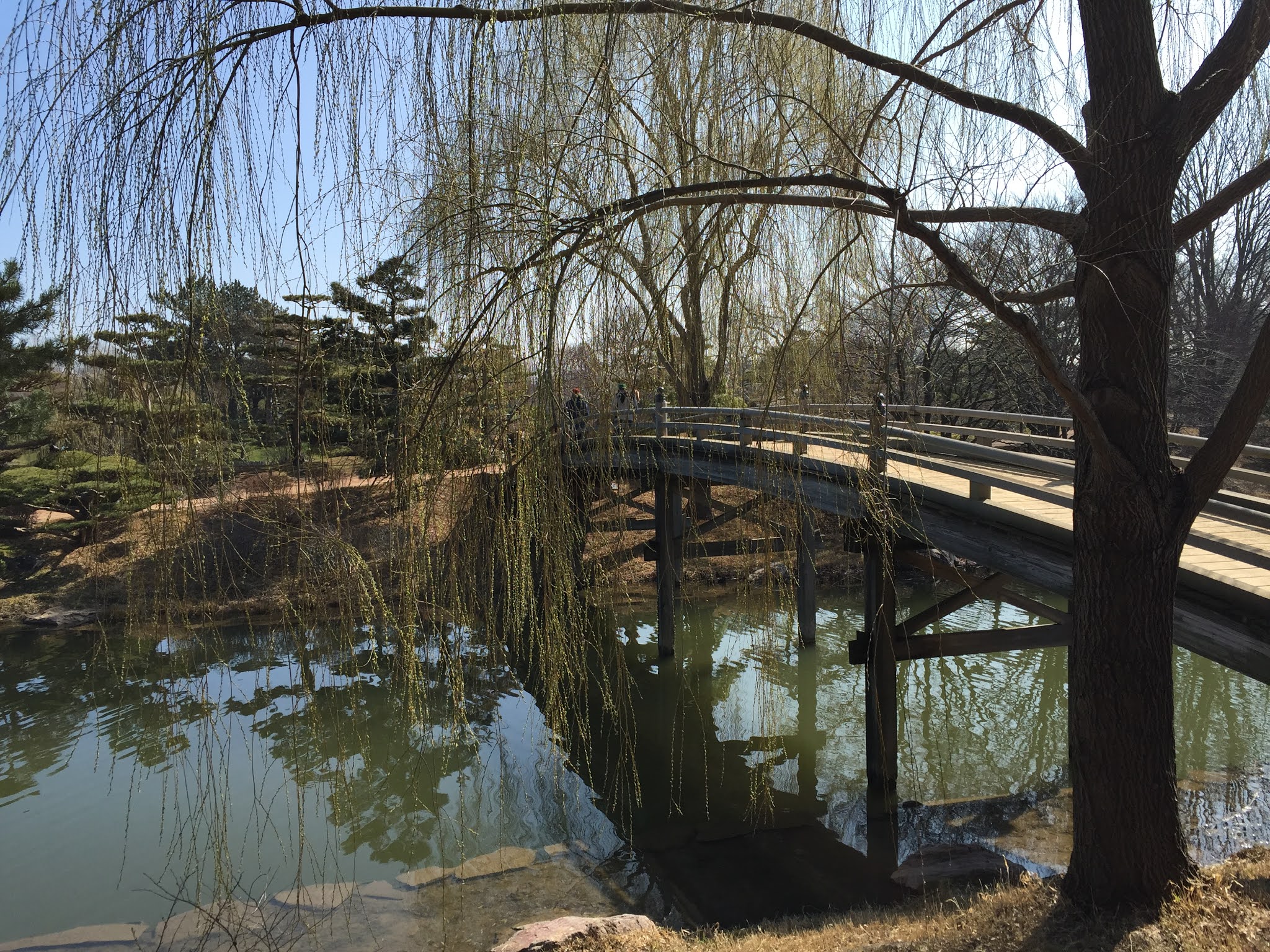
Stop 4: Japanese Garden Bridge - link between this world + paradise with an arch representing the difficulty of the path
Stop 5:  Keiunto - most formal of the gardens


Stop 6:  Dry Landscape Garden - smooth gravel represents calm matter, raked rippled patterns represent waves breaking on a shore; peek into the garden from the house


Stop 7:  Arbor - house adapted from a building at Kodai-jiya Koyota temple, built in Japan and assembled in Chicago

Stop 8:  Crouching Basin - tradition to wash hands and rinse mouth before entering teahouse

Stop 9:  Zig Zag Bridge - legend tells story that people can avoid evil spirits by crossing a zigzag bridge because evil spirits believed to move only in a straight line

Stop 10:  Seifuto - stone lantern and grouping of boulders; rocks are thought to be the bones of the earth

Stop 11:  Boat Landing Stones - 2 large granite slabs for an ornamental boat landing

Stop 12:  Dry Garden and Arbor House - smaller dry garden than on Keiunto; notice the water basin and lantern

Stop 13:  Willow - uneven pathway of stones to make you step more deliberate; notice the pruned willow

Stop 14:  Pine Tres - symbols of long life in Japanese culture

Stop 15:  Shoin House:  Recreated garden retreat of an Edo-period feudal lord built in Japan

Stop 16:  Water basin at the Shoin House

Stop 17:  Snow-Viewing Lantern - yukimi lantern built with sturdy legs and broad umbrella, enabling it to bear the snow

Stop 18:  Puryear Point - bridge views and sculptures

The Forest Preserve District of Cook County owns the garden and the Chicago Horticultural Society manages the garden.  There's an agreement for free admission (beyond the $25-$30 parking fee per day) until 2022, so visit now.